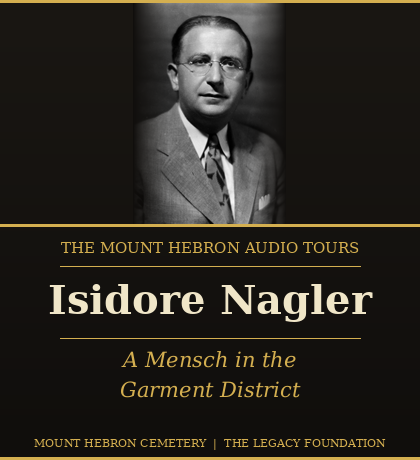
Isidore Nagler: A Mensch in the Garment District
There is a word in Yiddish, mentsh, that does not translate cleanly into English. It means something like a person of integrity. Someone who shows up. Someone who does what is right. Someone who builds rather than tears down. By every account, Isidore Nagler was a mentsh.
He was born on February 25, 1895, in Uście Biskupie, a small village in Galicia, then part of the Austro-Hungarian Empire. He grew up in the world of a Yiddish-speaking Jewish shtetl, where economic hardship was constant, opportunity was scarce, and antisemitic violence was never far away. The region had been losing Jewish families for decades. Between 1880 and 1914 more than two million Eastern European Jews left for America. In 1909, at the age of 14, Isidore Nagler joined them. He packed what he could carry and came to New York.
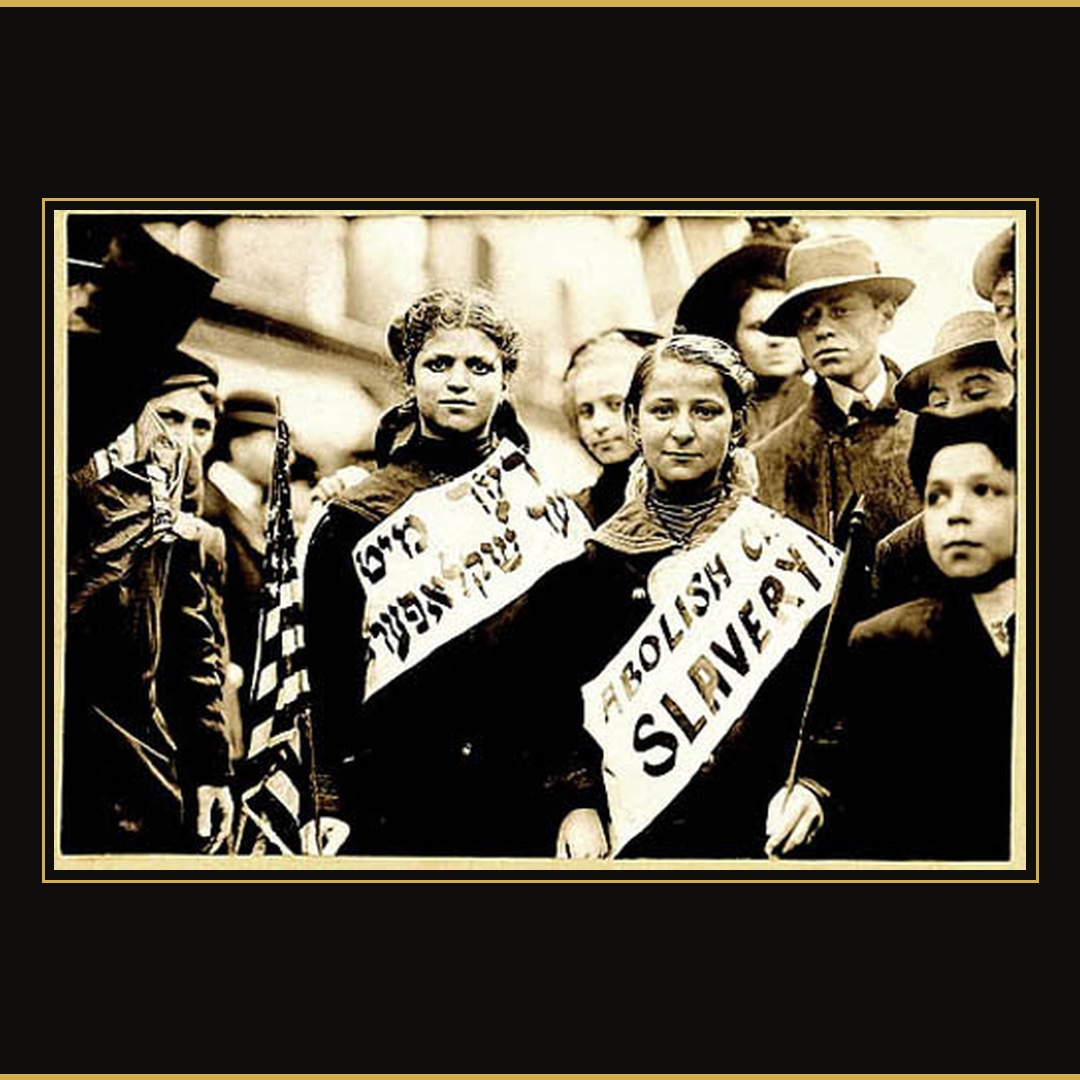
He went to work in the garment industry as a cutter, one of the most skilled positions in the trade, requiring precision and dexterity with manual shears in the cramped loft factories of the Lower East Side. The hours were long. The pay was low. The conditions were dangerous. Workers breathed fabric dust and worked beside machines that could take a finger in a moment of distraction. He knew all of this. He got to work anyway.
In 1911, two years after arriving in America, he joined Local 10 of the International Ladies' Garment Workers' Union, the Amalgamated Ladies' Garment Cutters' Union. He was sixteen years old. He would spend the next forty-eight years of his life in that union's service and he would never once stop fighting.
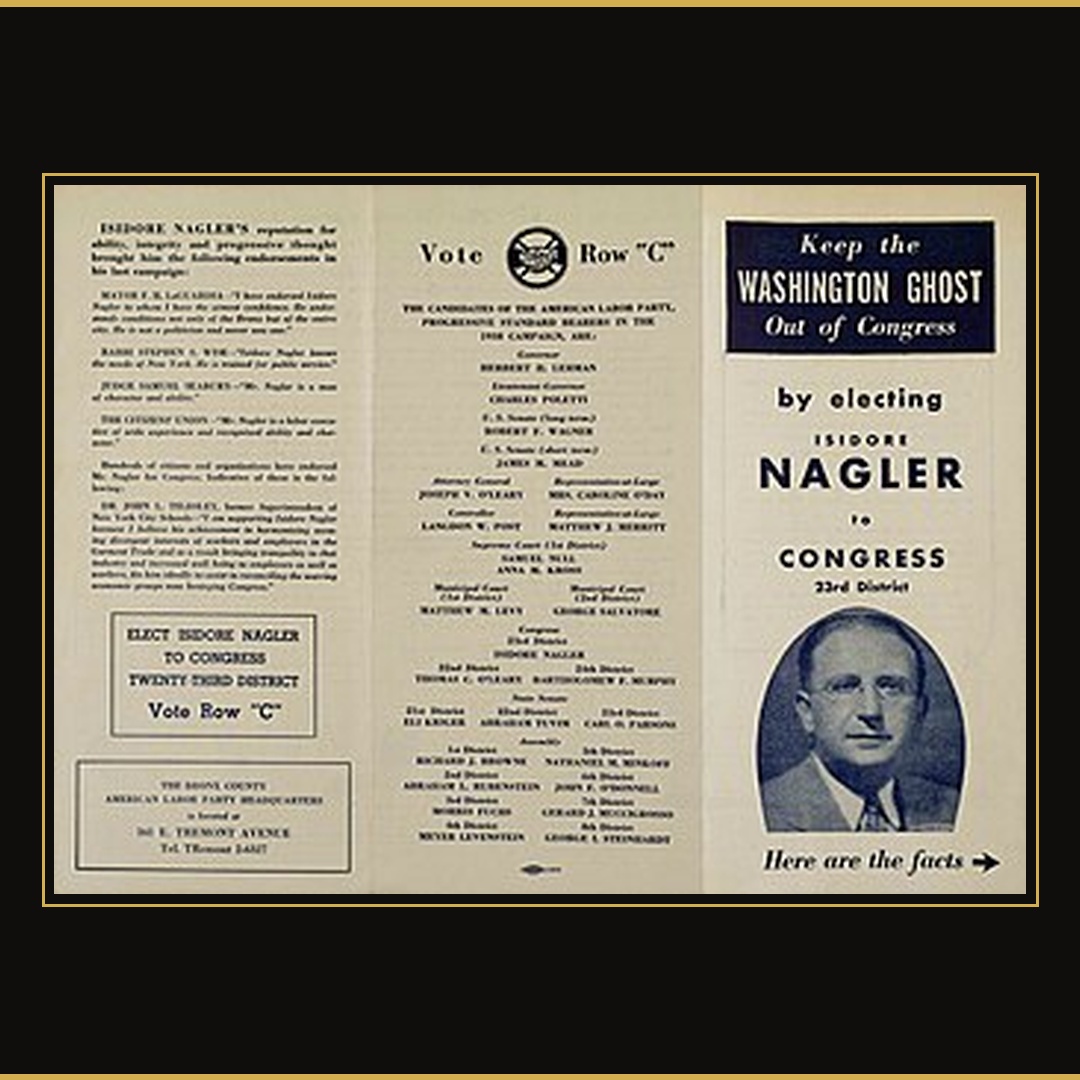
His rise was steady and earned. By 1919 he had become an officer in the local. By 1928 he had been elected vice president of the ILGWU and appointed general manager of the New York Cloak Joint Board, overseeing contracts and conditions for tens of thousands of workers across the cloakmaking industry. He would hold that vice presidency for thirty years, until the day he died.
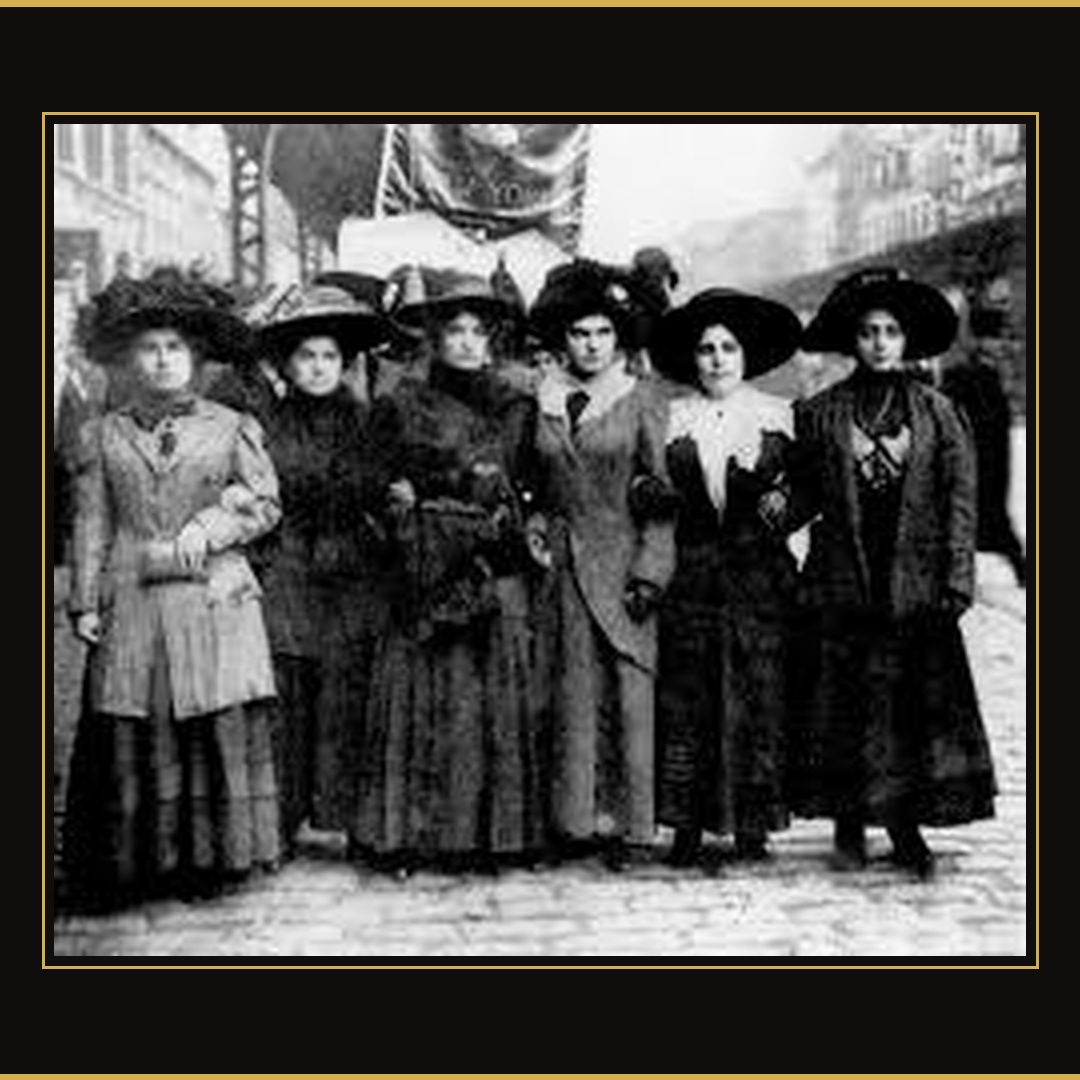
The work was never simple. The garment industry in New York in the early twentieth century was a battlefield on multiple fronts at once. On one side were the manufacturers and contractors who wanted to keep wages low, hours long, and conditions exactly as they were. On the other were Communist-backed factions who saw the union not as a vehicle for worker welfare but as a platform for Soviet ideology. Nagler had no patience for either. He believed in workers. He believed in democracy. He believed those two things could not be separated.
Under his leadership the union secured a 40-hour, five-day work week for cloakmakers, a real reduction from the grinding hours that had defined the industry in the early decades of the century. He standardized piece-rate systems and job classifications for cutters, reducing disputes over pay and giving workers more predictable earnings. He pushed for expanded pension provisions in 1953, recognizing that an industry with high physical demands owed its aging members something more than a handshake at retirement. He helped build out health and welfare funds that offered medical care and benefits to thousands of garment workers who had no other safety net. He did all of this through negotiation, through organizing, through the slow and unglamorous work of building something that lasts.
He also fought a war within his own house. From the moment he took on leadership in Local 10, Communist-backed factions challenged his authority. He did not flinch. He aligned himself with ILGWU President David Dubinsky, whose leadership shared his conviction that American labor unions had no business serving Soviet interests. Together they worked to remove radical elements from the union's leadership and restore trust in democratic governance. In 1944 the ILGWU withdrew from the American Labor Party over concerns about Communist infiltration. Nagler supported the move without hesitation.
In March 1950 the battle came to a vote. Nagler's slate ran against Communist-backed candidates in Local 10's officer elections. More than 6,000 members voted, the largest turnout in the local's history. Nagler received 5,466 votes. His opponent, Arnold Ames, received 555. A margin of nine to one. He called it "a crushing repudiation for the advocates of totalitarianism in our organization." He was not wrong. In 1939 Communist-backed candidates had received 30 percent of the vote in Local 10. By 1950 that number had fallen to less than 9 percent. He had not won this through speeches. He had won it by spending decades making his members' lives better and showing them what honest union leadership actually looked like.
Nagler never understood his work as stopping at the union hall door. He carried his community with him everywhere he went, and the community he carried was not only the garment workers of New York but the Jewish people as a whole.
He served as secretary of the Jewish Labor Committee, founded in 1933 to aid persecuted Jews in Europe and combat antisemitism in the United States. He chaired the Labor Committee for the 1936 Anti-Nazi Olympic Carnival, raising funds and awareness to boycott the Berlin Games and assist Jewish refugees fleeing Nazi Germany. He advocated for immigration reforms and economic support during the 1930s and 1940s, drawing on ILGWU networks to push for change when the political will was weak and the stakes could not have been higher.
In 1941, with the full weight of what was happening in Europe no longer possible to deny, Nagler collaborated with the Jewish National Fund to mobilize ILGWU resources for land reclamation projects in Palestine. He did not view a Jewish homeland as an abstraction. He viewed it as a practical necessity in a world that had made Jewish life in Europe impossible. He served as chairman of the Federation for Labor Israel, building ties between American garment workers and Israeli labor organizations that would outlast him by decades. He participated in the American Zionist Emergency Council, endorsing statements urging American diplomatic recognition of Israel and commitments to its security.
He believed the fight for workers and the fight for Jewish survival were the same fight, waged on different fronts. He showed up for both every single day.
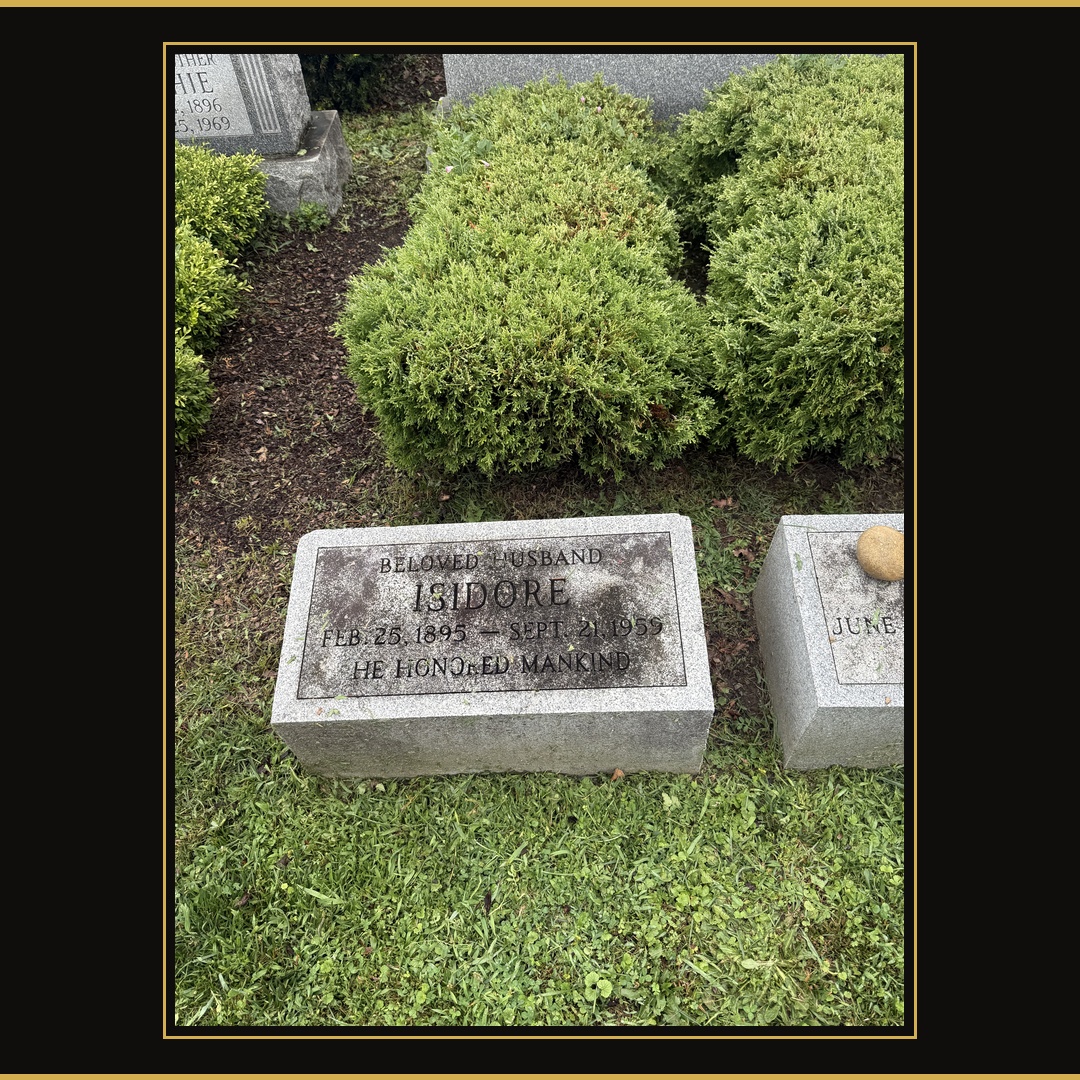
Isidore Nagler died on September 21, 1959, at Beth Israel Hospital in New York. He was 64 years old and still serving as general manager of the New York Cloak Joint Board. He had never stopped working. He had never stepped back and said that someone else could take it from here.
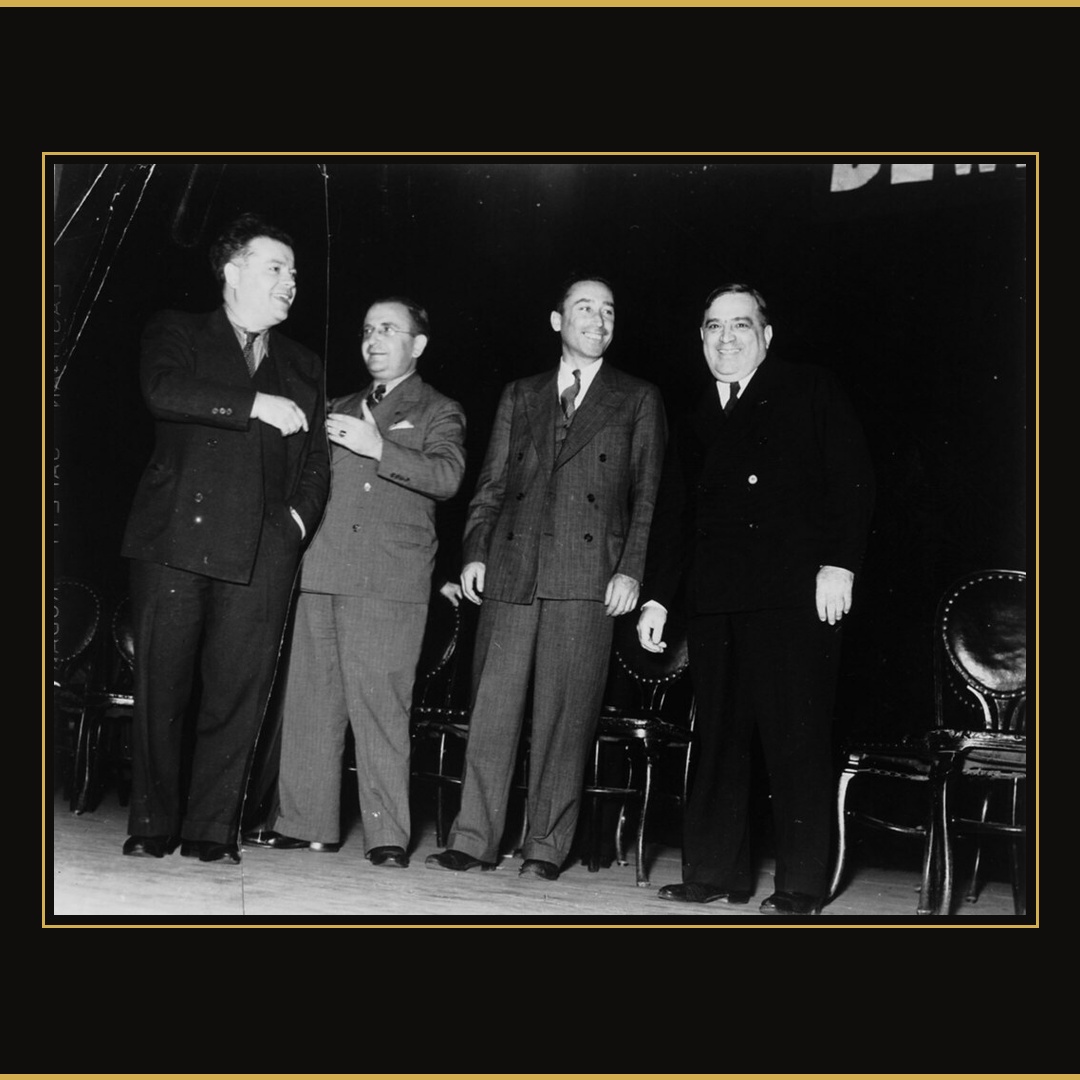
Two thousand people attended his funeral. Among those who eulogized him was Golda Meir, then Israel's Foreign Minister, who said he had spent his life breaking down the barrier between the labor movements in America and in Israel and had championed Zionism with everything he had. New York Mayor Robert F. Wagner also spoke. His long-time assistant Henoch Mendelsund succeeded him as manager of the Cloak Joint Board and carried forward the work Nagler had built.
A boy from a Galician village who came to New York at fourteen with nothing. Who spent five decades fighting for the people who cut fabric in loft factories. Who took on Communists and manufacturers with equal determination. Who never stopped showing up for his people on both sides of the Atlantic. Who built something that outlasted him.
Isidore Nagler rests at Mount Hebron Cemetery in Flushing, Queens. The Legacy Foundation is honored to tell his story.
May his memory be a blessing.
Blog by Deirdre Mooney Poulos, Director, The Legacy Foundation at Mount Hebron Cemetery
Works Cited
Kheel Center for Labor-Management Documentation and Archives. ILGWU Records, Collection 5780. Cornell University.
Meir, Golda. Eulogy for Isidore Nagler. 23 Sept. 1959. ILGWU Memorial Records, Kheel Center, Cornell University.
New York Times. "Anti-Red Slate Wins Cutters' Vote, 9 to 1." Mar. 1950.
New York Times. "Isidore Nagler, Labor Leader, Dies." 22 Sept. 1959.
Robert F. Wagner Labor Archives, Tamiment Library. Jewish Labor Committee Records. New York University.
Jewish Telegraphic Agency. "ILGWU Vice President Nagler Collaborates with Jewish National Fund." 1941.
Jewish Telegraphic Agency. "Isidore Nagler, ILGWU Vice President, Dies at 64." Sept. 1959.
American Zionist Emergency Council Records. Zionist Archives, New Yo
~Blog by Deirdre Mooney Poulos