The Life and Legacy of Henrietta Jacobson Adler
Summary:
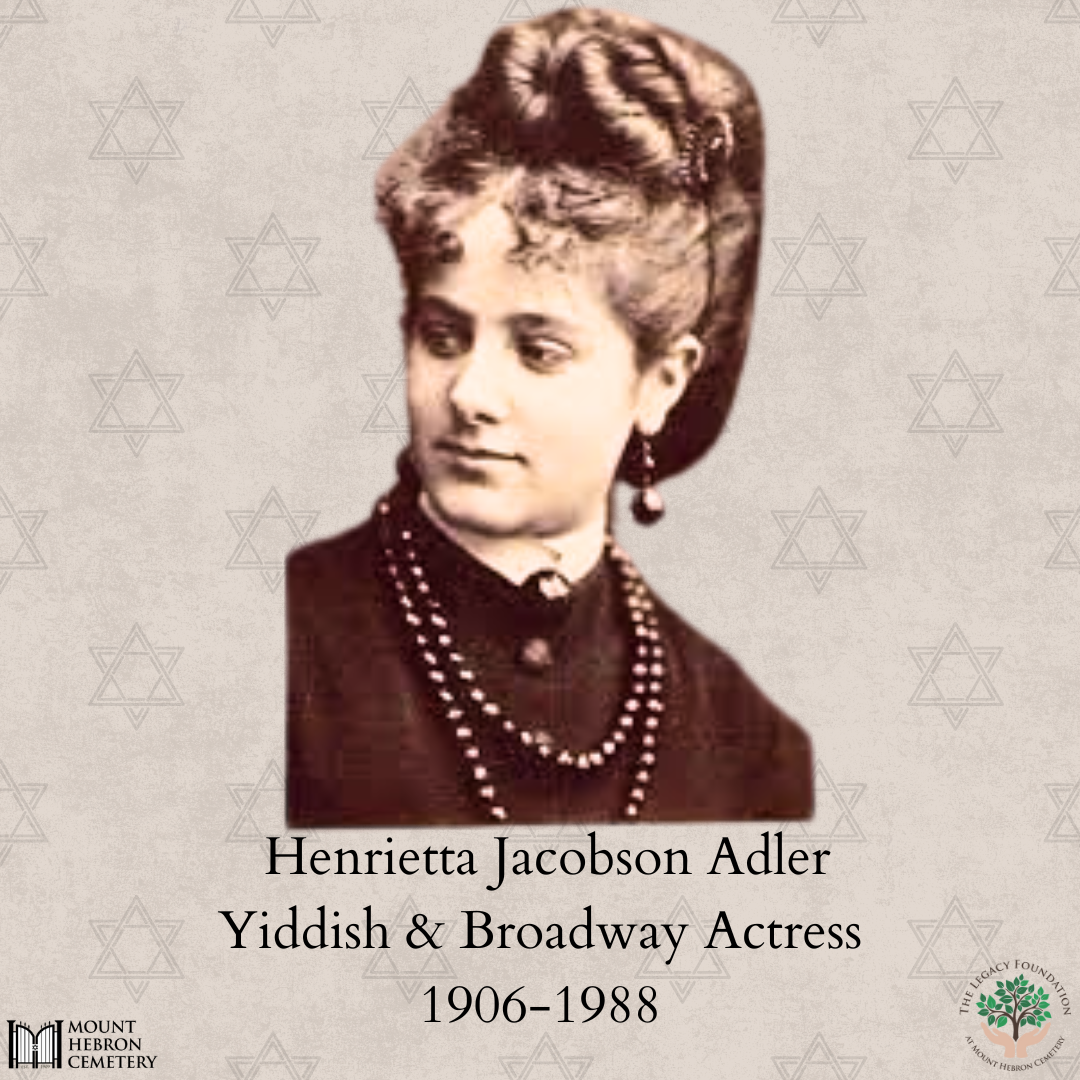
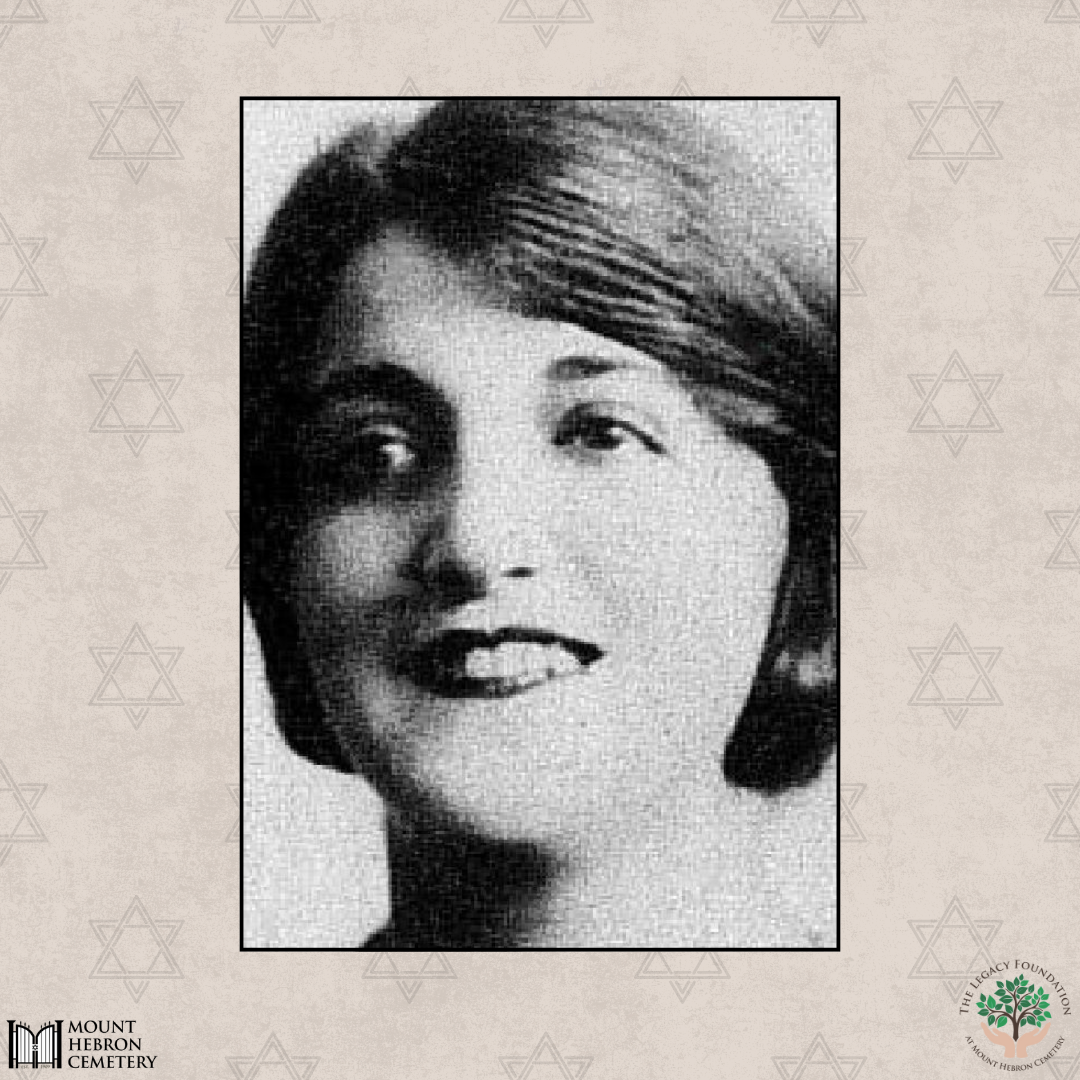
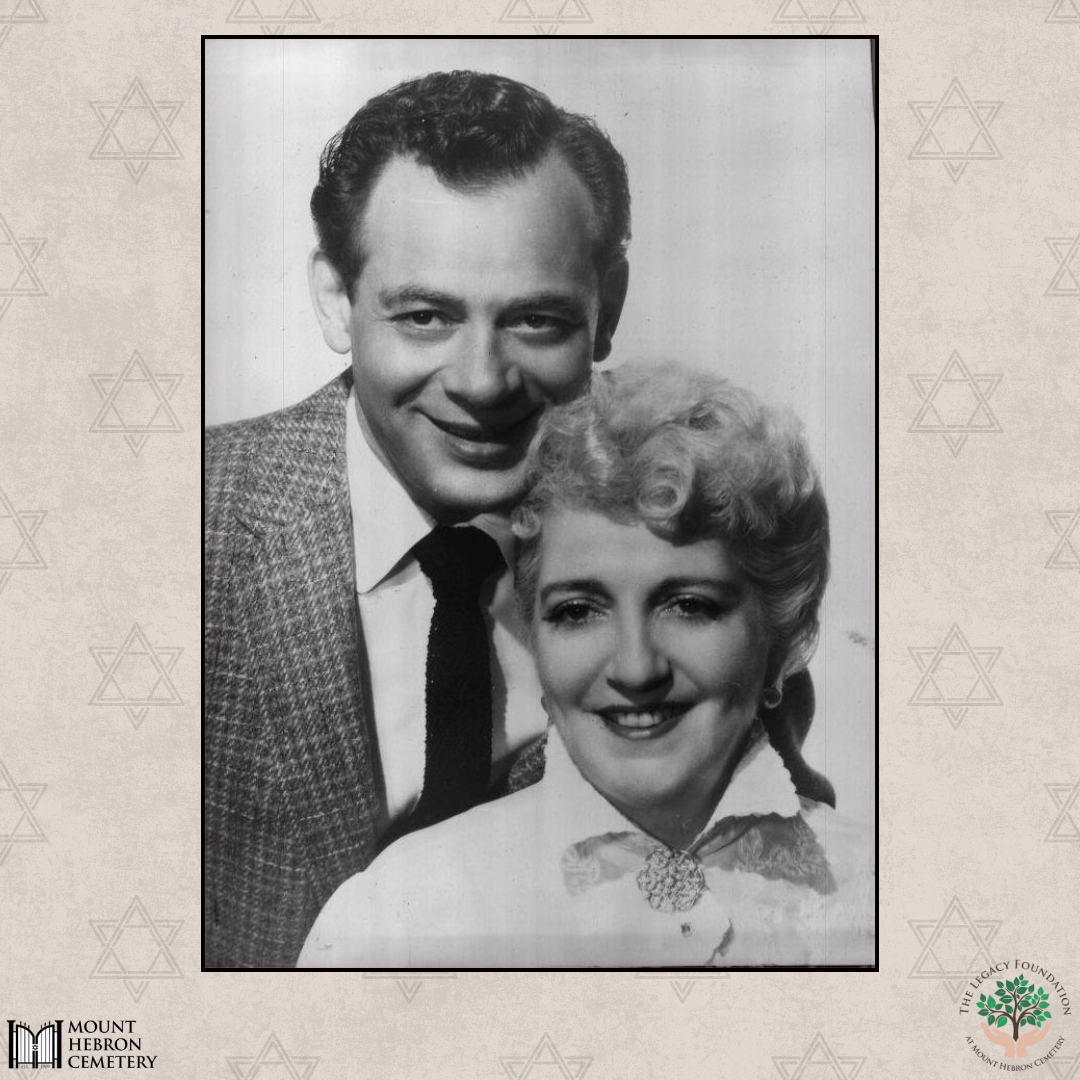
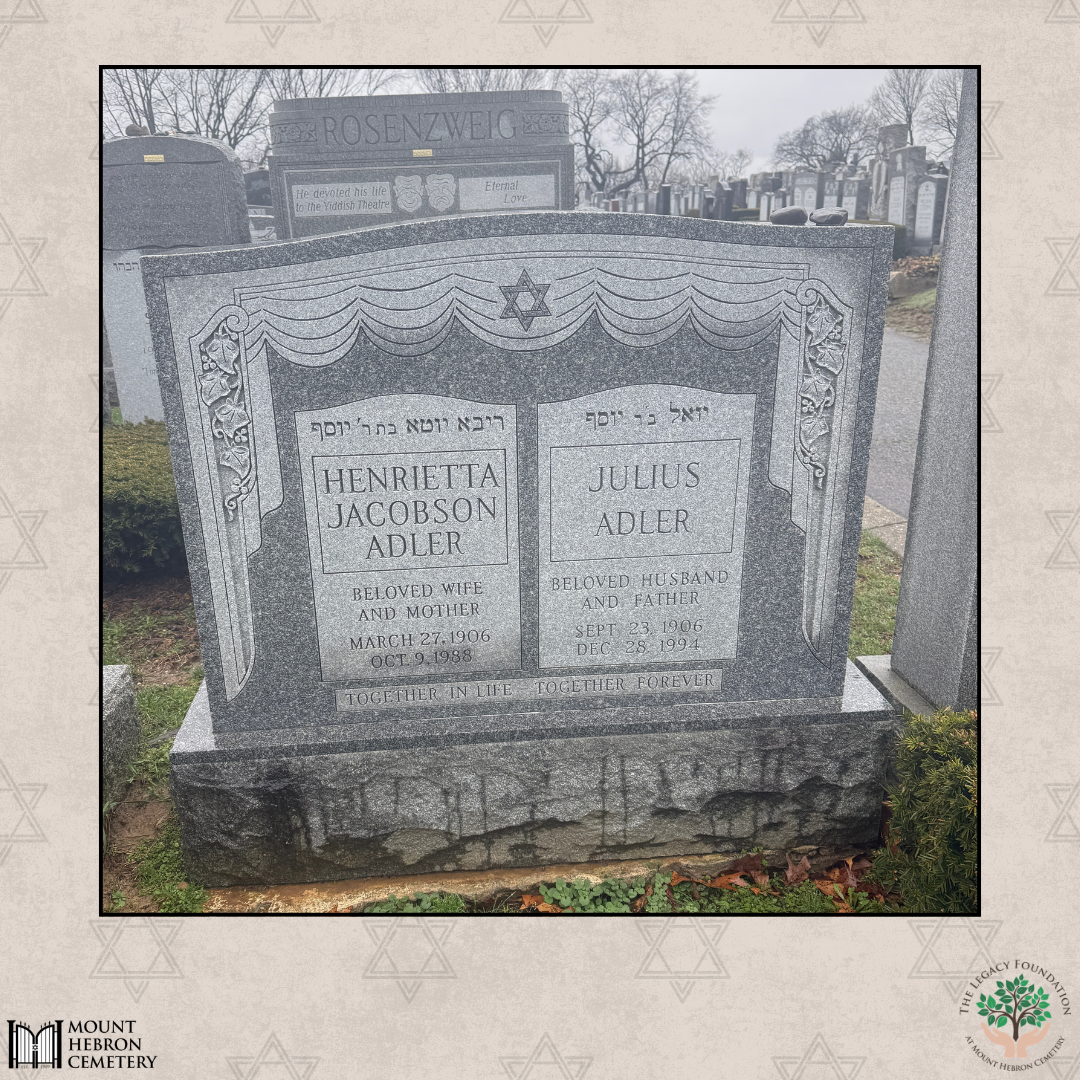
Henrietta Jacobson Adler (1906–1988) was a celebrated Yiddish actress who performed across the United States and Europe during the twentieth century. Born in Chicago to Russian immigrant Yiddish actors, she grew up surrounded by theater and performance from the very beginning of her life. She began acting at the age of three and by thirteen had already committed herself fully to a career on the stage. Over time she became known for her remarkable versatility: she was not only an actress, but also a singer, dancer, choreographer, and stage assistant who frequently helped design or build sets for productions. Her brothers were also prominent figures in the Yiddish theater world, making the Jacobson family one of several theatrical dynasties that shaped the art form in America. Later in her career, Jacobson successfully transitioned into American theater and film, appearing on Broadway and in motion pictures. She frequently performed with her husband, Julius Adler, whom she married in 1938. The couple worked together for decades and became a beloved performing team. In recognition of their contributions to theater, they received a lifetime achievement award in 1986. Henrietta Jacobson Adler died two years later, in 1988, at the age of eighty-two from heart failure.
Early Life:
Henrietta Jacobson was born in Chicago in 1906 into a family deeply connected to the world of Yiddish theater. Her parents, Bessie Jacobson and Joseph Jacobson, were both immigrants from Russia who had built careers performing in Yiddish theatrical productions. At the beginning of the twentieth century, Yiddish theater was flourishing in many American cities with large Jewish immigrant populations, particularly in Chicago and New York. Growing up in such an environment meant that Henrietta was surrounded by rehearsal rooms, stage lights, and performers from a very young age. With parents who were both actors, it seemed almost inevitable that she would eventually follow in their footsteps.
Tragedy struck early in her life, however. Henrietta’s father died when she was only several weeks old. His death left her mother, Bessie, to raise Henrietta and her two brothers—Hyman 'Hymie' Jacobson and Irving Jacobson—on her own. Despite the challenges of supporting a family as a single mother, Bessie continued her work in Yiddish theater and remained deeply involved in the performing arts community. Henrietta later described her mother as an incredibly strong and determined woman who worked tirelessly to support her children. Bessie’s perseverance ensured that Henrietta and her siblings continued to grow up surrounded by theater and artistic expression.
Henrietta’s introduction to the stage came almost as soon as she could walk. In an interview quoted in The Evening Independent, she recalled performing in her first play at the age of three alongside her mother. The play was called “The Immigrants,” and it told the story of a woman who traveled to the United States with thirteen children in search of a better life. Henrietta played one of the children in the story. In one memorable scene, her character went missing and was later discovered in an old potato sack that suddenly began to move, revealing the lost child inside. Even at such a young age, Henrietta demonstrated a natural ability to perform and captivate audiences.
By the time she reached the age of thirteen, Henrietta had already decided that acting would be her lifelong career. She threw herself into the work with enthusiasm and dedication. Unlike many performers who focused solely on acting, Henrietta became involved in many aspects of theater production. She often helped build and paint sets, assisted with costumes, and even created choreography for musical numbers. Her willingness to contribute wherever needed made her extremely valuable to theater companies. She possessed both creativity and determination, qualities that would help sustain her long career in the performing arts.
Acting Career:
Henrietta Jacobson’s career in theater continued to expand throughout the 1920s and 1930s as she performed in numerous Yiddish stage productions. During this period, Yiddish theater was an important cultural institution for Jewish communities in the United States and Europe. It provided not only entertainment but also a connection to language, traditions, and stories from Eastern European Jewish life.
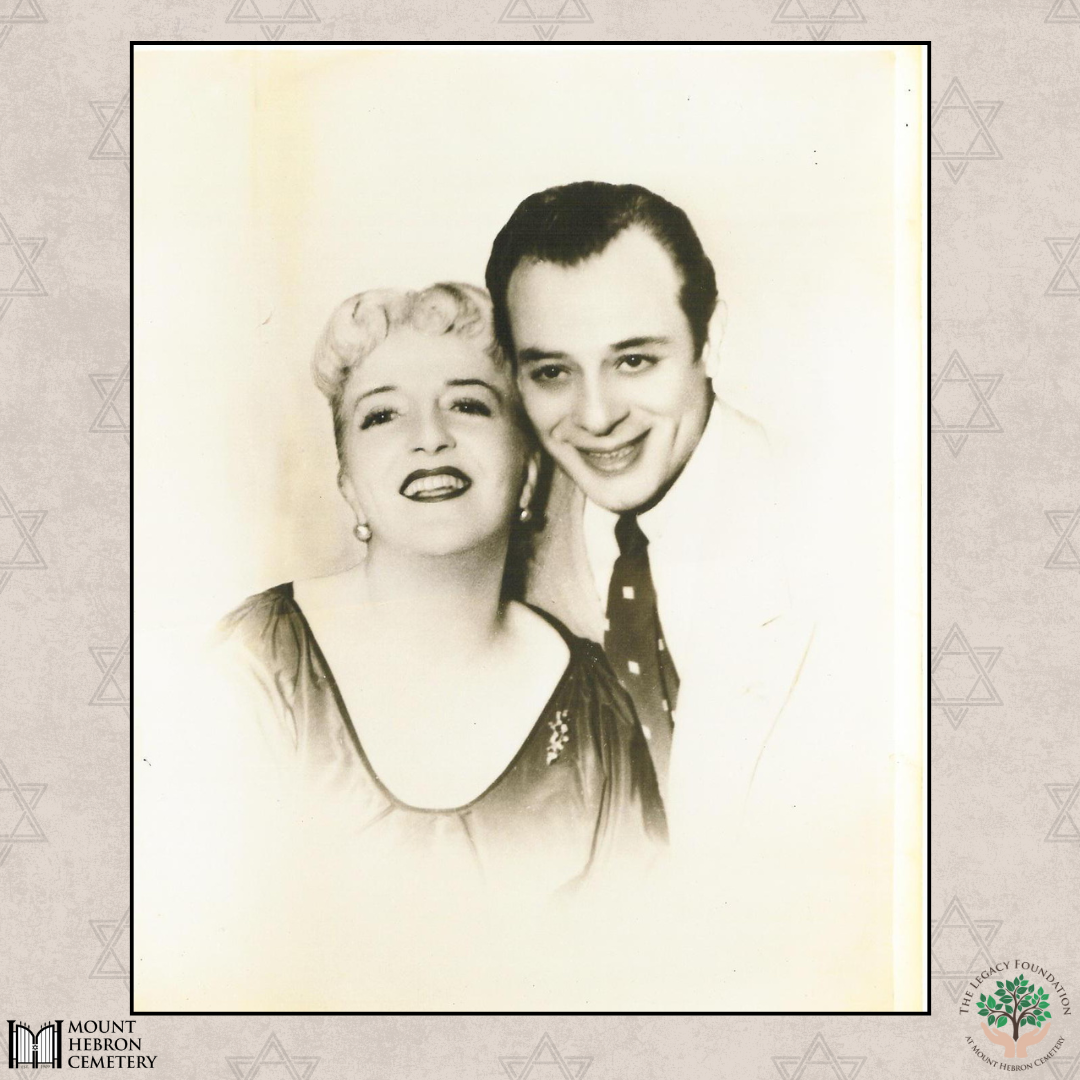
A major turning point in Henrietta’s personal and professional life came in 1935 when she met Julius Adler. The two first encountered each other while appearing in a production with Herman Yablokoff in the musical “Oh, Promise Me” at the McKinley Square Theater. Their chemistry on stage quickly became apparent, and they began performing together regularly. Over the next several years, Henrietta and Julius developed a successful partnership that audiences greatly enjoyed.
After performing together for about three years, the pair received an offer to perform in Belgium. When discussing the opportunity, Julius proposed marriage to Henrietta, suggesting that if they were married it would help them save money on travel expenses such as visas. Although the proposal may have begun due to thriftiness, Henrietta accepted, and the couple married in 1938. Their dedicated partnership would continue both on stage and in their personal lives for decades.
In 1944, Henrietta and Julius welcomed a son, Bruce Adler. Like his parents, Bruce eventually became involved in theater and performance. He appeared in Yiddish theater productions and later built a career in Broadway musicals and film voice acting, carrying forward the family’s theatrical tradition into another generation.
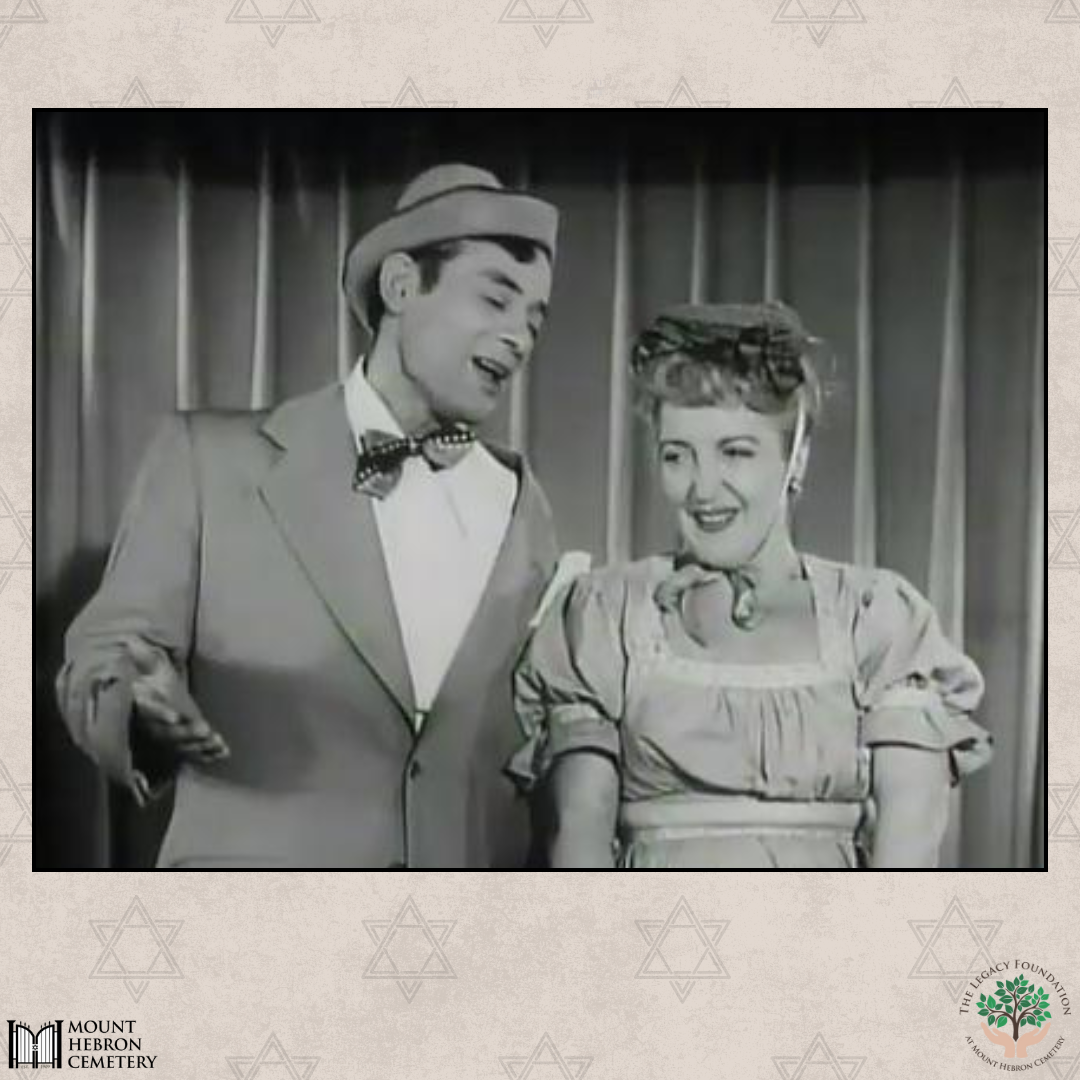
For many years Henrietta and Julius continued performing together in Yiddish plays and musicals. Among the productions they appeared in were “It Could Happen to You,” “The World of Mrs. Solomon,” “Go Fight City Hall,” and “Kosher Widow.” Their performances helped sustain Yiddish theater during a time when the art form was beginning to face challenges due to changing cultural and linguistic trends within American Jewish communities.
During the late 1940s, Henrietta also began expanding her career beyond traditional Yiddish theater. She gradually transitioned into mainstream American theater while still maintaining her cultural roots. In 1948, she and Julius starred together in “GI Bride” at the Alexander Theater in London, bringing their talents to an international stage.
Henrietta later appeared in the film Hero at Large alongside actors John Ritter and Ann Archer. She also performed on Broadway, appearing in Neil Simon’s comedy “Come Blow Your Horn.” In addition, she performed in the musical “70 Girls 70,” created by the songwriting team of John Kander and Fred Ebb.
Beyond Broadway, Henrietta and Julius toured extensively, performing in dinner theaters across the United States. They appeared together in popular productions such as “Don’t Drink the Water” and “Hello, Dolly!” These tours allowed them to reach audiences across the country and maintain their presence in American theater for many years.
Legacy:
By the later years of their lives, Henrietta Jacobson Adler and Julius Adler had become respected veterans of the theater world. Their decades of work had helped preserve and celebrate Yiddish theater traditions while also connecting them with broader American performance culture.
In April 1986, the couple received a prestigious lifetime achievement award known as the Golden Goldy. The award was presented by the Congress for Jewish Culture in recognition of their significant contributions to theater and Jewish cultural life. Their son Bruce had the honor of presenting the award to them, making the moment especially meaningful for the entire family.
Two years later, in 1988, Henrietta Jacobson Adler passed away at the age of eighty-two at Lenox Hill Hospital after suffering from heart failure. Her death marked the end of a long and remarkable career that had spanned nearly eight decades.
Although she is no longer alive, Henrietta Jacobson Adler left behind a lasting legacy. Through her performances, she helped sustain Yiddish theater during an important period of cultural change. She also demonstrated that performers from the Yiddish stage could successfully transition into mainstream American theater and film. Her work paved the way for later generations of Jewish actors seeking opportunities on Broadway and beyond.
Today, she is remembered as one of the talented performers who helped preserve a vibrant theatrical tradition while bringing it to new audiences. Through her dedication, creativity, and passion for the stage, Henrietta Jacobson Adler secured her place among the enduring figures of Yiddish theater history.
Works Cited:
Kirschenbaum, Jacob. “Henrietta Jacobson - Naye Pnis’er Oyf Unzer Bine ‘Morning Journal.’” Jacobson/Henrietta, www.museumoffamilyhistory.com/yt/lex/J/jacobson-henrietta.htm. Accessed 25 Jan. 2026.
“Henrietta Jacobson, a Yiddish Actress, 82 (Published 1988).” New York Times, www.nytimes.com/1988/10/12/obituaries/henrietta-jacobson-a-yiddish-actress-82.html. Accessed 26 Jan. 2026.
Henrietta Jacobson New York Times Archived Articles and TimesMachine - The New York Times Help Center, help.nytimes.com/205343148-Features/115014772767-New-York-Times-Archived-Articles-and-TimesMachine. Accessed 26 Jan. 2026.
Andito. “Spot the Shot: 229-231 East 12th Street - Village Preservation.” Village Preservation - Greenwich Village Society for Historic Preservation, 17 June 2020, www.villagepreservation.org/2012/08/21/spot-the-shot-229-231-east-12th-street/#:~:text=Among%20the%20performers%20that%20resided,performers%20Bessie%20and%20Joseph%20Jacobson.
“The Evening Independent.” Google News Archive Search, Google, news.google.com/newspapers?id=S_wLAAAAIBAJ&pg=2514%2C473146&dq=julius%2Badler&hl=en. Accessed 25 Jan. 2026.
“Actress Henrietta Jacobson Is Dead.” Jewish Telegraphic Agency, 13 Oct. 1988, www.jta.org/archive/actress-henrietta-jacobson-is-dead.
Oh, Promise Me, www.moyt.org/exhibitions/1/gd/oh-promise-me.htm. Accessed 25 Jan. 2026.
~Blog by Kayla Rose