Story Summary:
The Rzeszower Young Men's Society was established by immigrants hailing from Rzeszow, Poland. Initial Jewish presence dates to the 15th century. The Jews of Rzeszow established prominent trade connections among other countries. In 1880, there were about 5500 Jews in Rzeszow. This number increased to about 15,000 by the eve of World War II. On September 9, 1939, the Germans entered Rzeszow. The Jews of Rzeszow perished in the Holocaust. Their memories live on.
~ Blog by Olivia Scanlon
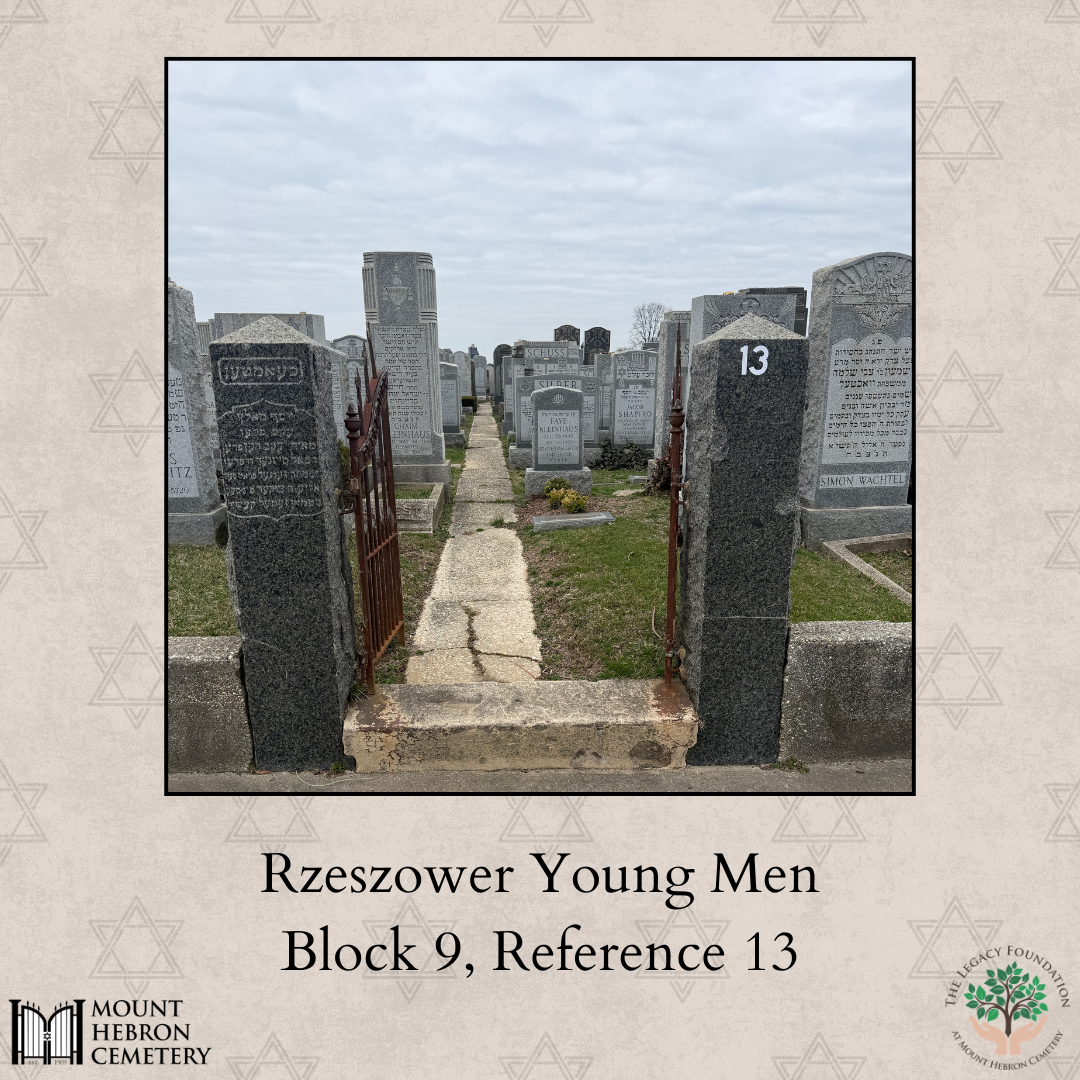
Rzeszower Young Men
The Rzeszower Young Men’s Society was established by immigrants hailing from Rzeszow, Poland. Initial Jewish presence dates to the 15th century. By the 17th century, the Jews of Rzeszow began playing a more central role in the community, participating in trade and establishing connections with other trading countries, including Hungary and the Ottoman Empire. Jews also owned shops in clothes trade goldsmithing. During this time, two synagogues were erected and a community cemetery was established.
By the 19th century, trade had expanded to include grain and factories continued to be established. In 1880, there were about 5500 Jews in Rzeszow. This number increased significantly to over 8000 Jews, and about 15,000 at the start of World War II. The 19th century also brought various Zionist organizations, including the Chovevei Zion and the Hashachar.
On September 9, 1939, the Germans entered Rzeszow, immediately conscripting the Jews to forced labor. In October, a Judenrat was formed, headed by attorney Kleinman. The Jewish police force was also established. On December 17th, 1941, a ghetto was formed, which would come to hold over 12,000 Jews from Rzeszow, Lodz, and Upper Silesia. Within the Judenrat, a small hospital was established, as well as a branch of the Jewish Social Self-Help (JSS), which supported about 2500 people and maintained two kitchens. By July 1942, there were about 22,000 people in the ghetto. That same month a mass expulsion took place across four stages, with those deemed unfit for labor taken to the Rodna Forest and shot, about 20,000 deported, and the remaining sent to nearby forced labor camps or Auschwitz. In August 1944, Rzeszow was liberated by the Soviet Army. In 1957, there were no Jews recorded in Rzeszow.
https://jguideeurope.org/en/region/poland/galicia/rzeszow/
https://www.jewishgen.org/yizkor/rzeszow/rze056.html
https://sztetl.org.pl/en/towns/r/179-rzeszow/99-history/137976-history-of-community
https://jgaliciabukovina.net/111093/community/rzheshuv
https://www.holocausthistoricalsociety.org.uk/contents/ghettosj-r/rzeszow.html
https://www.yadvashem.org/righteous/stories/markowa-and-the-rzeszow-region.html
https://www.jewishgen.org/yizkor/rzeszow/rze186.html
https://www.esjf-cemeteries.org/survey/rzeszow-old-jewish-cemetery/
https://www.jewishvirtuallibrary.org/rzeszow
Rzeszower Young Men Blog
The Rzeszower Young Men’s Society was established by immigrants hailing from Rzeszow, Poland. Initial Jewish presence dates to the 15th century. By the 17th century, the Jews of Rzeszow began playing a more central role in the community, participating in trade and establishing connections with other trading countries, including Hungary and the Ottoman Empire. Jews also owned shops in clothes trade goldsmithing. During this time, two synagogues were erected and a community cemetery was established.
By the 19th century, trade had expanded to include grain and factories continued to be established. In 1880, there were about 5500 Jews in Rzeszow. This number increased significantly to over 8000 Jews, and about 15,000 at the start of World War II. The 19th century also brought various Zionist organizations, including the Chovevei Zion and the Hashachar.
On September 9, 1939, the Germans entered Rzeszow, immediately conscripting the Jews to forced labor. In October, a Judenrat was formed, headed by attorney Kleinman. The Jewish police force was also established. On December 17th, 1941, a ghetto was formed, which would come to hold over 12,000 Jews from Rzeszow, Lodz, and Upper Silesia. Within the Judenrat, a small hospital was established, as well as a branch of the Jewish Social Self-Help (JSS), which supported about 2500 people and maintained two kitchens. By July 1942, there were about 22,000 people in the ghetto. That same month a mass expulsion took place across four stages, with those deemed unfit for labor taken to the Rodna Forest and shot, about 20,000 deported, and the remaining sent to nearby forced labor camps or Auschwitz. In August 1944, Rzeszow was liberated by the Soviet Army. In 1957, there were no Jews recorded in Rzeszow.
https://jguideeurope.org/en/region/poland/galicia/rzeszow/
https://www.jewishgen.org/yizkor/rzeszow/rze056.html
https://sztetl.org.pl/en/towns/r/179-rzeszow/99-history/137976-history-of-community
https://jgaliciabukovina.net/111093/community/rzheshuv
https://www.holocausthistoricalsociety.org.uk/contents/ghettosj-r/rzeszow.html
https://www.yadvashem.org/righteous/stories/markowa-and-the-rzeszow-region.html
https://www.jewishgen.org/yizkor/rzeszow/rze186.html
https://www.esjf-cemeteries.org/survey/rzeszow-old-jewish-cemetery/
https://www.jewishvirtuallibrary.org/rzeszow
~Blog by Olivia Scanlon