Story Summary:
The First Krystynopoler Sick Benevolent Association, also known as Brith Isaac, was a mutual aid society formed in New York by Jewish immigrants from Krystynopol, a town now called Sheptytskyi in western Ukraine. Founded by people seeking safety and opportunity, the society provided support during illness, organized burials, and preserved cultural ties among members from their shared hometown. Krystynopol had a thriving Jewish community from the 18th century until 1942, when most of its Jewish residents were deported to the Belzec extermination camp. Although the town's Jewish life was destroyed, its memory lives on through descendants, family names like Kristinopoler, and society burial plots at cemeteries such as Mount Hebron. The story of this society reflects the larger experience of Jewish immigrants who built new lives while honoring the communities they left behind.~Blog by Deirdre Mooney Poulos
The Legacy of the First Krystynopoler Sick Benevolent Association
In the early decades of the 20th century, Jewish immigrants from Eastern Europe arrived in New York City in growing numbers, escaping political unrest, poverty, and antisemitic violence. Among them were families from Krystynopol, a town once located in the Austro-Hungarian province of Galicia, now called Sheptytskyi in western Ukraine. These immigrants brought with them a strong sense of communal responsibility rooted in centuries of Jewish life in Eastern Europe. One of the most enduring outcomes of this ethos was the formation of mutual aid societies known as landsmanshaftn, named after their members’ towns of origin. The First Krystynopoler Sick Benevolent Association, also known as Brith Isaac, was one such organization, founded by immigrants from Krystynopol to support one another in a new and unfamiliar world.
Krystynopol had a vibrant Jewish community dating back to 1740. Jews in the town played key roles in commerce, education, and religious life, and the town was known for its rabbinic scholarship and Hasidic presence. Surnames such as Kristinopoler or Kristianpoller are directly linked to the town’s name and appear in rabbinical dynasties and family trees. These names anchored descendants to their ancestral town and the spiritual life that once thrived there. Before World War II, Jews made up a substantial portion of Krystynopol’s population. But in 1942, the Jewish community was largely destroyed when residents were deported to the Belzec extermination camp as part of the Nazi campaign to annihilate Eastern European Jewry.
For those who emigrated to the United States before the war, New York City offered opportunities as well as challenges. The Krystynopoler immigrants, like many others, created a mutual aid society to help each other navigate illness, unemployment, and death. The First Krystynopoler Sick Benevolent Association provided sick benefits, burial arrangements, and a sense of community. It held meetings, organized religious observances, and ensured members would not face hardship alone. Societies like Brith Isaac were not only practical institutions but also cultural lifelines, allowing immigrants to maintain connections to their past while adapting to American life.
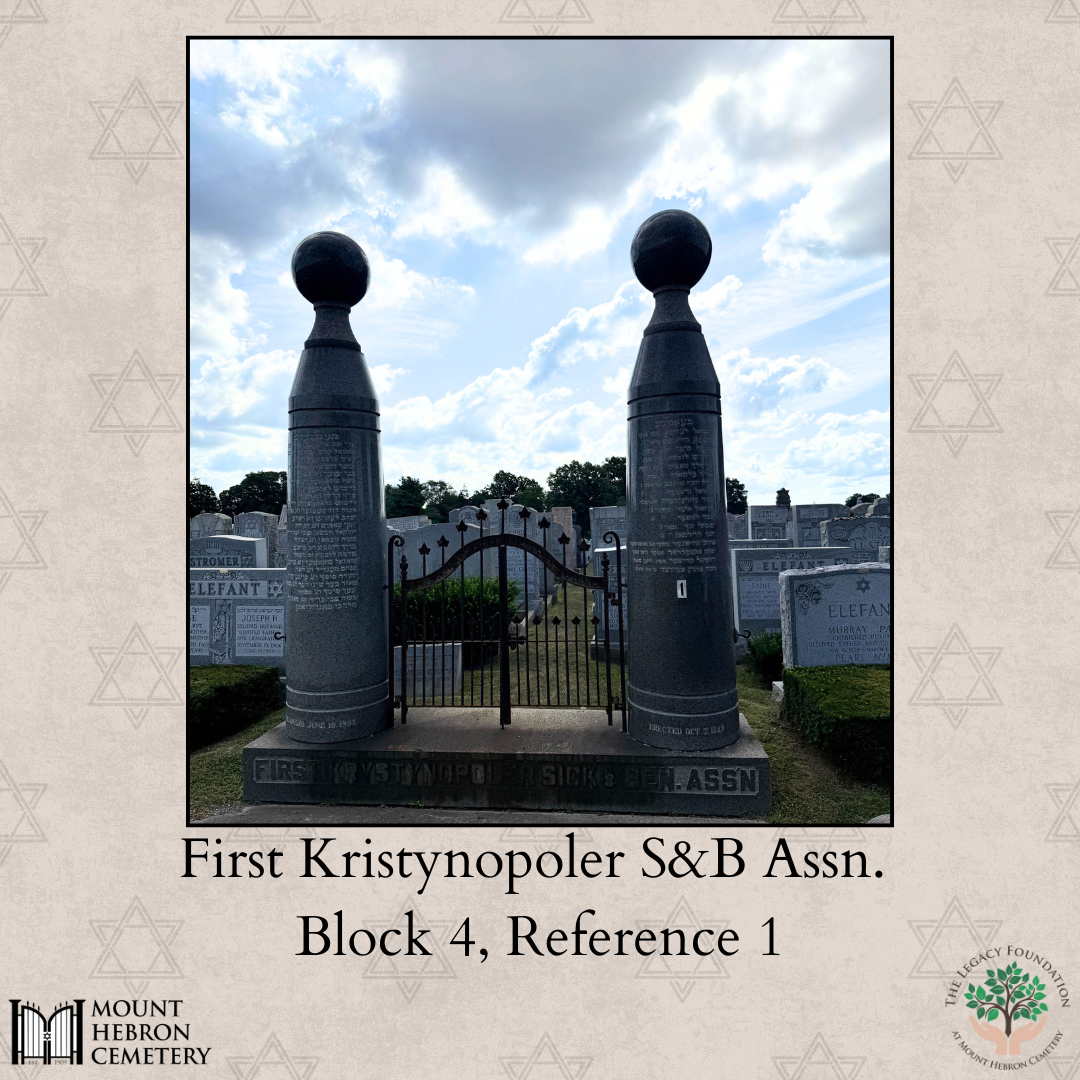
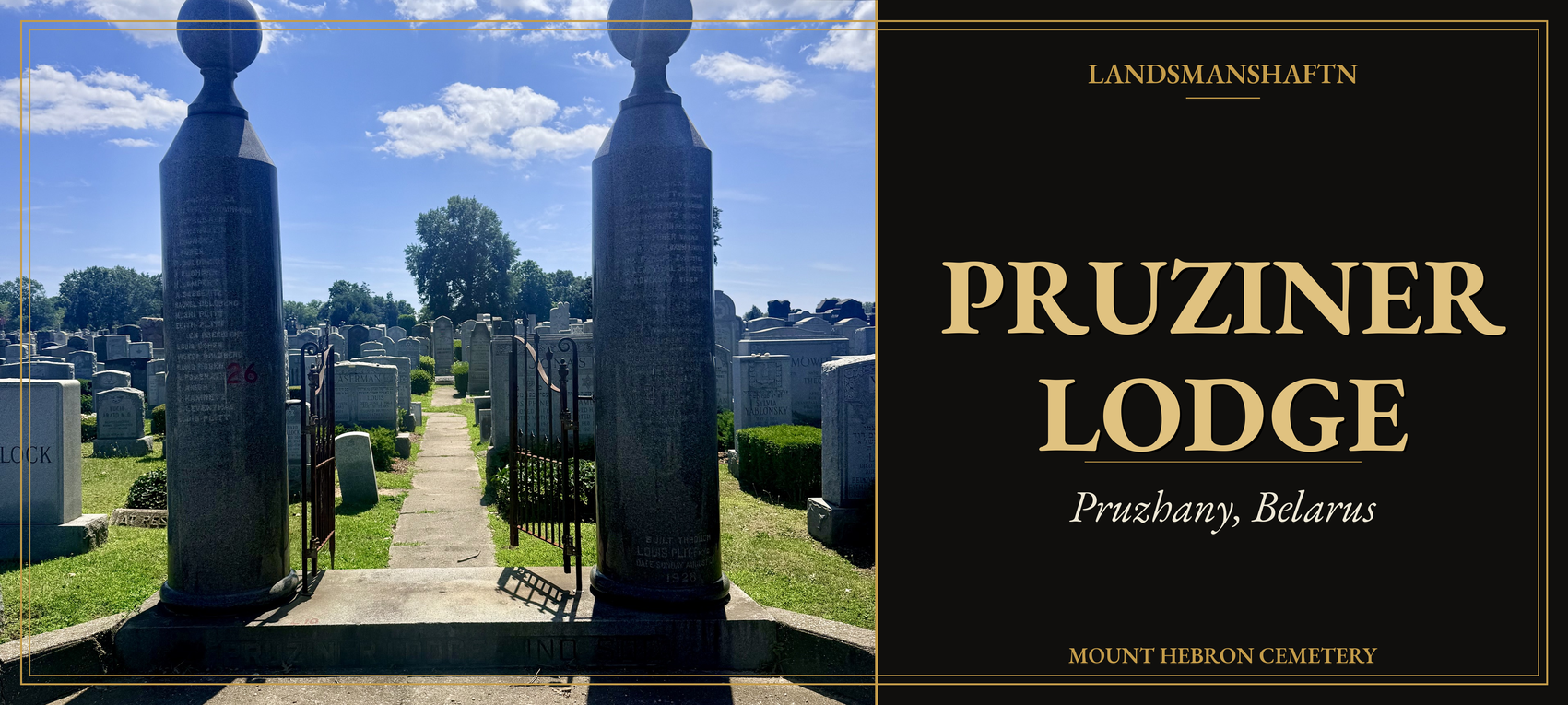
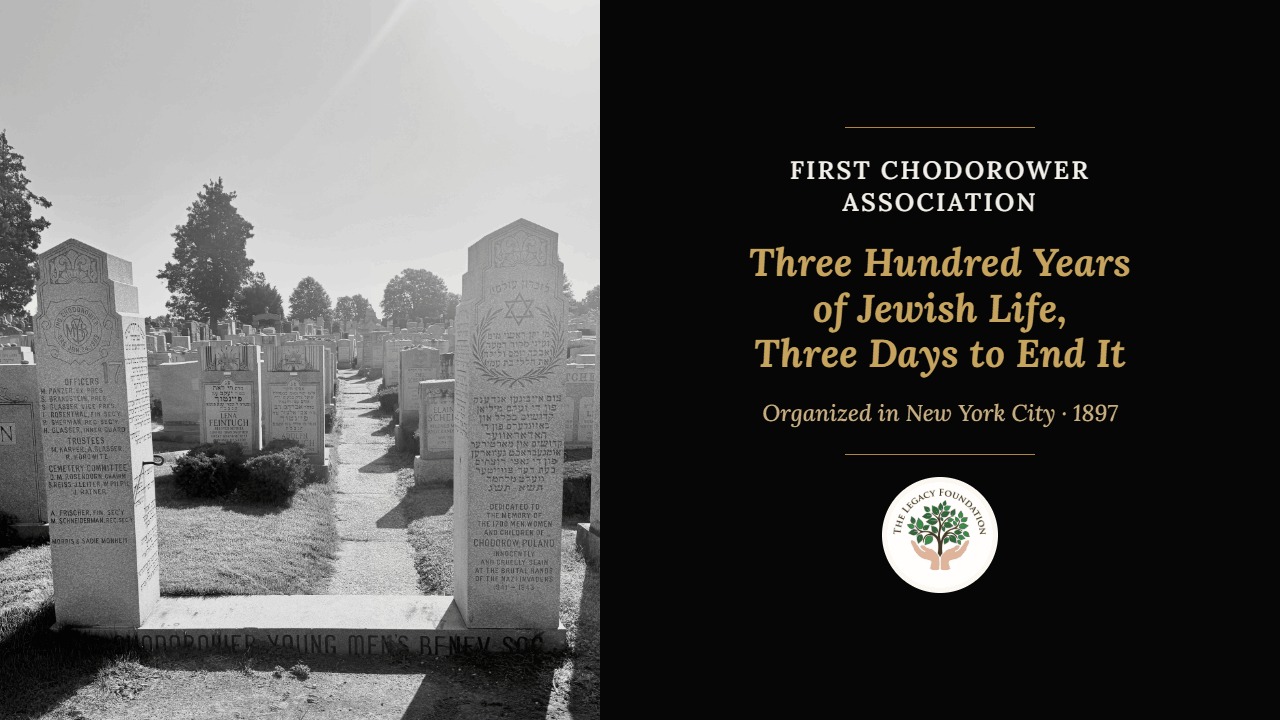
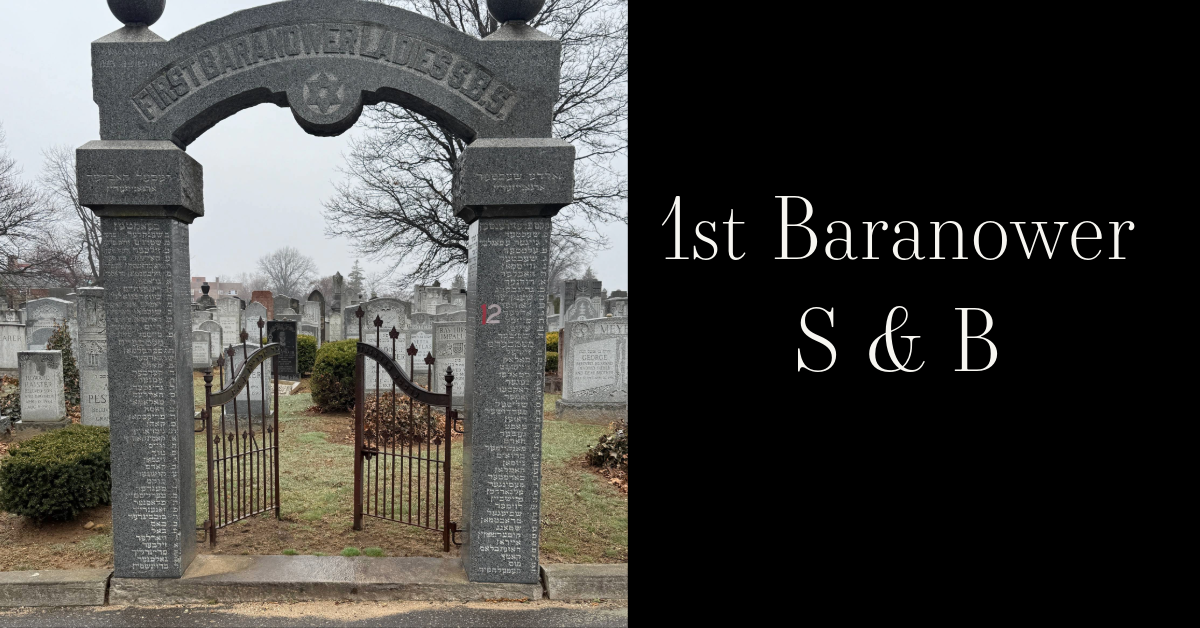
Physical reminders of the First Krystynopoler Society still exist today. In cemeteries like Mount Hebron in Queens, the society's burial plot is marked by a distinctive gate bearing the town's name and Hebrew inscriptions. These structures stand as silent testimonies to the immigrants’ dedication to preserving their identity, even in death. Though many landsmanshaftn have faded or dissolved, their impact endures in these resting places and in the family histories of their members. The story of the First Krystynopoler Sick Benevolent Association reflects a broader pattern of Jewish immigrant resilience, remembrance, and community building. It also keeps alive the memory of Krystynopol—a once-thriving Jewish town erased by war but remembered in stone and story by those who carried its legacy across the sea.
~Blog by Deirdre Mooney Poulos
Work Cited:
JewishGen – Communities Database
https://www.jewishgen.org/Communities/
JewishGen – Landsmanshaftn Database
https://www.jewishgen.org/databases/USA/landsmanshaftn.htm
YIVO Encyclopedia of Jews in Eastern Europe
https://yivoencyclopedia.org
United States Holocaust Memorial Museum – Krystynopol
https://encyclopedia.ushmm.org
Jewish Heritage Europe
https://jewish-heritage-europe.eu
Center for Jewish History – Genealogy Resources
https://www.cjh.org
New York Public Library – Landsmanshaftn Collection
https://www.nypl.org
Jewish Virtual Library – Galicia
https://www.jewishvirtuallibrary.org/galicia
Find A Grave – Mount Hebron Cemetery
https://www.findagrave.com/cemetery/65403/mount-hebron-cemetery