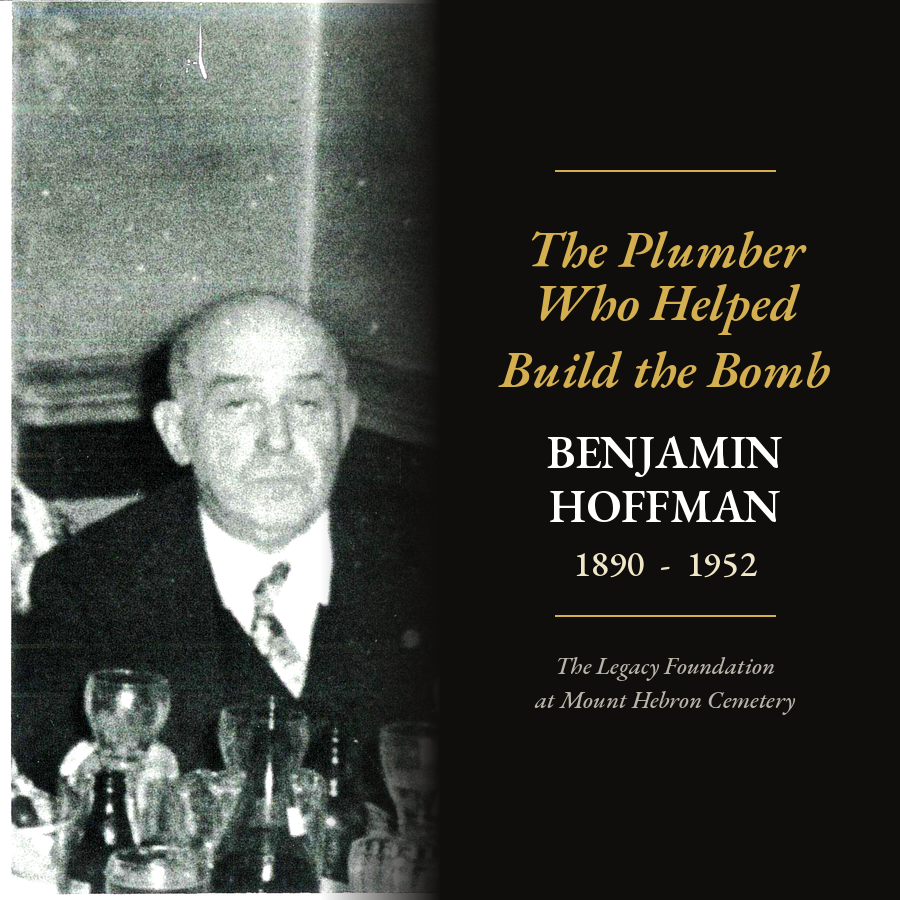
The Plumber Who Helped Build the Bomb: Benjamin Hoffman
He was eleven years old when he saw New York for the first time.
The ship was called the Zeeland. It had sailed from Antwerp in the summer of 1901, one of hundreds of steamers that year carrying families out of the old empires of Europe and into whatever came next. The crossing took about ten days. For a child in steerage it meant crowded berths, salt air, seasickness, and then, one morning, a harbor. Somewhere on that ship was a boy from Galicia, a province of Austria-Hungary that no longer exists on any map. His name was Benjamin Hoffman.
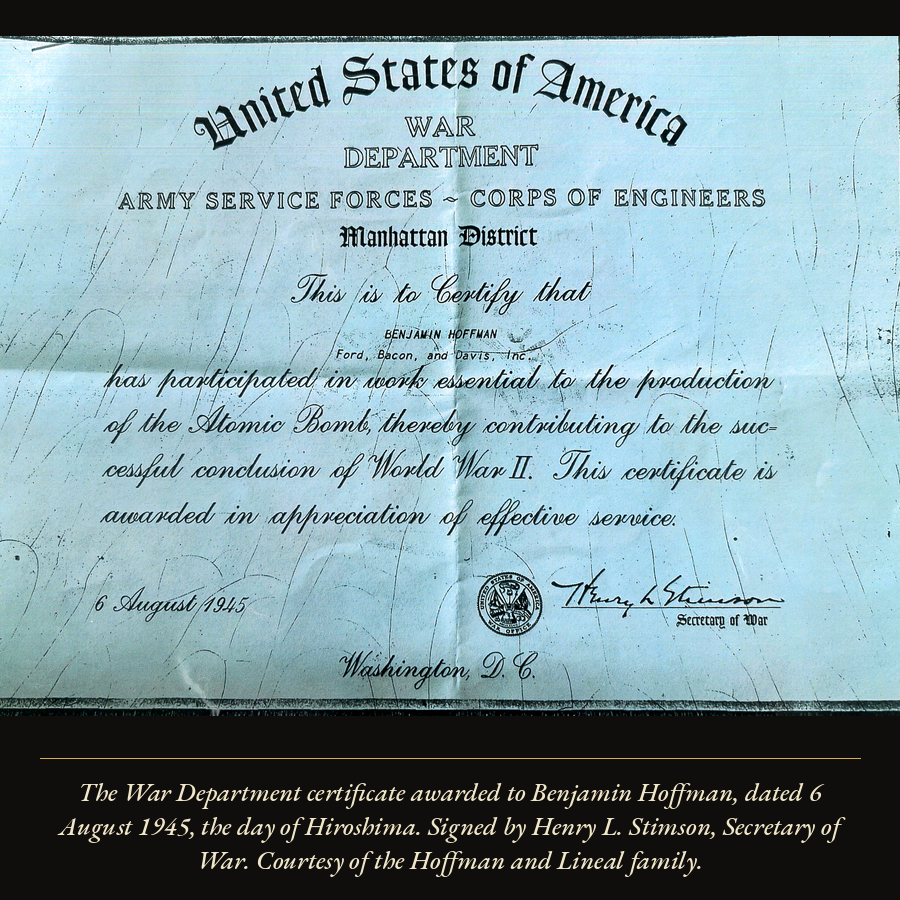
Forty-four years later, the Secretary of War of the United States signed a certificate with that same name on it. It thanked Benjamin Hoffman for work essential to the production of the atomic bomb.
This is the story of what happened in between.
Galicia was the poorest corner of the Austro-Hungarian Empire, a stretch of land that today straddles southeastern Poland and western Ukraine. It held one of the largest Jewish populations in Europe, and at the turn of the century its people were leaving in enormous numbers. They left behind poverty, conscription, and the long shadow of restriction. They boarded trains to port cities like Antwerp and Hamburg, and they sailed west. Between 1880 and 1914, some two million Jews from Eastern Europe made this journey. Benjamin was one of them, born March 3, 1890, and carried across the ocean before his twelfth birthday.
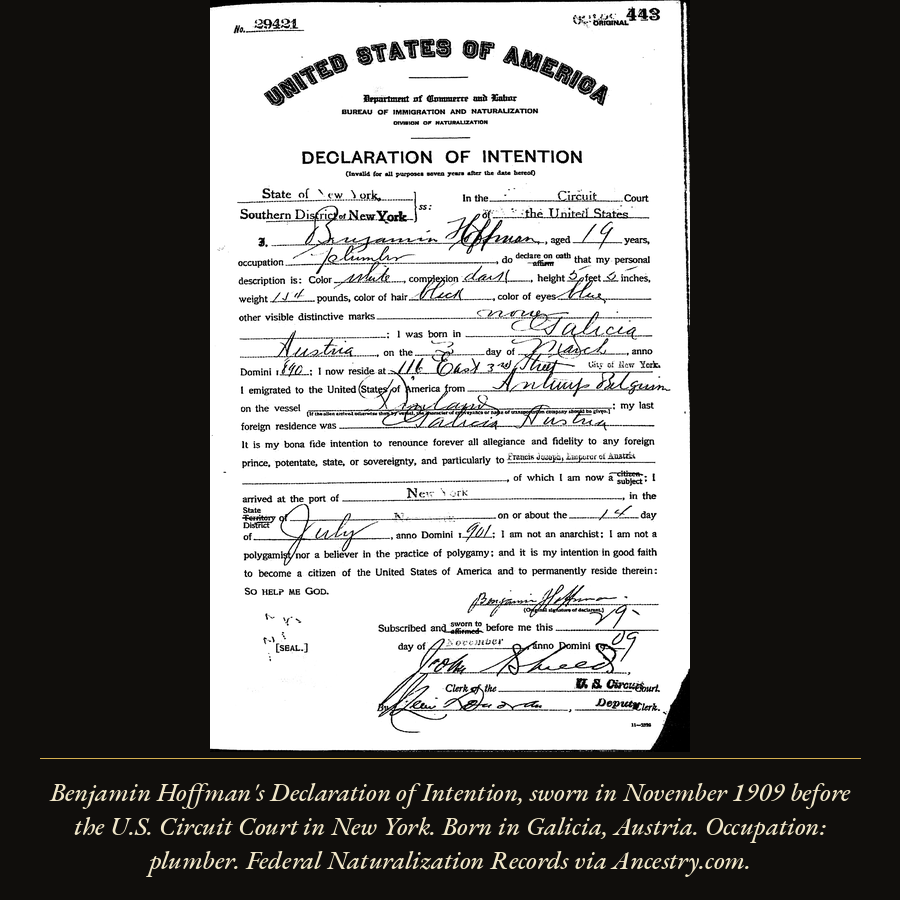
He landed in a city that ran on immigrant labor, and he went to work. By 1909 he was nineteen years old, living at 116 East 3rd Street on the Lower East Side, in a neighborhood so dense it was said to be the most crowded place on earth. He worked as a plumber. That November, he walked into the Circuit Court for the Southern District of New York and swore out his Declaration of Intention to become an American citizen.
The document survives, and it rewards a slow reading. In careful clerk's script, it records that Benjamin Hoffman renounces forever his allegiance to any foreign prince, potentate, state, or sovereignty, and particularly to Francis Joseph, Emperor of Austria. It records that he stands five feet five inches tall and weighs 134 pounds. Black hair. Blue eyes. No distinctive marks. Occupation: plumber. At the bottom, in his own hand, is his signature, and beneath it the oath. So help me God.
It is easy to read past a word like that. Plumber. But hold it for a moment. This was a teenager supporting himself with his hands, in a trade that kept a growing city alive. Most immigrant stories of that era end there, in honest work, in family, in quiet. There is nothing small about such a life. But Benjamin's story did not end there.
At some point, the plumber decided to become an engineer.
He earned his Bachelor of Science degree at Cooper Union, the storied institution founded in 1859 by Peter Cooper, a self-taught industrialist who never forgot what it meant to be poor. Cooper built his school on a radical idea: that education should be free, and open to the working class. Classes were held at night for exactly this reason. The lecture halls filled after dark with tradesmen, clerks, seamstresses, and immigrants who had worked a full day and came anyway, night after night, year after year. Abraham Lincoln gave the speech that made him president in Cooper Union's Great Hall. Thomas Edison studied there. So did generations of young men and women whose names history never recorded, who simply wanted more.
A plumber from East 3rd Street walking out with an engineering degree is Cooper Union's whole mission come to life.
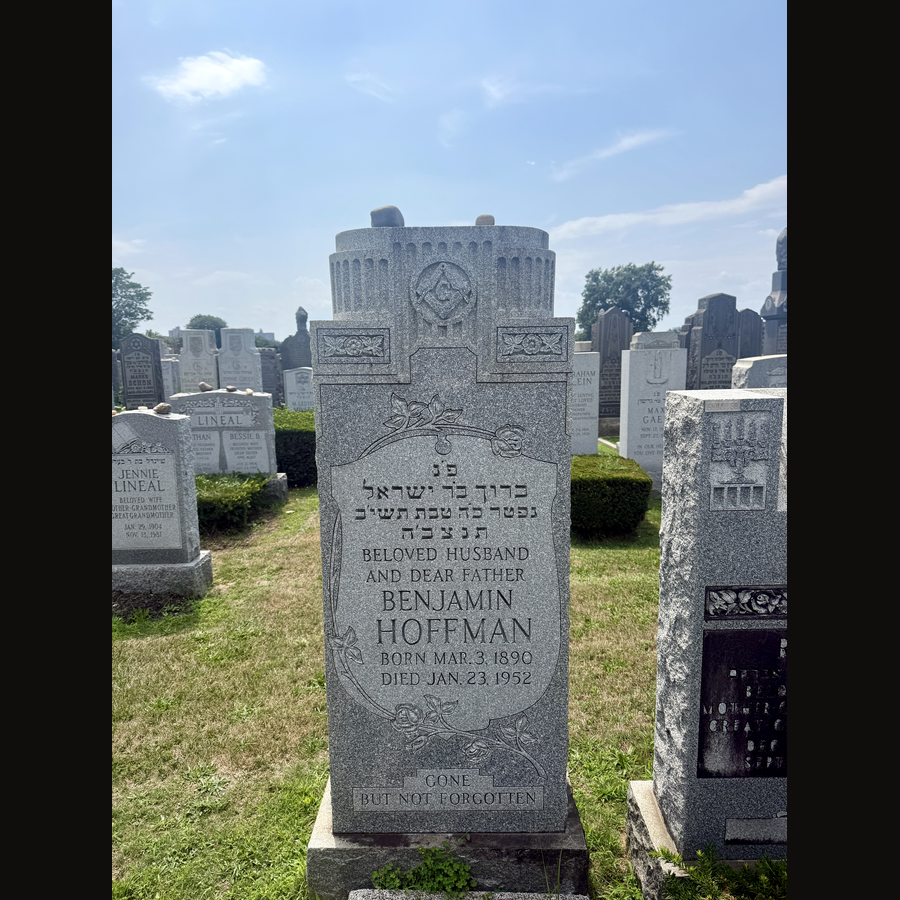
Benjamin married Fannie Lineal, joining a family whose plot at Mount Hebron would one day be his own resting place. The family ran a plumbing business in New York City, and Benjamin built his career and his life here, in the boroughs, through the First World War, through the twenties, through the Depression. By all accounts of those who knew him, he was brilliant, kind, and generous. He might have finished his working years that way, respected and comfortable, an American success story of the ordinary kind.
Then the world caught fire.
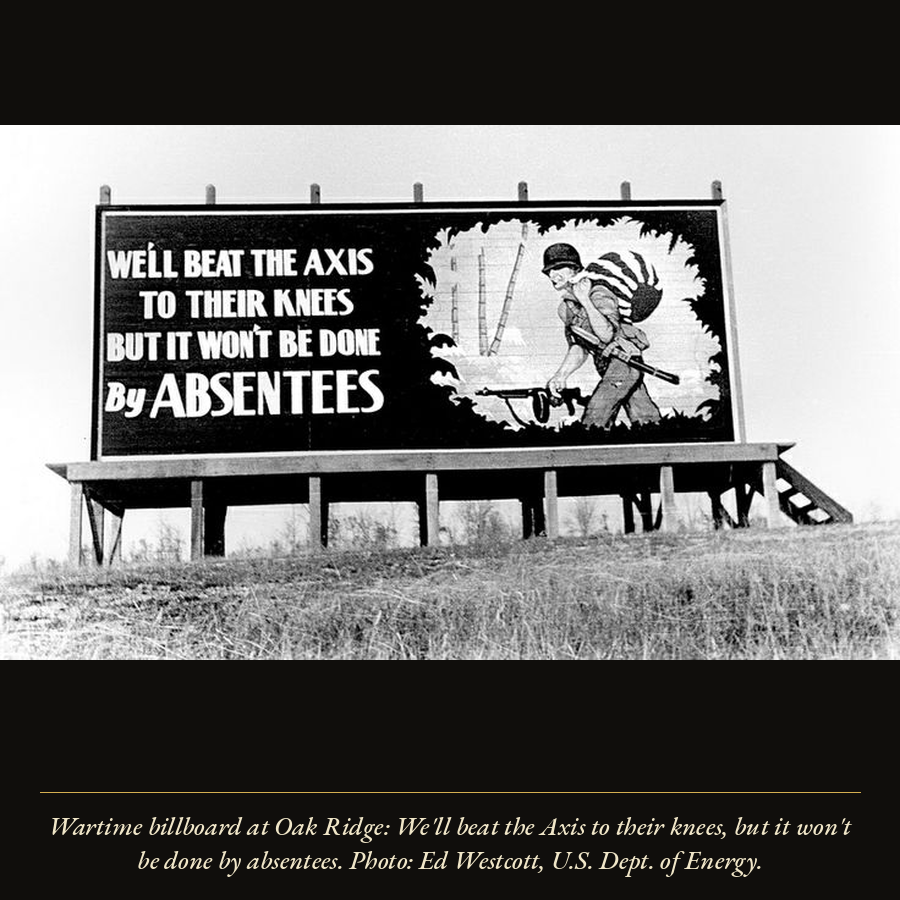
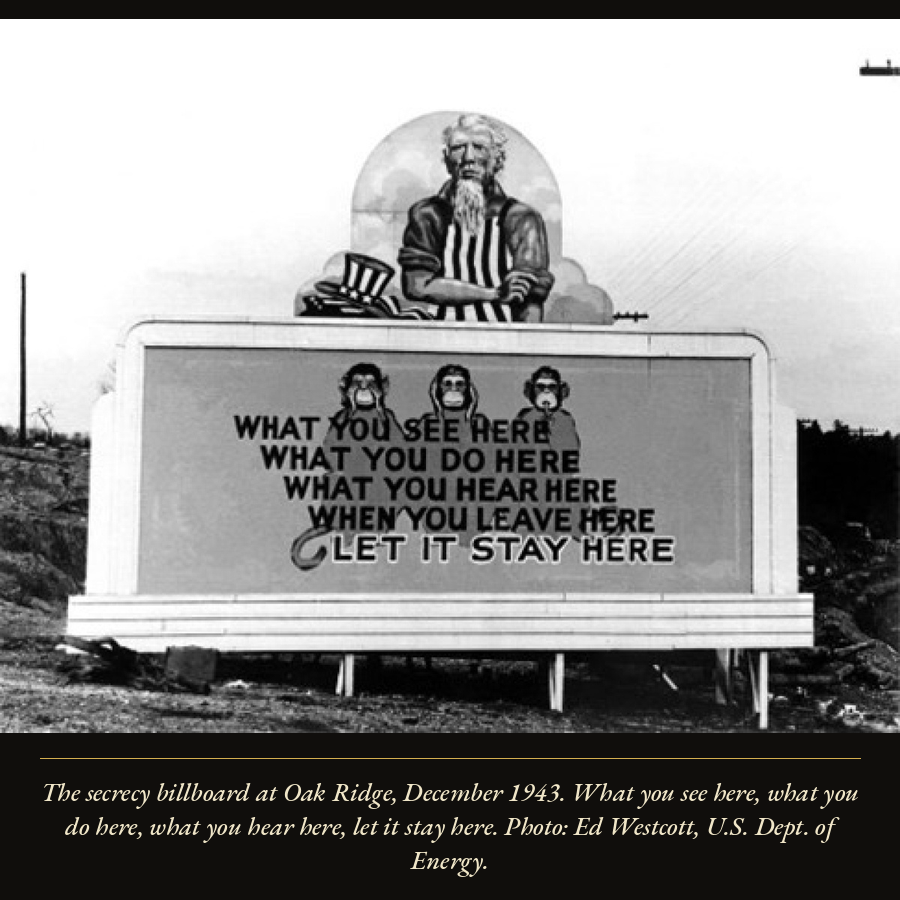
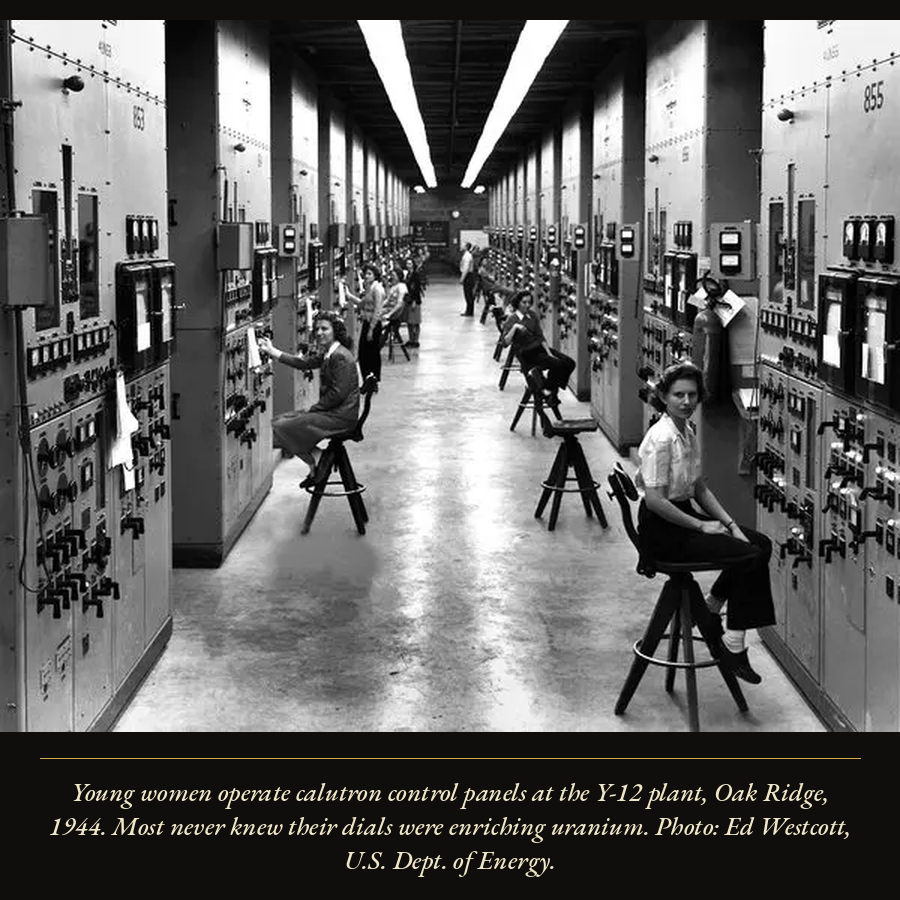
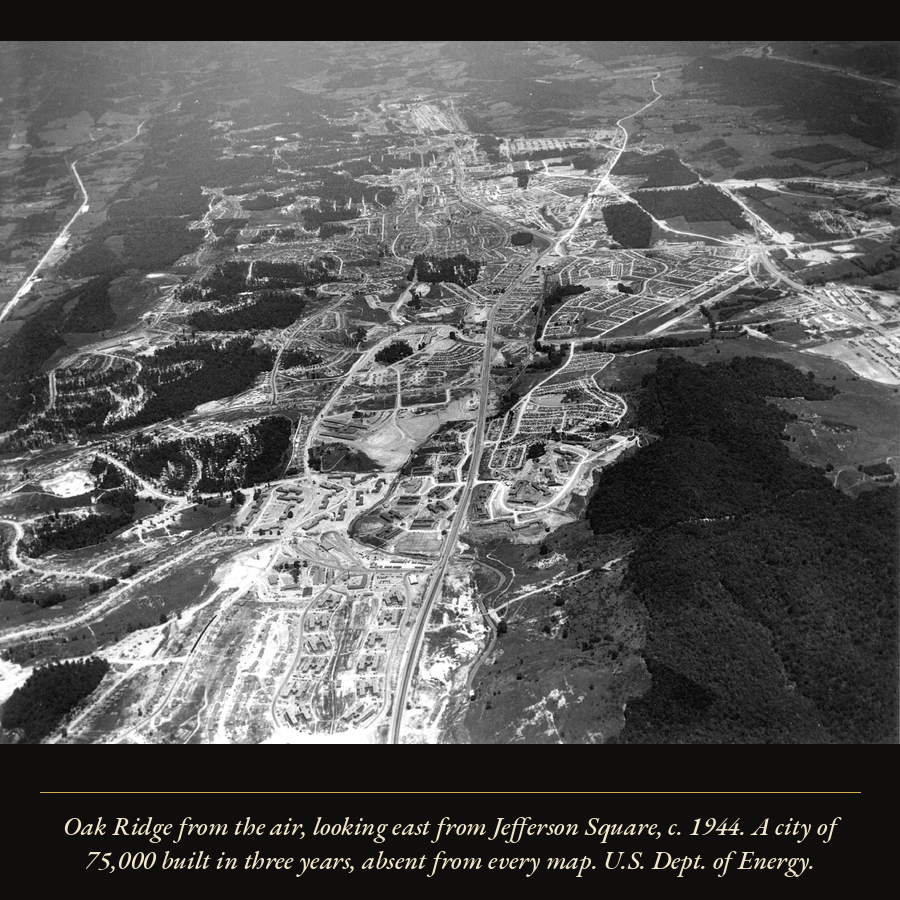
In 1942, the United States government began quietly buying up farmland in the hills of eastern Tennessee. Families who had worked that land for generations were given weeks to leave. Within three years, a city of 75,000 people stood where the farms had been. It had schools, churches, movie theaters, and mud everywhere. It was the fifth largest city in Tennessee, and it appeared on no map. Its residents could not tell their families where they lived or what they did. Billboards inside the fences reminded them daily: what you see here, what you do here, what you hear here, let it stay here.
The place was called Oak Ridge. Its purpose was the Manhattan Project.
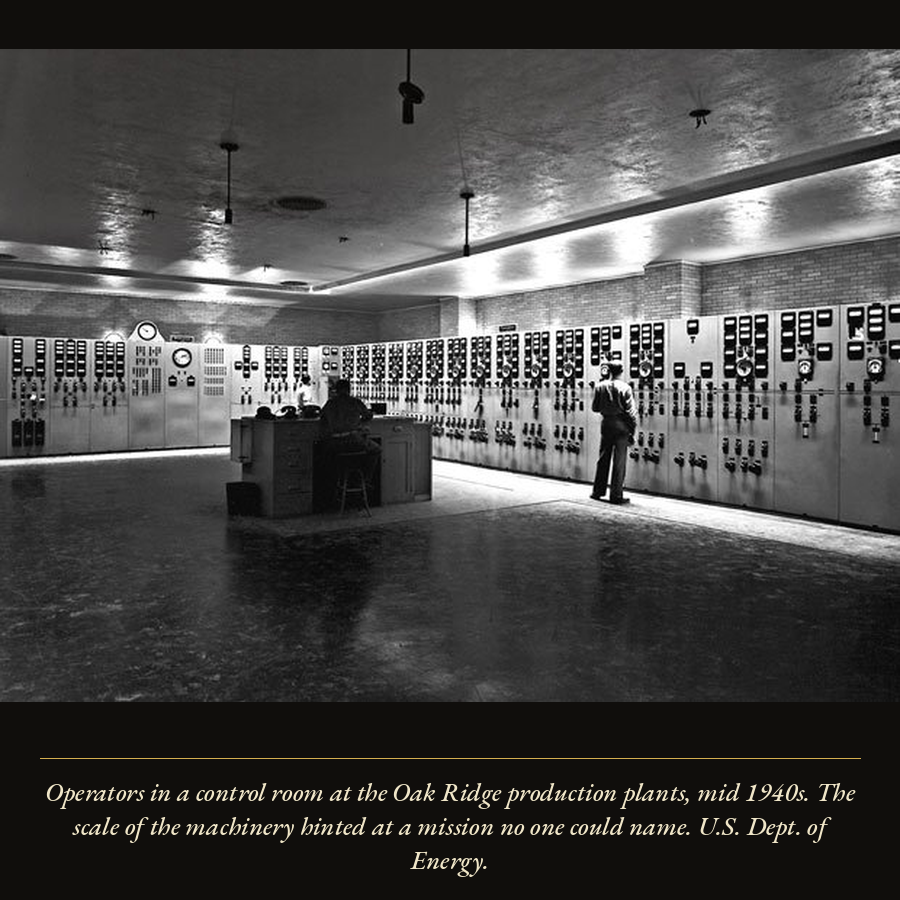
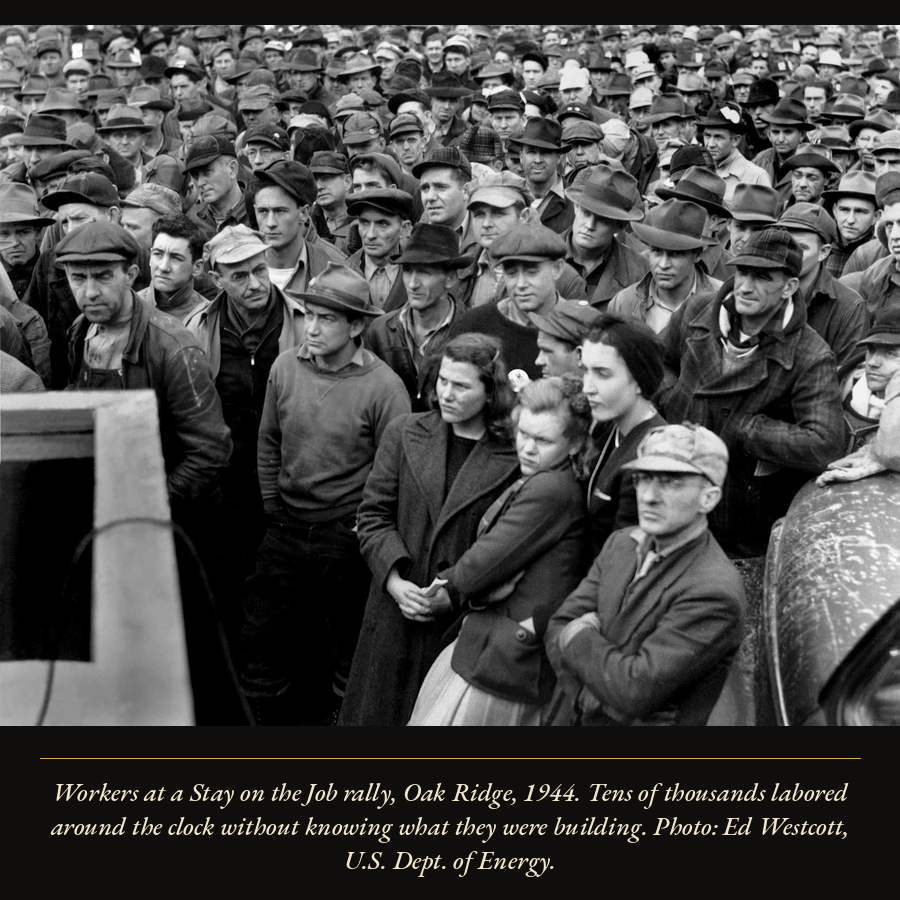
Benjamin Hoffman was recruited to work there. He was in his fifties by then, an engineer with decades of experience, employed through Ford, Bacon and Davis, Inc., a New York engineering firm brought in as a Manhattan Project contractor. He spent several years at Oak Ridge, one of tens of thousands of workers laboring behind fences and badge checkpoints, under a secrecy so complete that most of them had no idea what they were building. The work was compartmentalized by design. A worker knew his own task and nothing more. They only knew it mattered, because everything about the place told them so: the urgency, the guards, the scale, the silence.
Think of what that asked of a man like Benjamin. He had spent forty years building a life in New York. Now, past fifty, he left it for a raw city in the Tennessee hills, for work he could not name, answering to a wife and family with questions he was forbidden to answer.
The certificate in the Hoffman family's possession is printed on pale blue paper, ornate and formal. It reads: United States of America. War Department. Army Service Forces, Corps of Engineers. Manhattan District. This is to certify that Benjamin Hoffman has participated in work essential to the production of the Atomic Bomb, thereby contributing to the successful conclusion of World War II. This certificate is awarded in appreciation of effective service. It is signed by Henry L. Stimson, Secretary of War.
Look at the date. August 6, 1945.
That is the day the bomb fell on Hiroshima. That is the day the secret of Oak Ridge finally had a name, the day workers in Tennessee learned from the radio, along with the rest of the world, what their years of silent labor had built. On the very day the world changed, the War Department certified the work of the boy from Galicia. The war in the Pacific ended nine days later.
Think about the arc of this one life. A child flees the empire of Franz Joseph and crosses an ocean in steerage. He becomes a teenage plumber on the Lower East Side. He studies in Peter Cooper's free school and becomes an engineer. And when the country that took him in faces the darkest war in human history, when it needs builders for a project so secret it officially did not exist, he answers, and helps end it.
Benjamin Hoffman rests today at Mount Hebron Cemetery, in the Lineal family plot, among the hundreds of thousands of stories that make this ground sacred. Every stone here holds a life. Some of those lives were quiet. Some changed the world. His did both.
He renounced an emperor. He served a republic. He is home now, in Queens.
~Blog by Deirdre Mooney Poulos & The Lineal Family
Sources:
Declaration of Intention No. 29421, Benjamin Hoffman, U.S. Circuit Court, Southern District of New York, November 1909. Federal Naturalization Records, 1794 to 1943, via Ancestry.com. Courtesy of the Hoffman and Lineal family.
Certificate of the War Department, Army Service Forces, Corps of Engineers, Manhattan District, awarded to Benjamin Hoffman, August 6, 1945, signed by Henry L. Stimson, Secretary of War. Courtesy of the Hoffman and Lineal family.
Family recollections of Lorraine J. Lineal Barry, niece of Benjamin Hoffman, correspondence with The Legacy Foundation at Mount Hebron Cemetery, 2026.
Manhattan Project National Historical Park, National Park Service, on the history of Oak Ridge and the Clinton Engineer Works, nps.gov/mapr.
U.S. Department of Energy, Office of History and Heritage Resources, The Manhattan Project: An Interactive History, on wartime secrecy and the Oak Ridge workforce.
The Cooper Union for the Advancement of Science and Art, institutional history, cooper.edu.