Remembering Yazlovets:
The Story Behind the Jazlowitzer Sick & Benevolent Association
Yazlovets was once a small but thriving town in the historic region of Podolia, located in what was then southeastern Poland and is now western Ukraine. Before the Second World War, Jewish families made up nearly half of the town’s population. They lived side by side with their Polish and Ukrainian neighbors, working as tailors, merchants, bakers, and teachers.
The Jewish community was built around its synagogue, study halls, and marketplace. On the Sabbath, families gathered for prayer and song. Life followed the rhythm of the Jewish calendar, filled with traditions of learning, charity, and celebration. The town was known for its rabbis and scholars who maintained strong ties to Hasidic and rabbinical centers across Podolia and Galicia.
Although Yazlovets was small, it was part of a vibrant network of Jewish communities that spanned the region. These towns shared family ties, trade connections, and a deep sense of cultural and spiritual belonging.
At the turn of the twentieth century, this stability began to unravel. Waves of violence swept through Podolia as wars and revolutions broke apart empires. In 1919, during the Polish–Ukrainian conflict, pogroms struck Jewish neighborhoods throughout the area. In Yazlovets, homes were looted, synagogues were burned, and many residents were killed or fled.
For those who survived, rebuilding was slow. Poverty deepened, and antisemitism continued under changing governments. Yet Jewish life persisted. By the 1930s, Yazlovets again had an active synagogue, Hebrew and Yiddish schools, and charitable societies. Youth groups prepared for emigration to Palestine, and small businesses tried to recover.
When Nazi Germany invaded the Soviet Union in 1941, Yazlovets came under German control. The Jewish residents were forced to wear identifying armbands and perform forced labor. In 1942, the Nazis and their collaborators began rounding up the Jews of Yazlovets and neighboring towns. Some were murdered locally; others were sent to ghettos in Buchach or transported to extermination camps such as Belzec.
Very few survived. The town’s centuries-old Jewish presence was erased in just a few months. After the war, the synagogue was gone, homes were taken over, and the cemetery fell into ruin. What had been a close-knit Jewish world vanished from the landscape, leaving only fragments of memory and stone.
Long before the Holocaust, families from Yazlovets had already begun to leave. Between the 1880s and 1920s, many Jewish residents sought safety and opportunity abroad, driven by poverty, pogroms, and political instability. They sailed to New York and other American cities, bringing with them their traditions and a longing to preserve their communal ties.
To support each other in a new land, they formed landsmanshaftn — hometown societies that offered financial aid, arranged burials, and helped new immigrants find their footing. One of these groups was the Jazlowitzer Sick & Benevolent Association, founded by immigrants from Yazlovets in the early twentieth century.
The Jazlowitzer Sick & Benevolent Association was more than just a mutual aid group. It was a living bridge between the old world and the new. Members paid modest dues to fund medical care, emergency loans, and funeral expenses. But the society also offered something deeper — a sense of identity and belonging for people far from home.
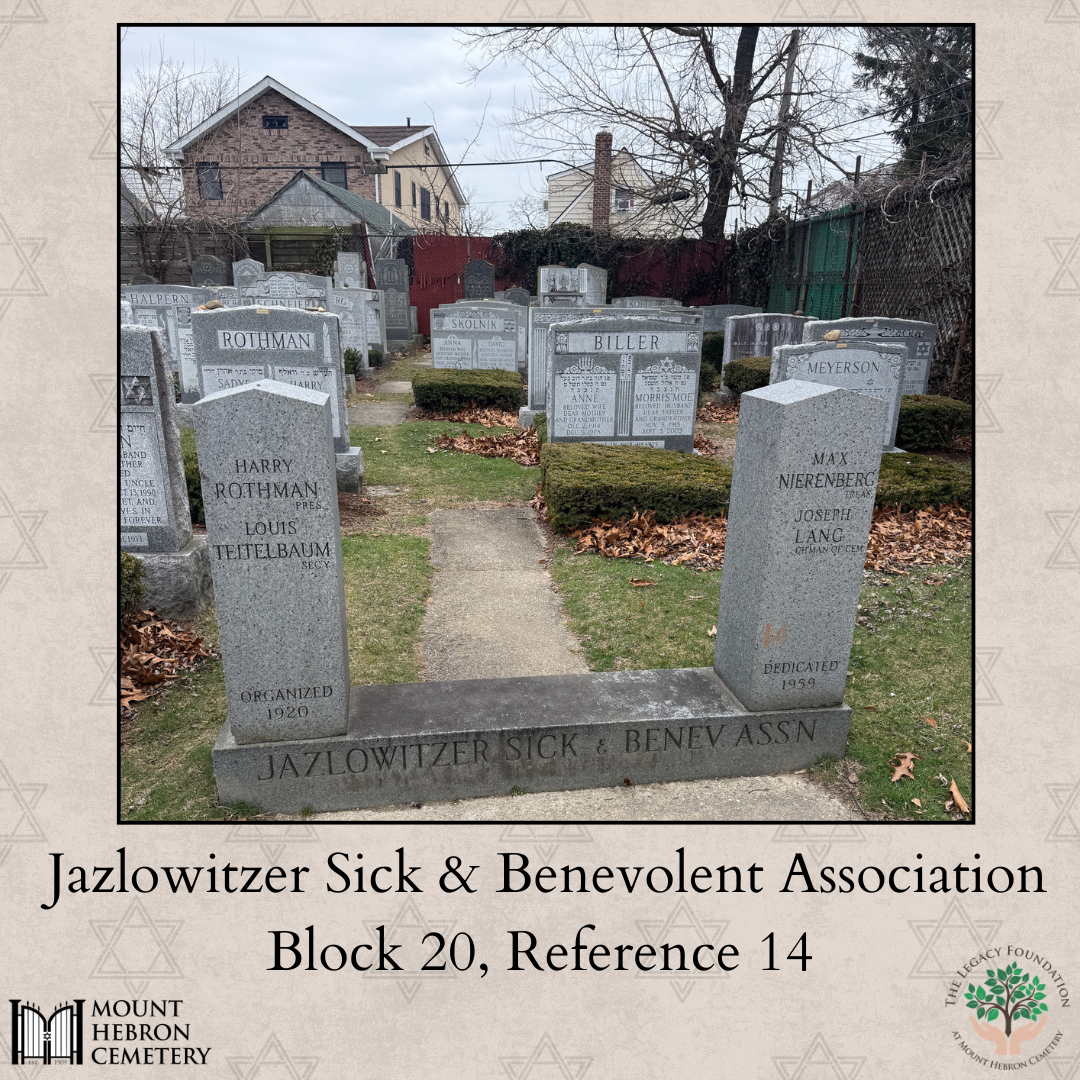
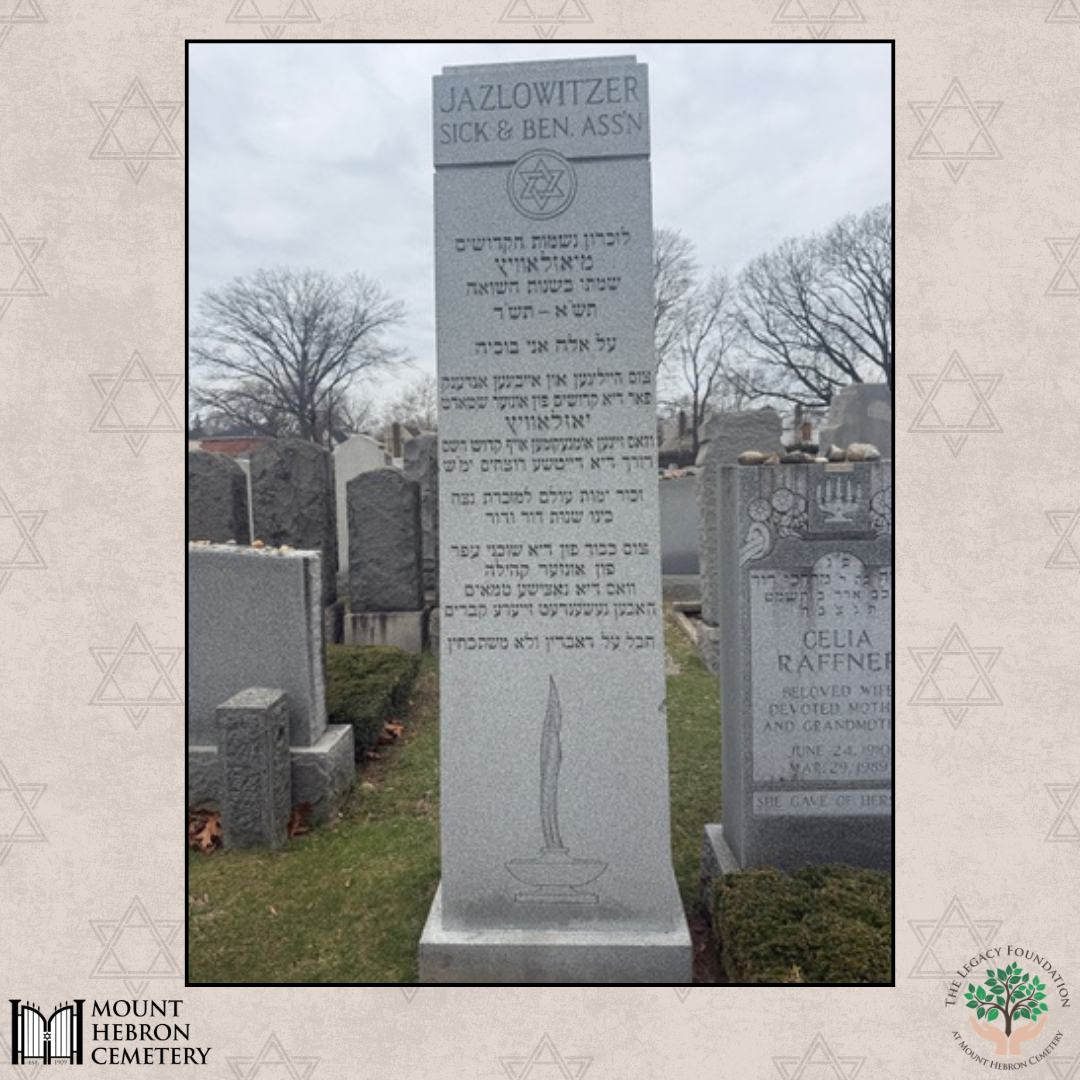
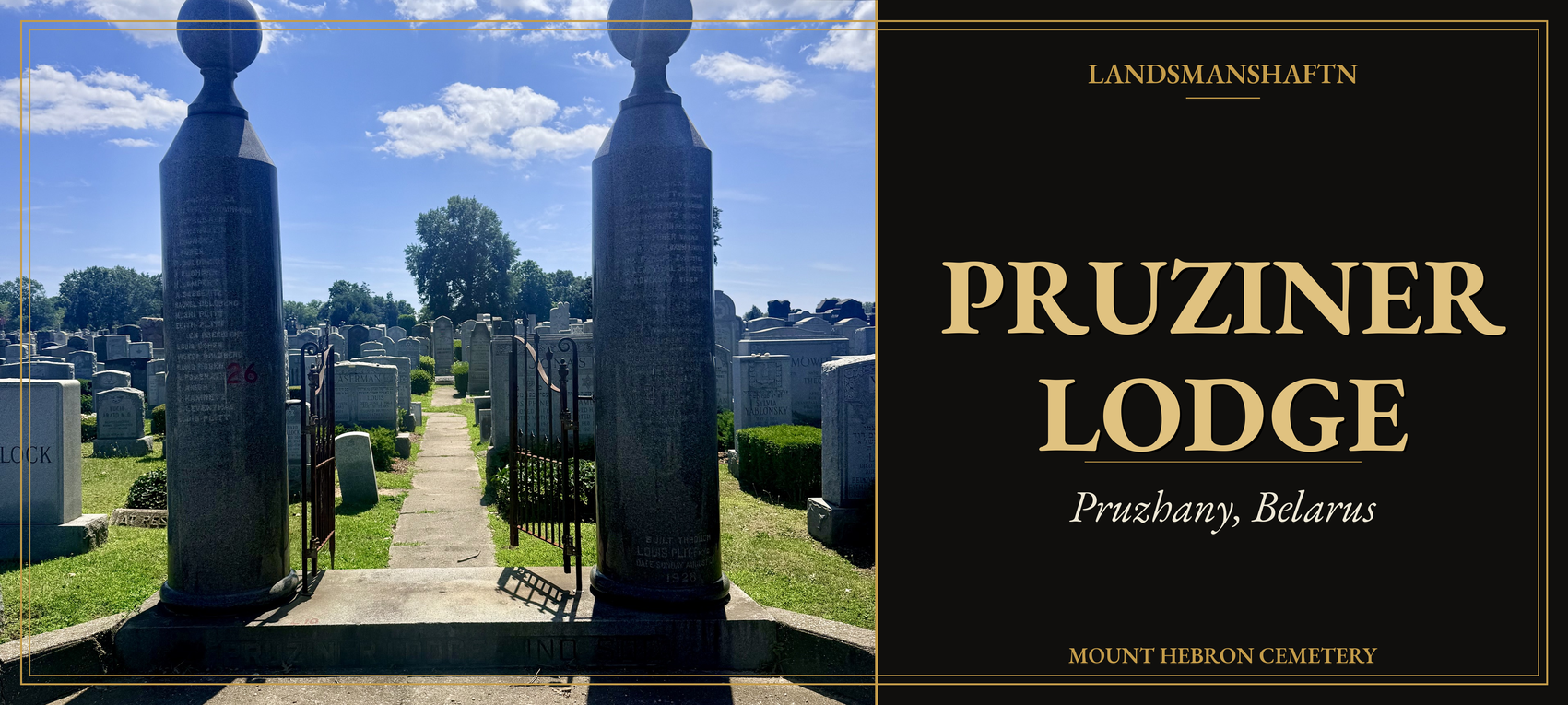
Like many landsmanshaftn from Eastern Europe, the Jazlowitzer Association purchased burial plots for its members at Mount Hebron Cemetery in Queens, New York. This section became a sacred space where families could be laid to rest among others from the same town. The society’s gate and monument at Mount Hebron still stand today, inscribed with the name Jazlowitzer Sick & Benevolent Assn., a testament to the immigrants who built a new life while honoring their roots.
For these early immigrants, the burial society carried forward the values of mutual responsibility that had defined Jewish life in Yazlovets for generations. In the absence of extended family networks, the society became a surrogate family. Members attended one another’s funerals, marked the anniversaries of loved ones, and kept alive the memory of the town they left behind.
The Legend of the Breitbart Family
Among the families remembered from Yazlovets and the surrounding region is the Breitbart family, whose name became famous across Europe and America. The most well-known member was Zishe Breitbart, born in 1883 in Poland to a Jewish blacksmith family whose roots stretched across Podolia and Galicia. Though he may not have been born in Yazlovets itself, family connections and local memory placed the Breitbarts among the strong and hardworking Jews of that region.
Zishe became a celebrated strongman in the early twentieth century. Known as “The Iron King” and “The Strongest Man in the World,” he performed incredible feats of strength — bending iron bars, lifting horses, and tearing chains apart with his bare hands. He wore a Star of David on his chest and took pride in showing the world that Jewish men could be powerful, proud, and heroic.
For Jews from Yazlovets and neighboring towns, the story of the strong Breitbart became both legend and inspiration. In immigrant neighborhoods in New York and Philadelphia, families told stories of “the Breitbart from Yazlovets” who could lift wagons and protect his people. Whether or not every tale was true, these stories carried deep symbolic power. They represented strength, resilience, and survival — qualities that the Jews of Yazlovets had shown for centuries.
Some members of the Breitbart family immigrated to America and joined hometown associations such as the Jazlowitzer Sick & Benevolent Association. Within these societies, such stories were cherished reminders of courage and continuity. The legend of Breitbart, the strong man, became part of the moral heritage of Yazlovets, linking physical strength with the spiritual endurance of an entire people.
Memory and Legacy
Today, the Jazlowitzer section at Mount Hebron is one of more than a thousand landsmanshaftn plots that together tell the story of Jewish migration and community-building in America. Each gate and monument represents a town that once thrived in Eastern Europe — a town like Yazlovets, where Jewish culture flourished until it was destroyed by war and genocide.
Descendants of Yazlovets families continue to trace their roots through genealogical projects, Yizkor books, and preservation efforts. The Legacy Foundation at Mount Hebron has begun documenting these burial societies to ensure their histories are not lost. The Jazlowitzer Sick & Benevolent Association stands as a powerful example of how immigrants turned grief and memory into lasting institutions of care and remembrance.
The story of Yazlovets is both heartbreaking and inspiring. It reminds us of a community that once brimmed with life, faith, and resilience. It also reminds us that the descendants of that community, through the Jazlowitzer Association and others like it, built a bridge between continents and generations.
To walk among the headstones in the Jazlowitzer section at Mount Hebron is to step into a circle of memory. Each name carved in stone connects the living to a vanished world — to the families who once filled the streets of Yazlovets, who carried their customs across the sea, and who made sure that even in death, they would rest together as one community.
~Blog by Deirdre Mooney Poulos