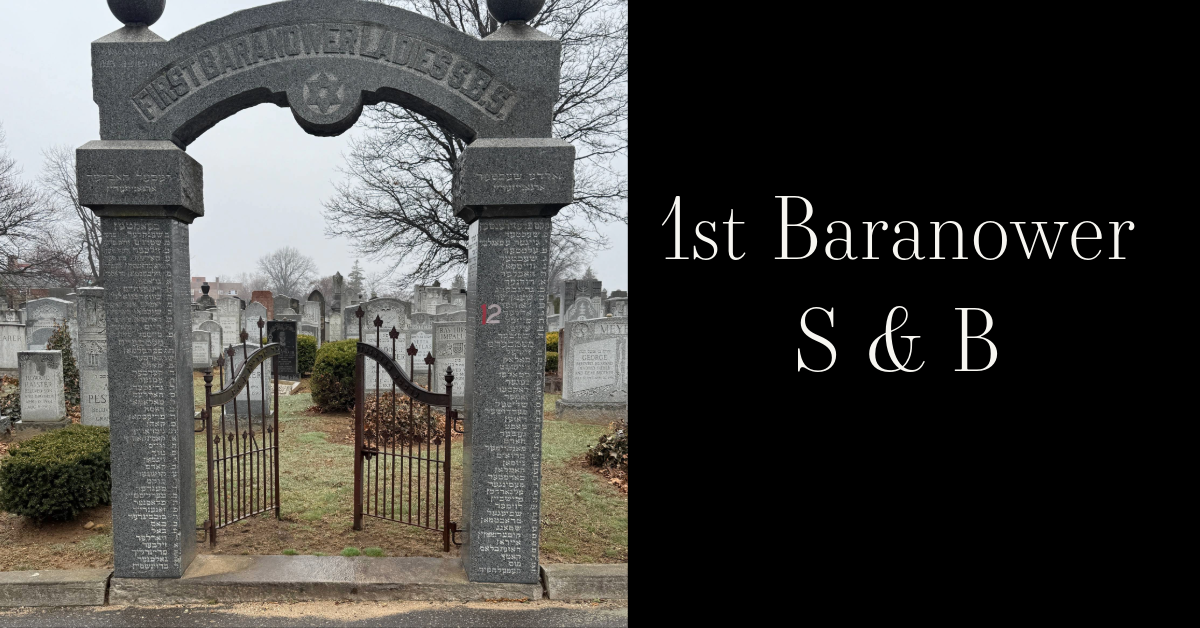
Story Summary:
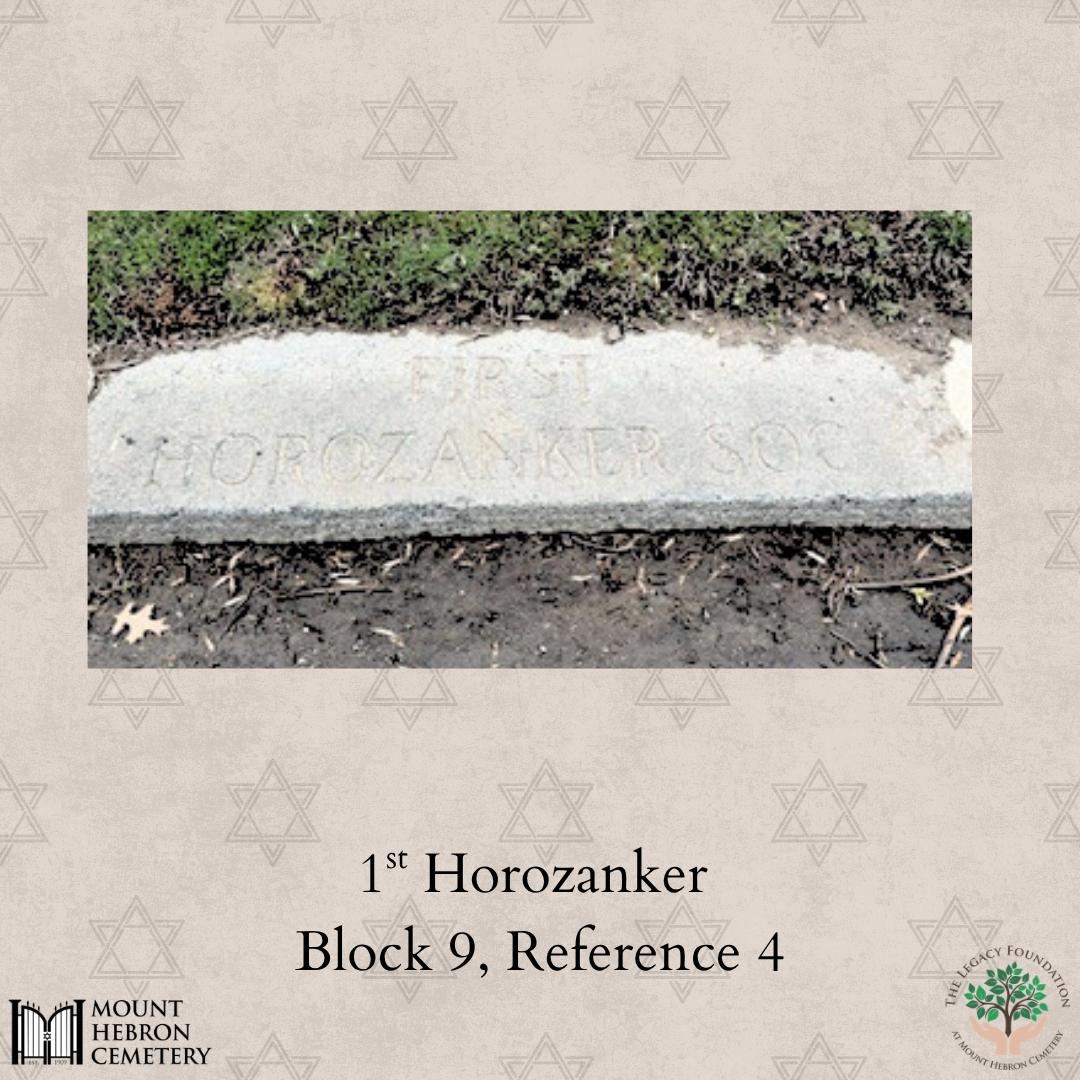
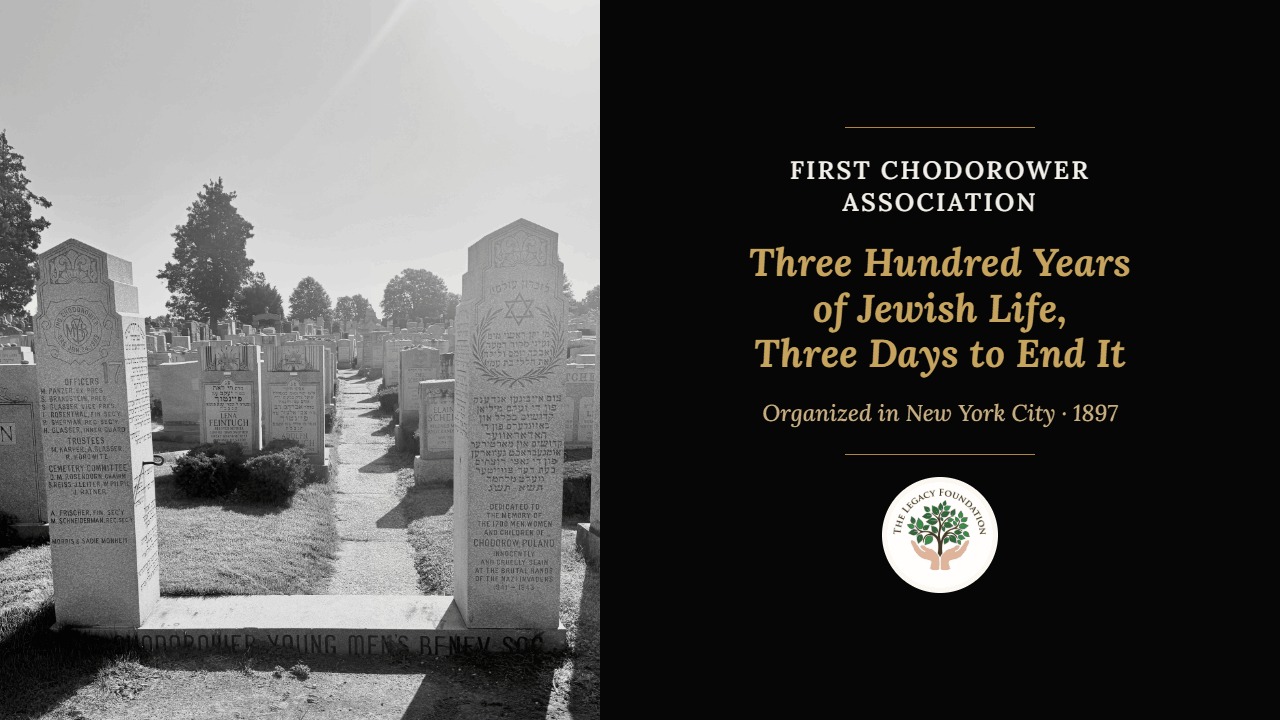
The 1st Horozanker Sick and Benevolent Society was established by immigrants hailing from Horodenka, Ukraine. A court document places Jewish presence in Horodenka to the 1440s however it was only by the 17th century that they were granted permission to settle and engage in trade/crafts. The Jews made their livings by engaging in the trades of salt and timber as well as craftsmen. Despite the economic hardships faced under Austrian occupation, the Jews of Horodenka continued building the cultural, educational, and religious aspects of their community through establishing schools and various houses of prayer. A mass immigration followed after World War I, with over 2000 emigrating to the United States, South America, Canada, and Israel. The Jews of Horodenka and its surround villages perished in the Holocaust. Their memories live on. ~Blog by Olivia Scanlon
1st Horozanker
The 1st Horozanker Sick and Benevolent Society was established by immigrants hailing from Horodenka, Ukraine. A court document places Jewish presence in Horodenka to the 1440s however it was only by the 17th century that they were granted permission to settle and engage in trade/crafts. Jews were soon thereafter granted land for a synagogue and cemetery. Jews made their living as dealers of grain, timber, and salt. Many were also tavern keepers. Jews were in control of their internal communal matters regarding education, taxes, and leadership. All judicial matters fell under the jurisdiction of the Beit Din (Court of Rabbis).
The Jews were influenced by the Shabbetai-Zvi movement as well as the Frankist movement. In the 1760s, Jews began engaging in the Hasidic movement. In 1772, Horodenka fell under Austrian occupation. Heavy taxes were levied on the Jewish people, including the Protection and Tolerance Tax (later called the Domestic Land Tax) and the Property and Occupation Tax (later replaced by the Kosher Meat Tax in 1784), amounting to five times as much as that required of the Christian community. In 1822, the town was also repeatedly destroyed by fires. Despite these economic hardships, the Jews of Horodenka continued defining their educational, religious standing within the town. In 1852, Jews were permitted to purchase real estate. They soon established a Jewish boys school in 1898 (financed by the Baron Hirsch), and opened a Hebrew school in 1907. By the 20th century, the Great Synagogue, Yeshivas, and multiple Hasidic prayer houses stood. By the 1870s, there were over 3000 Jews in Horodenka. This number grew to over 3500 by the 1880s, and about 4100 by 1910. It was during this time that the Jews of Horodenka began participating in the Zionist movement, forming various groups including the Bnei Zion, Agudat Achim, and the Agudat Chaverim, and the emergence of the Haskalah (Enlightenment movement).
During World War I, the Jews of Horodenka suffered terribly under Russian occupation, resulting in a mass immigration of over 2000 Jews in 1920 to the United States, Canada, South America, and Eretz Yisroel. In September of 1939, the town was occupied by the Red Army and annexed to the Soviet Union, becoming part of the Ukrainian SSR. On July 2nd, 1941, units of the Hungarian Army entered Horodenka. German occupation followed shortly after. Anti-Jewish measures were enacted, and in November of the same year, a Judenrat was established. In April of the following year, about 1500 Jews were sent to the Belzec extermination camp. The following July, the ghetto began the liquidation process. The process continued into September, resulting in over 2000 being killed. Horodenka was liberated on March 24th, 1944. Today, a Holocaust memorial stands in the New Jewish Cemetery, remembering the lives of the Jews of Horodenka and the surrounding villages.
https://www.jewishgen.org/yizkor/gorodenka/gor086.html
https://www.shtetlinks.jewishgen.org/Gorodenka/html/a_brief_history.html
https://www.centropa.org/en/photo/jewish-part-horodenka
https://www.jgaliciabukovina.net/110675/community/horodenka
https://cja.huji.ac.il/browser.php?mode=set&id=40079
~Blog by Olivia Scanlon