Hebron's Stories
If a story is important, then it must be told. We can portray dreams of what the future may hold, or allow introspection on what has occurred in the past. A story is a narrative that can relay lessons and warnings. A story can teach us about hope and remind us how important and meaningful our lives are. We are unearthing stories about those buried at Mount Hebron Cemetery.
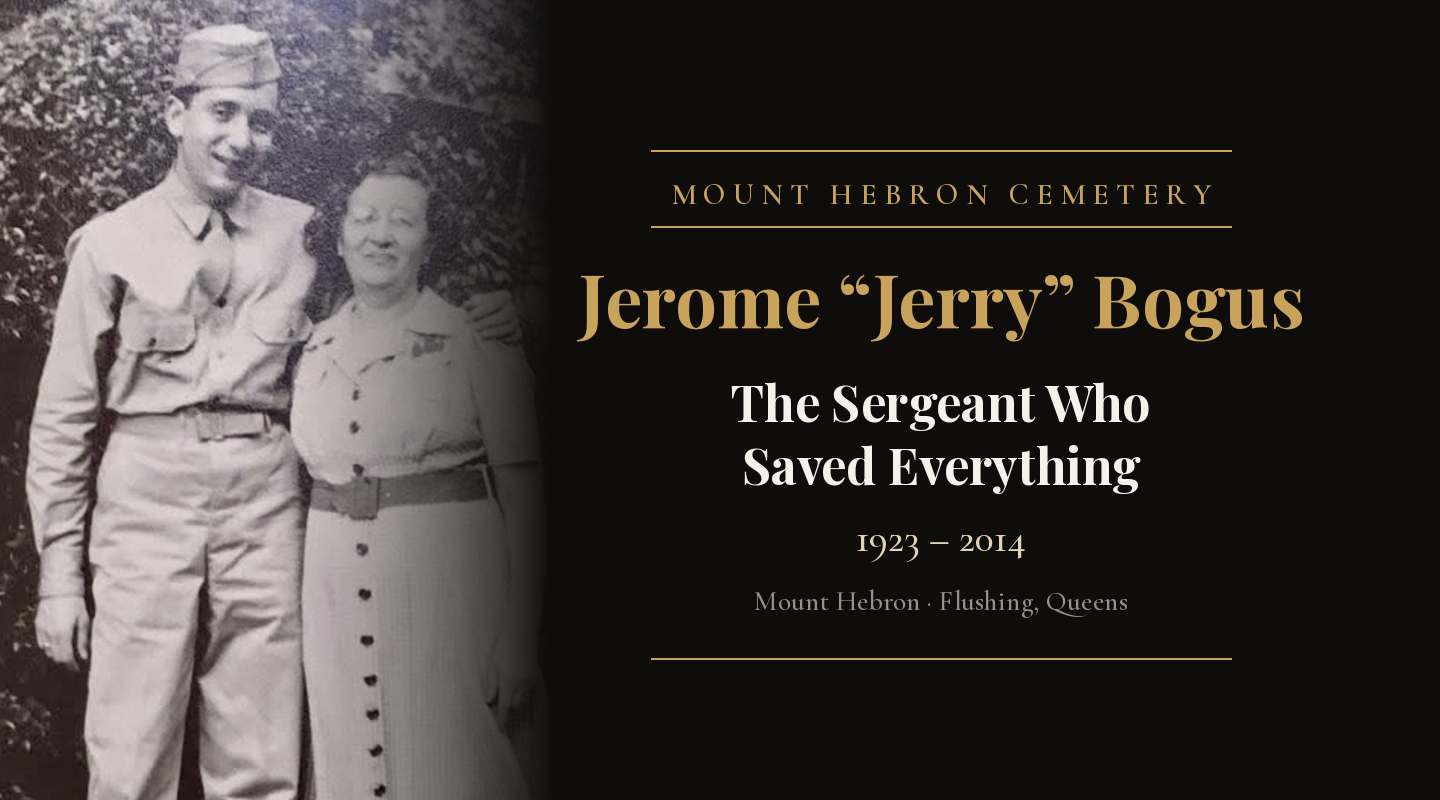
Jerome "Jerry" Bogus never fired a shot at the enemy. The Bronx boy dreamed of medical school, but when his father died, he went to work to support his mother and sister. Drafted in 1943, he landed in the hospital after fighting a forest fire, and the Army listed him as dead by mistake. He proved them wrong. He served at a prisoner of war camp in New Mexico and left the Army a dental supply sergeant in Texas. He kept everything. His dog tags. His prayer book. His footlocker. Because he did, we can tell his story. He rests at Mount Hebron Cemetery in Flushing, Queens. ~Blog by Deirdre Mooney Poulos
Learn More
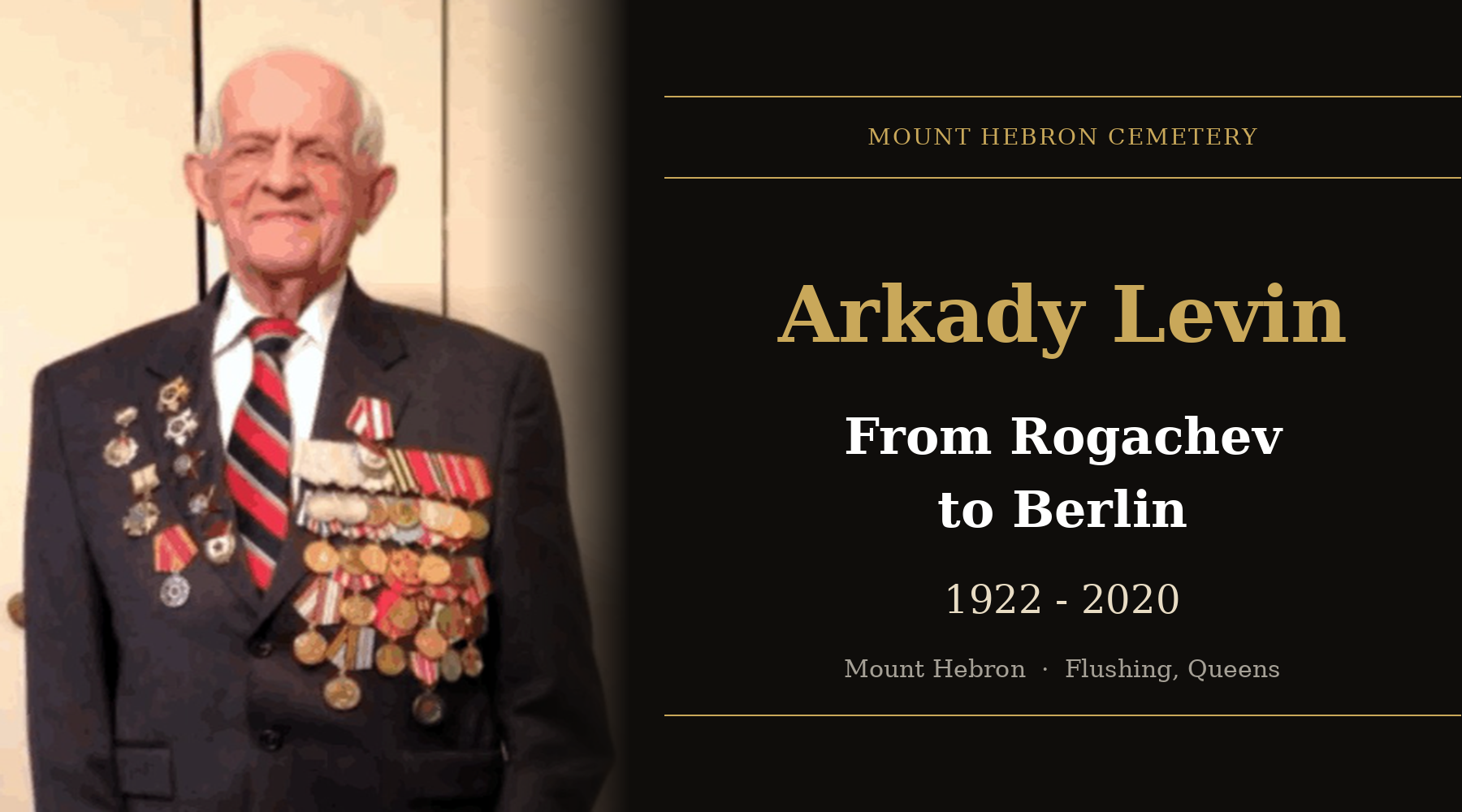
In the summer of 1941, a nineteen year old Jewish boy from Rogachev, Belarus climbed into a fighter plane and flew into the largest military invasion in human history. Arkady Levin flew defensive missions over Minsk and Orsha, survived the Siege of Leningrad, fought at Kursk and did not stop flying until Berlin, wounded five times and returning to the front every single time. By the time the war ended there was no room left on his uniform for another medal. Arkady Levin rests at Mount Hebron Cemetery in Flushing, Queens. His family described him in four words. Our Hero. Our Pride. Our Strength. Our Protector.~Blog by Deirdre Mooney Poulos
Learn More
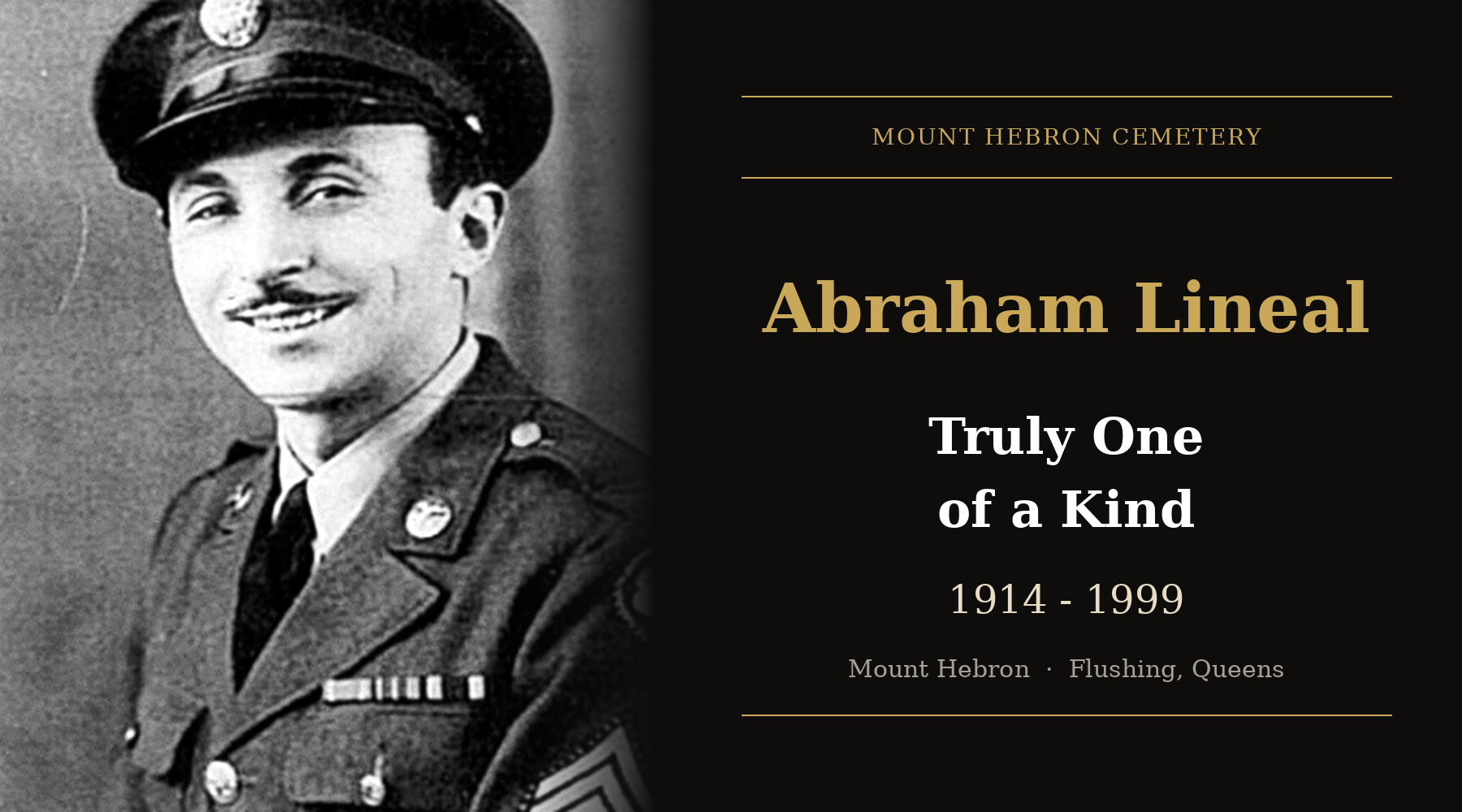
Abraham Lineal did not go to war with a rifle. He went with a pen, keeping the records of the wounded in the Medical Corps of the European Theater. He came ashore at Omaha Beach on June 6, 1944, was wounded in the last year of the war and received the Purple Heart, but never left a single word about how it happened. The man who spent the war making certain that no wounded soldier slipped through the cracks without a name rests at Mount Hebron Cemetery in Flushing, Queens. His family carved three words into his stone. One of a kind. ~Blog by Deirdre Mooney Poulos & The Lineal Barry Family
Learn More
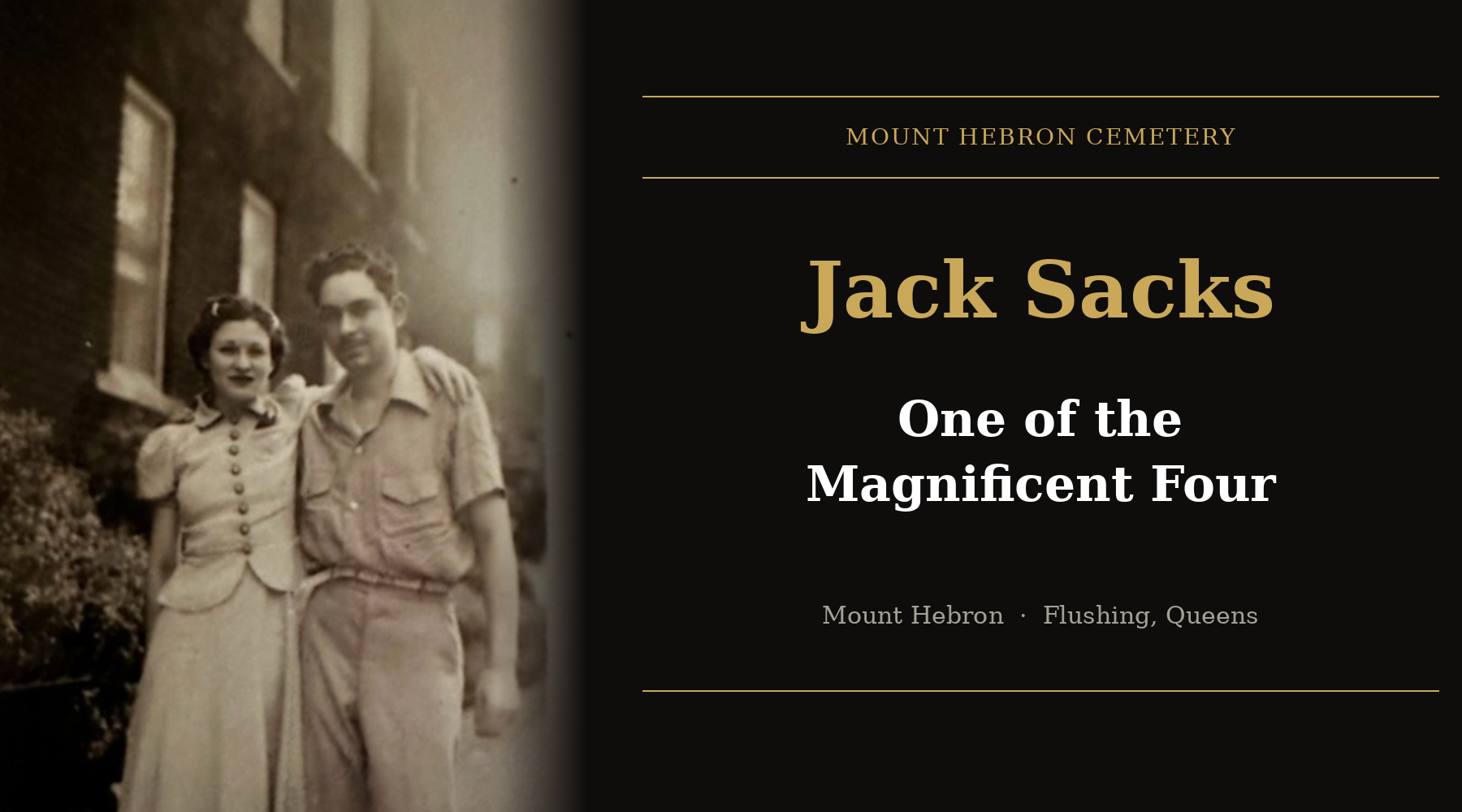
Jack Sacks was a Brooklyn boy who worked at the Brooklyn Navy Yard until the draft came in 1943. In his letters from training camp, he called the family at home "the Magnificent Four," and he often wrote about the family cat, Peppy. The Army sent him to the China-Burma-India Theater, one of the hardest and most forgotten fronts of the entire war. He came home in 1946 with three medals, a story about a Japanese sword, and memories he rarely spoke of. He returned to the dry-cleaning trade and lived a quiet, steady life. Jack Sacks rests at Mount Hebron Cemetery. ~Blog by Deirdre Mooney Poulos & The Sacks Family
Learn More
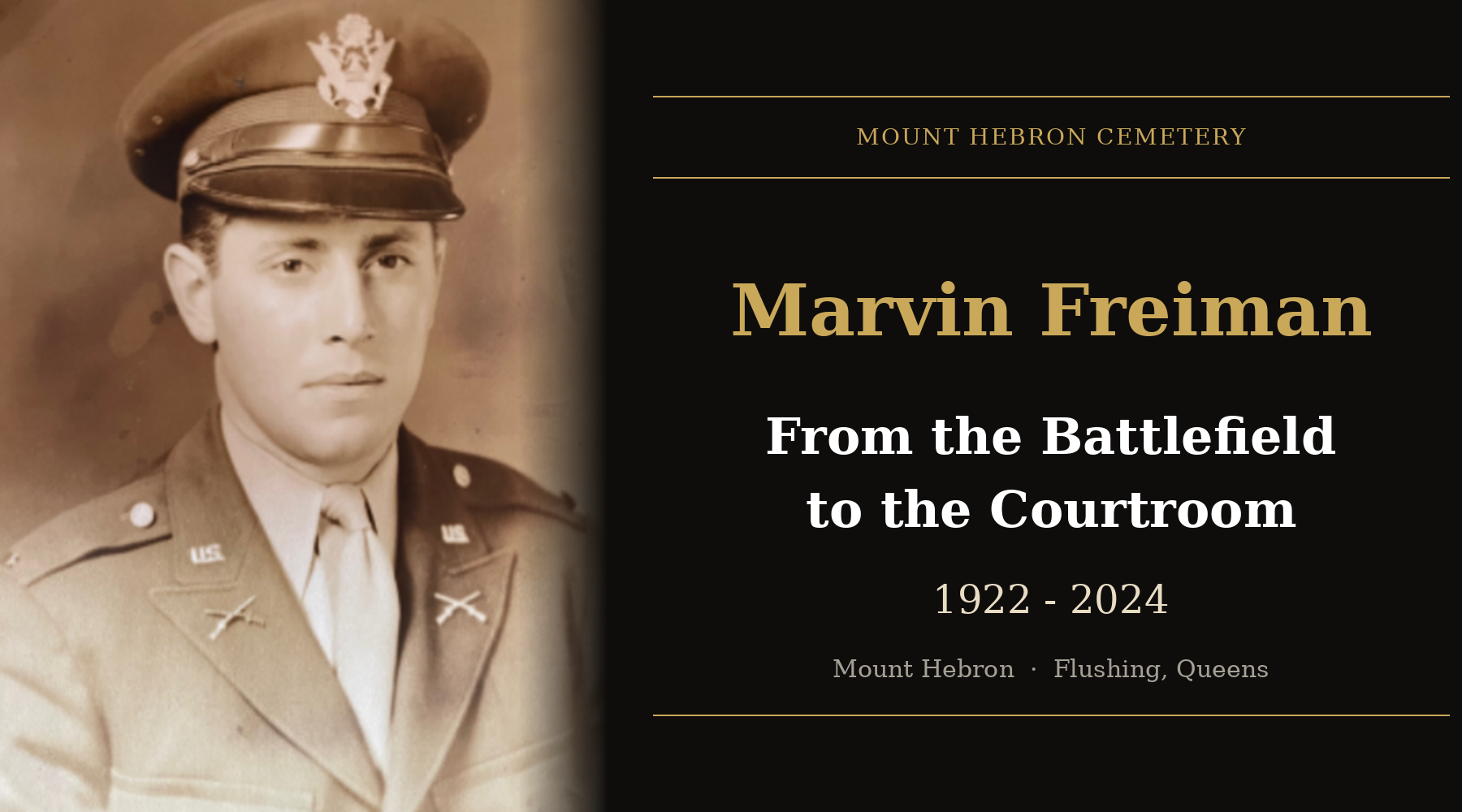
Marvin Freiman lived a life of service, scholarship, and integrity. A top graduate of NYU in 1942, he joined the U.S. Army during World War II and served for more than four years, rising to the rank of Captain. His military career spanned infantry, airborne, and air force service, and he also served as a historian, intelligence officer, and legal counsel. After the war, he earned his law degree from Cornell and practiced for over fifty years, carrying the same dedication and sense of justice that defined his service. His legacy reflects courage, intellect, and an unwavering commitment to doing what is right.~Blog by Deirdre Mooney Poulos
Learn More
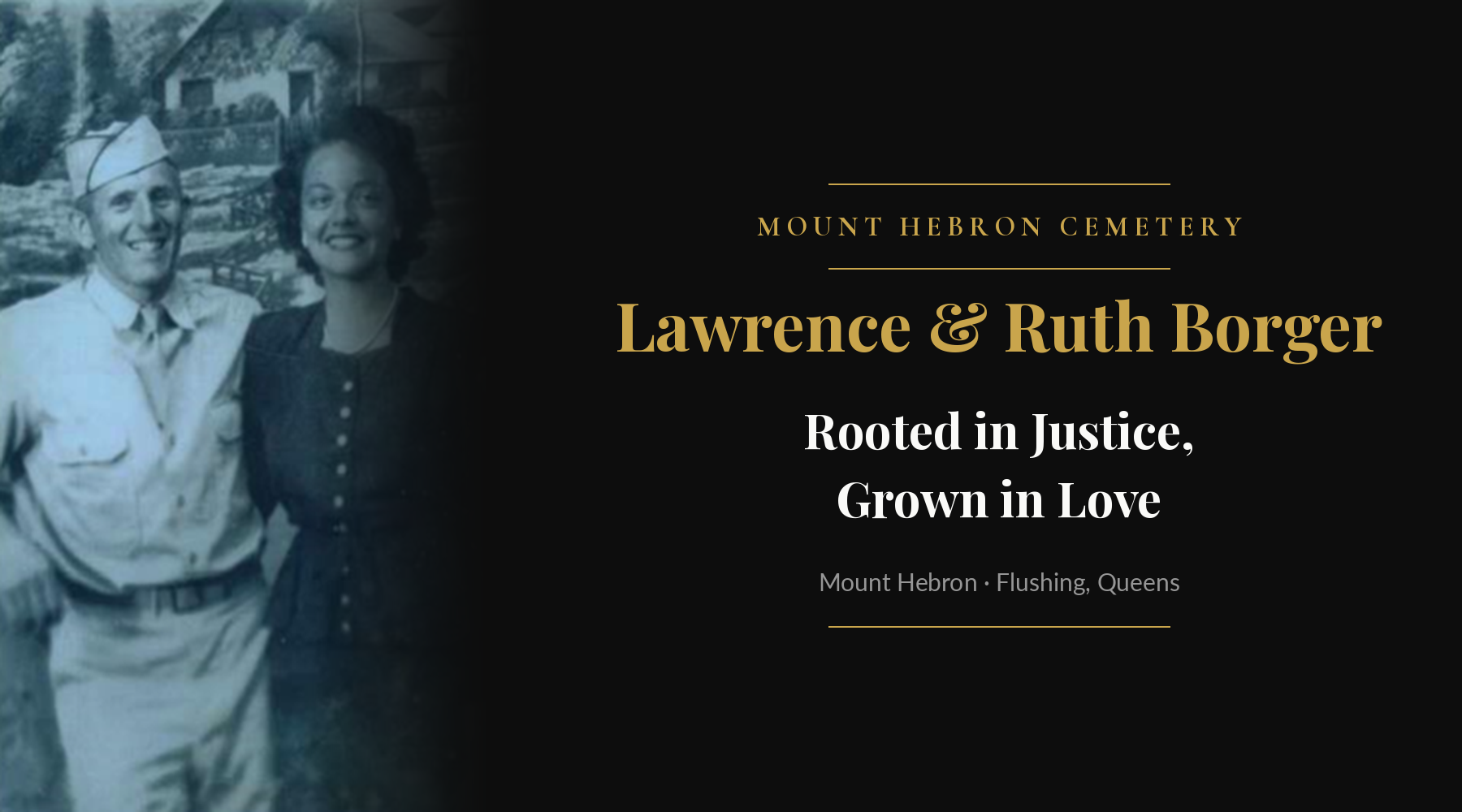
Larry Borger grew up with deaf parents, and his first language was sign language. He studied forestry at Syracuse and spent more than 75 years caring for trees. During World War II, on leave at an Adirondack resort, he played Maple on the Hill on his harmonica. The next day, Ruth Diamond told him, "I heard you last night and it was lovely." They were married for 66 years. Larry founded his own tree company, taught, and helped revive the Queens Botanical Garden. Ruth, a social worker, helped veterans and fought for peace. They raised three daughters in Bayside. Like strong trees, their roots run deep. ~Blog by Deirdre Mooney Poulos
Learn More
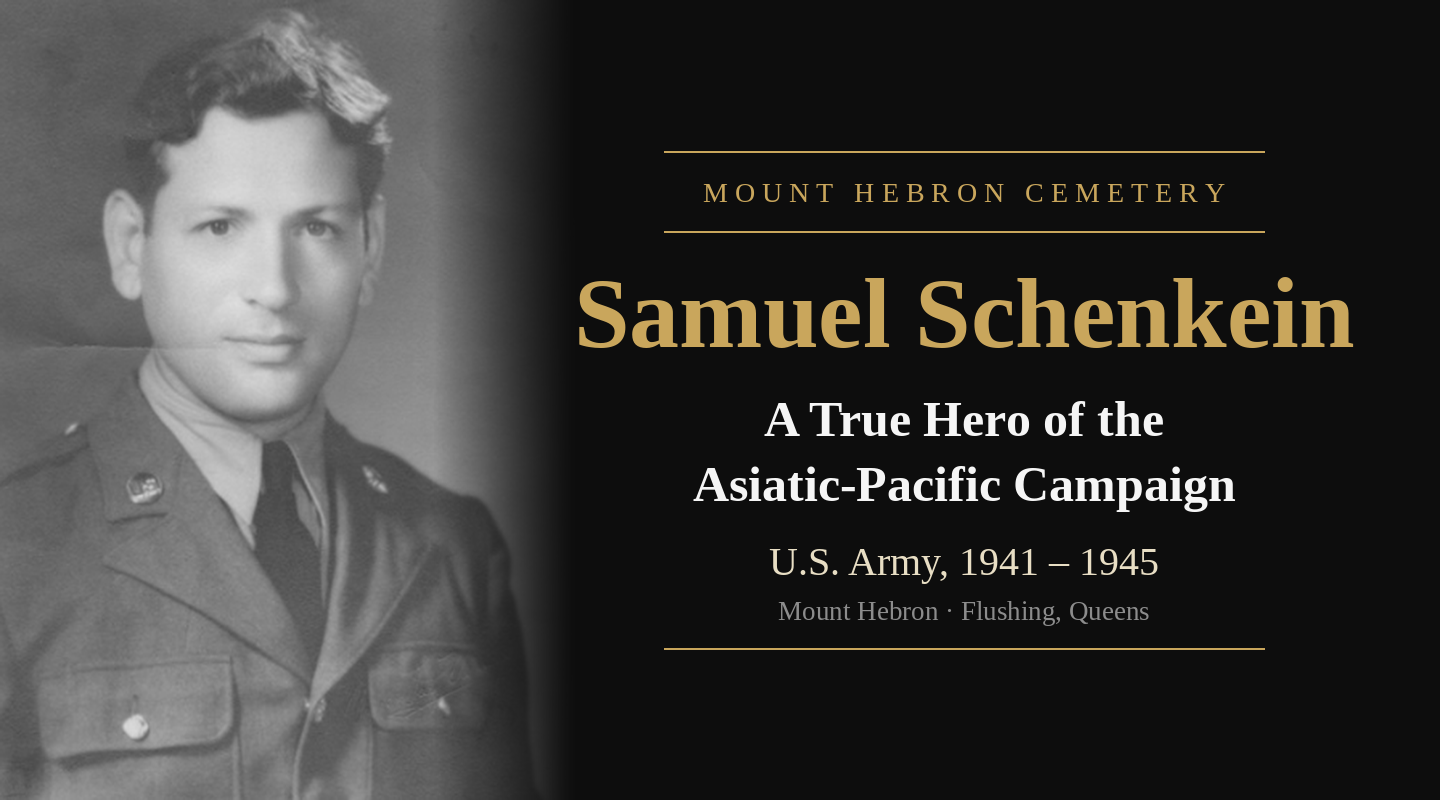
Samuel was born in Woodhaven, New York and went on the serve in World War II in the Army. He served from March 28, 1941 to June 21, 1945. Samuel served as an ammunition handler, He was awarded the Asiatic-Pacific Campaign medal, a Bronze Service Star, Good Conduct medal, American Defense Service medal, WWII Victory medal, and an Honorable Service lapel button.
~Contributed by Sheila Cavell
Learn More
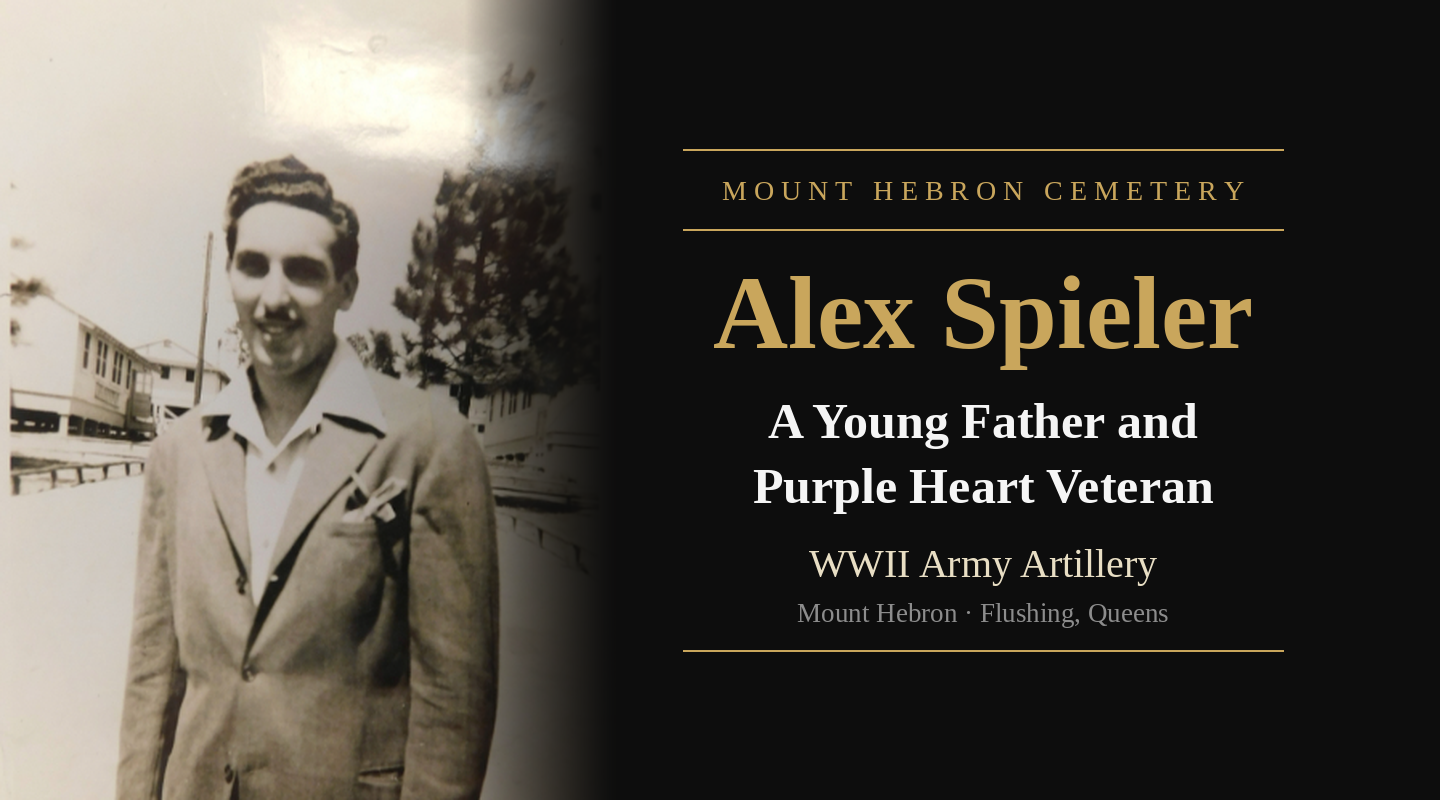
Alex Spieler was born in Brooklyn, the son of a mother from Austria and a Russian father. He was a shoe salesman when he registered for the Army. He became an artillery expert and was stationed at Fort Sill, where his only son Robert was born. At thirty, he was sent to the Battle of the Bulge. He was wounded by shrapnel and sent back to the field. He was killed on January 20, 1945, and received the Purple Heart. His body came home in 1948. Robert was raised by his grandparents. He later joined the ROTC at Hofstra in honor of his father. Alex Spieler rests at Mount Hebron Cemetery.
Learn More
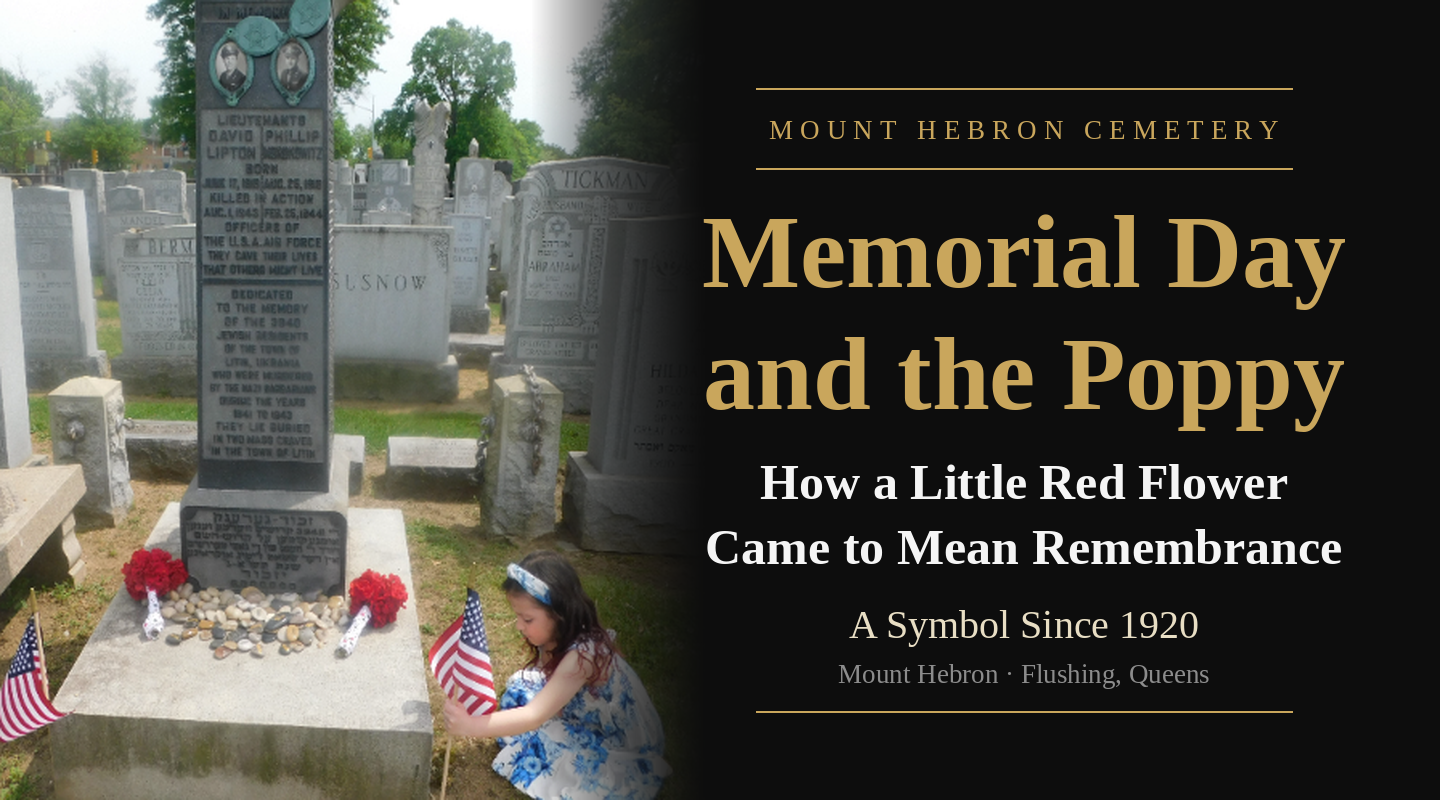
As Memorial Day approaches, red poppies begin to make their annual appearance, especially pinned to people's lapels, tote bags or even hats. These colorful flowers, often made of fabric or crepe paper honor and memorialize fallen soldiers, as well as serving as a fundraiser to support our nation's war veterans. The red poppy officially became the national emblem of remembrance in 1920, but the resilient little flower's roots run deep, all the way back to the battlefields of World War I, where they grew in the unlikeliest of places.
Learn More
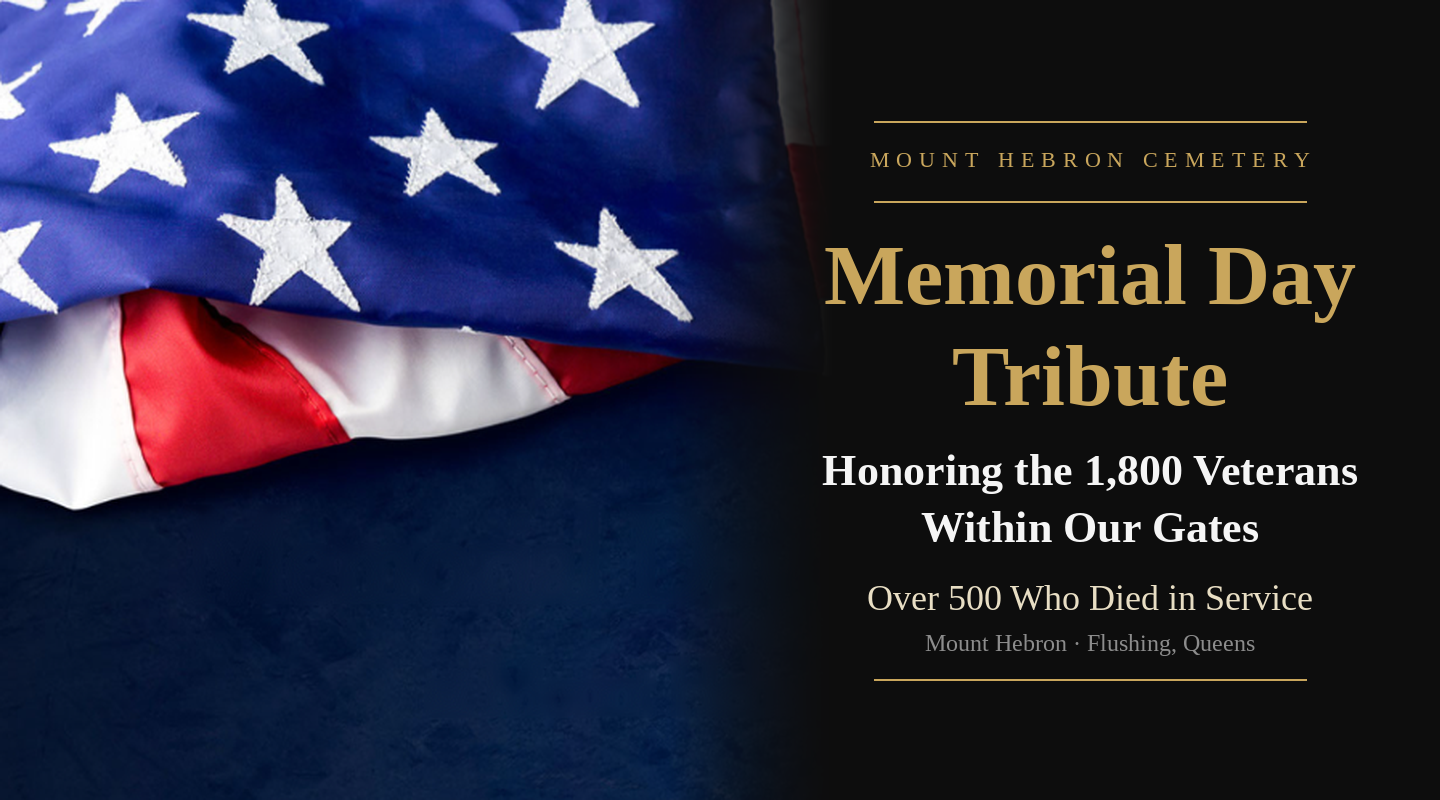
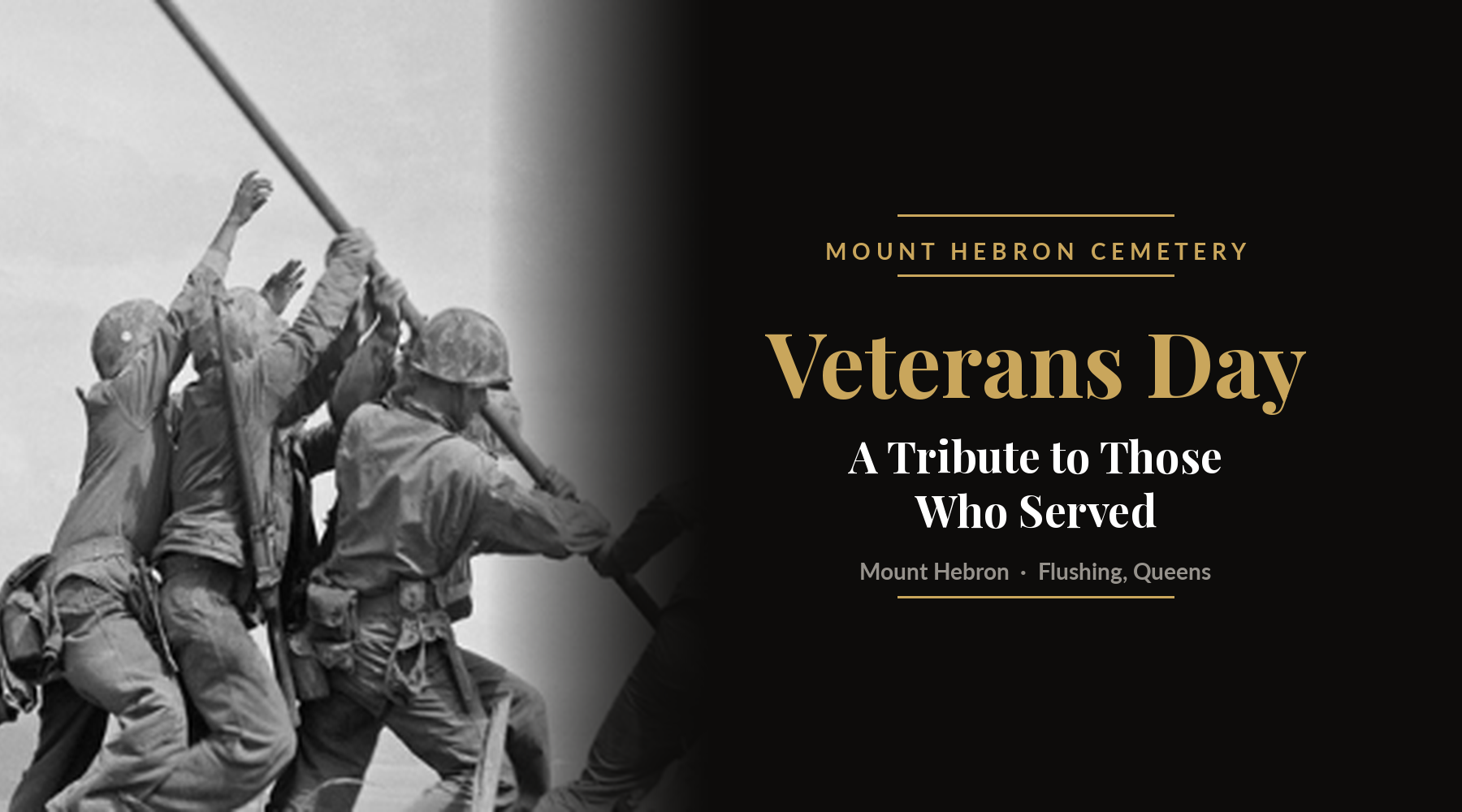
We are honored at Mount Hebron Cemetery to be the final resting place for over 1,800 Veterans. We have identified over 500 who died in service of our country. Please join us on a photographical journey in remembrance of the brave men and women who selflessly defended our country and gave their lives for more than a century who rest with us. We will always be proud of the heroes within our gates and are dedicated to preserving their legacy.
We owe an immeasurable debt to our veterans, to the fallen, and to the families who love them. Just as our servicemen and women have taken care of us, we must also take care of them. It is our sacred duty as a country to honor them and remember their sacrifice.
Learn More
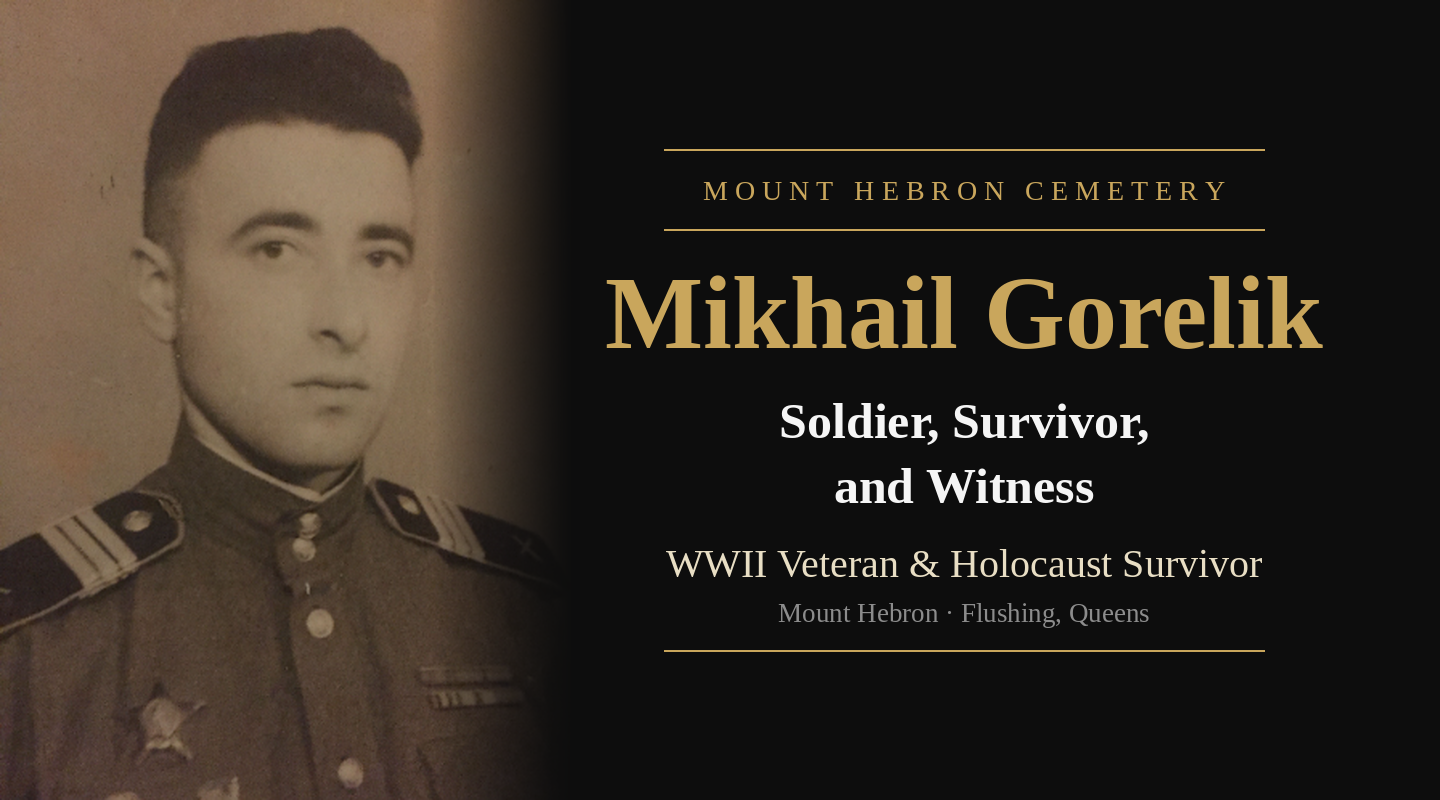
Mikhail Gorelik was thirteen when the Germans reached Lelchitsy, his small town in Soviet Belarus. He hid in a frozen well and under a stove while his mother, two sisters and brother were taken away and shot. A local family, Ivan and Gapa Belotsky and their daughter Maria, hid him at the risk of their lives. He survived in swamps and forests, barefoot and starving. In 1943 he joined the Soviet partisans, adding two years to his age. He fought on with the Red Army, was wounded twice, and served until 1950. Ivan Belotsky stood at his wedding as his second father. ~From the testimony of Mikhail Gorelik, shared by his family
Learn More
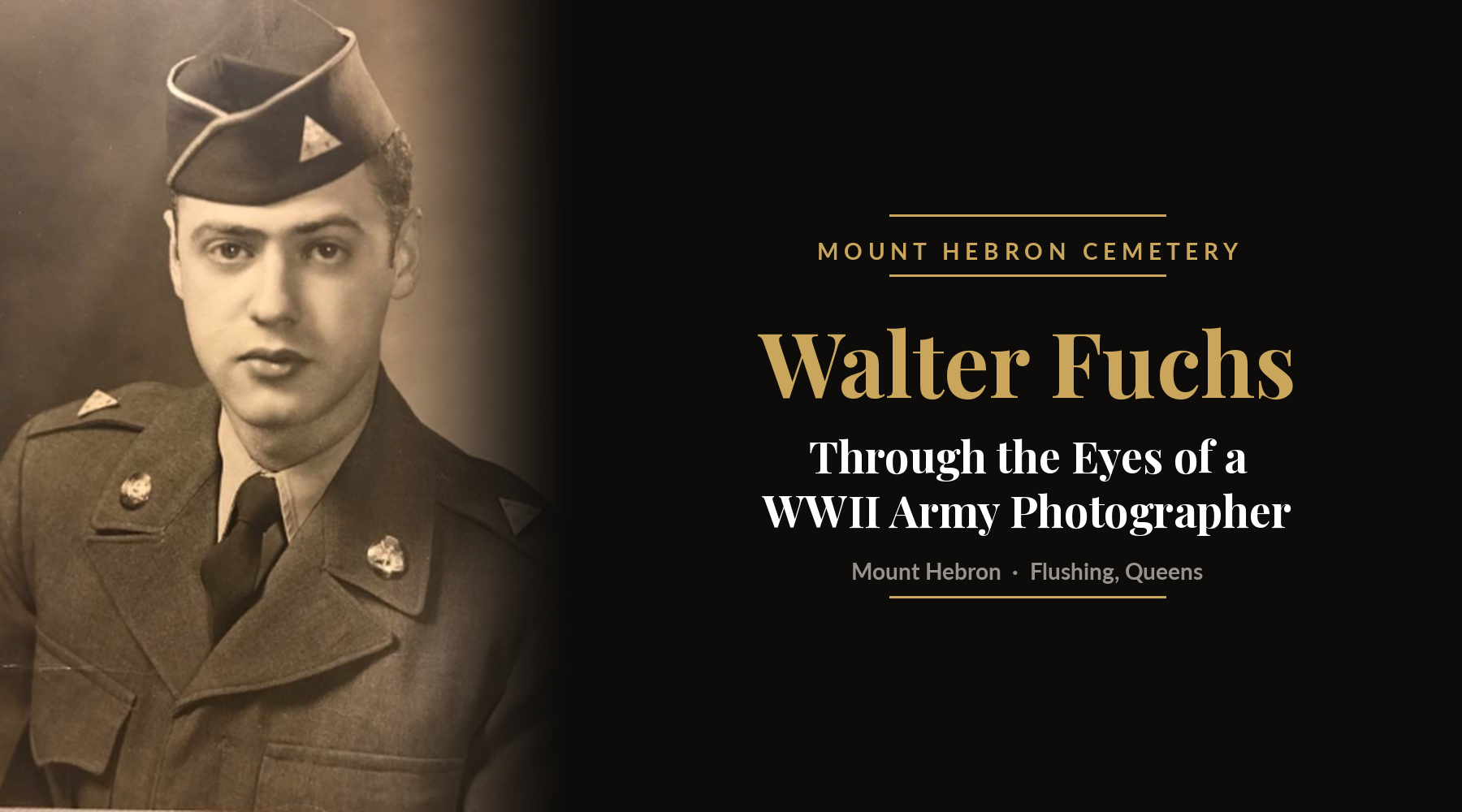
Walter J Fuchs was an official U.S. Army Photographer and served in the 40th Infantry Division. He now rests with us at Mount Hebron Cemetery.
Please join us on a photographic journey of his time during his service.
Learn More
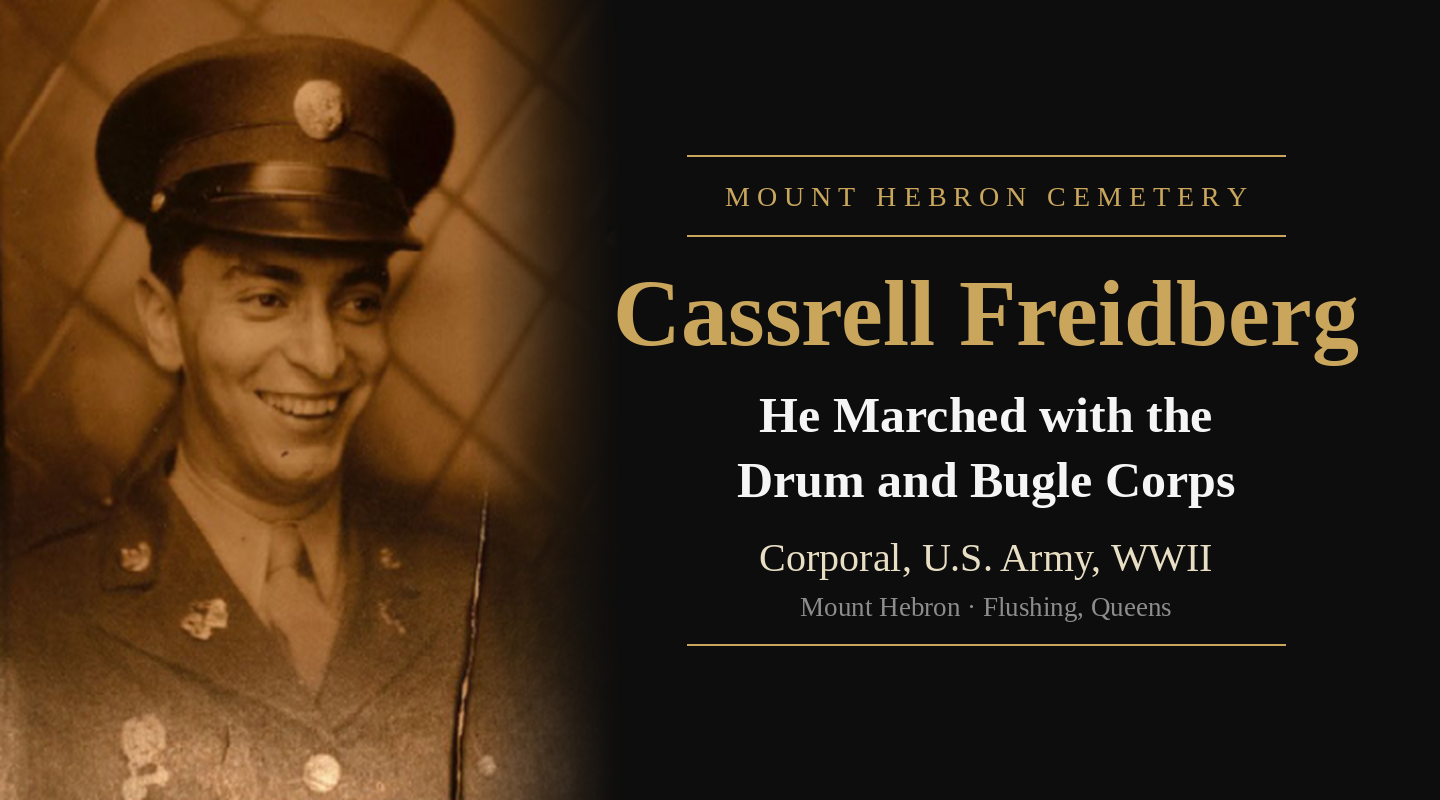
Corporal Cassrell Freidberg was a World War II Army Veteran who also served in the Drum and Bugle Corps. He was in Company D, 2nd Battalion.
He now rests with us at Mount Hebron Cemetery. May his service and legacy be a blessing to us all.
Slideshow
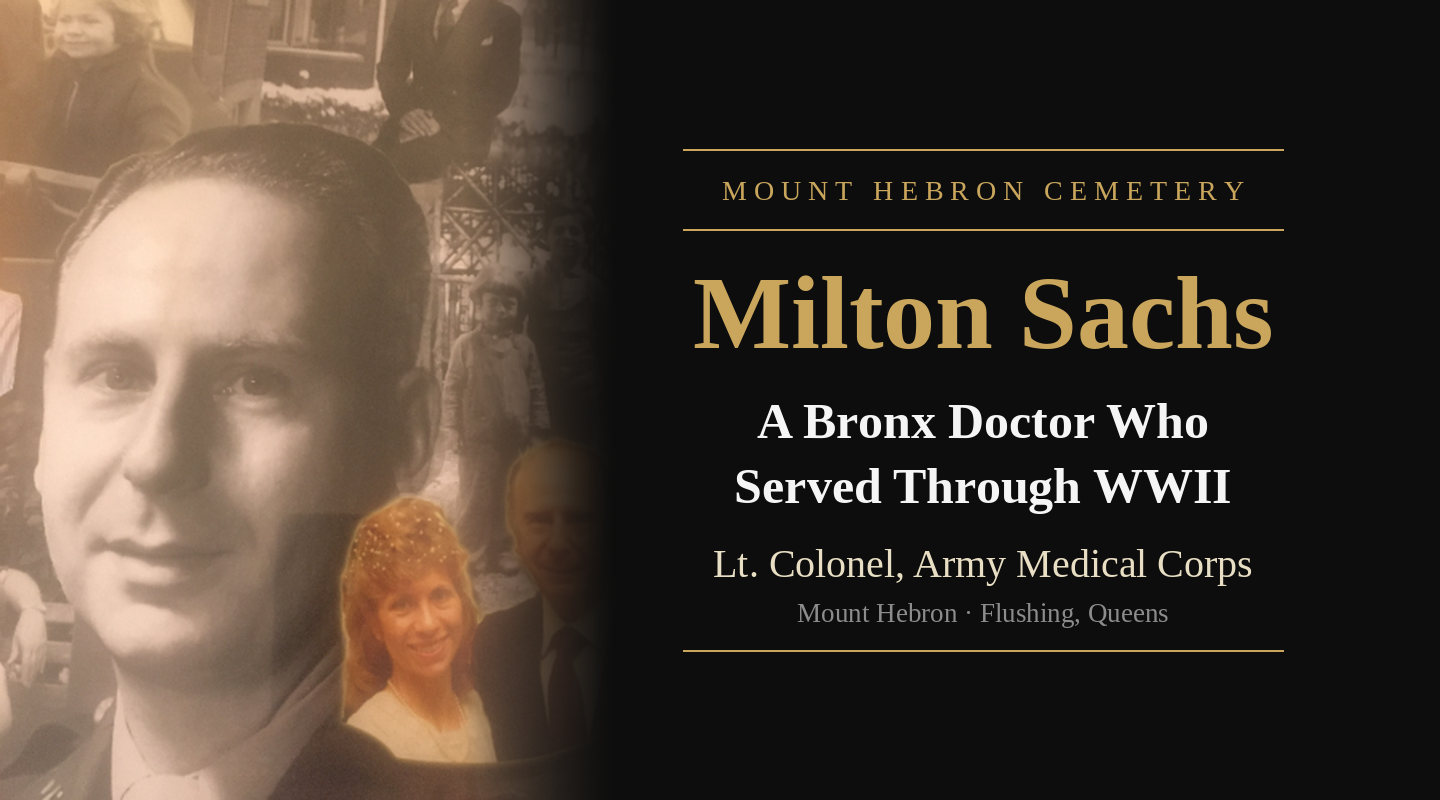
Milton Sachs was born in 1910 and grew up in the Bronx, the son of a traveling dress salesman. He went to medical school in Canada and enlisted in 1941. For three and a half years he served as a Lieutenant Colonel in the Army Medical Corps in Algiers, tending to the wounded. In 1946 he married Naomi Diamond on the roof of the Pierre Hotel and joined her father's practice. For forty years he made house calls with his black bag by the door. In his 80s, he went to work for the garment workers' union. On September 11, 2001, a police car brought him home safe. Nothing ever threw him. ~Blog by Michael Ackermann
Learn More
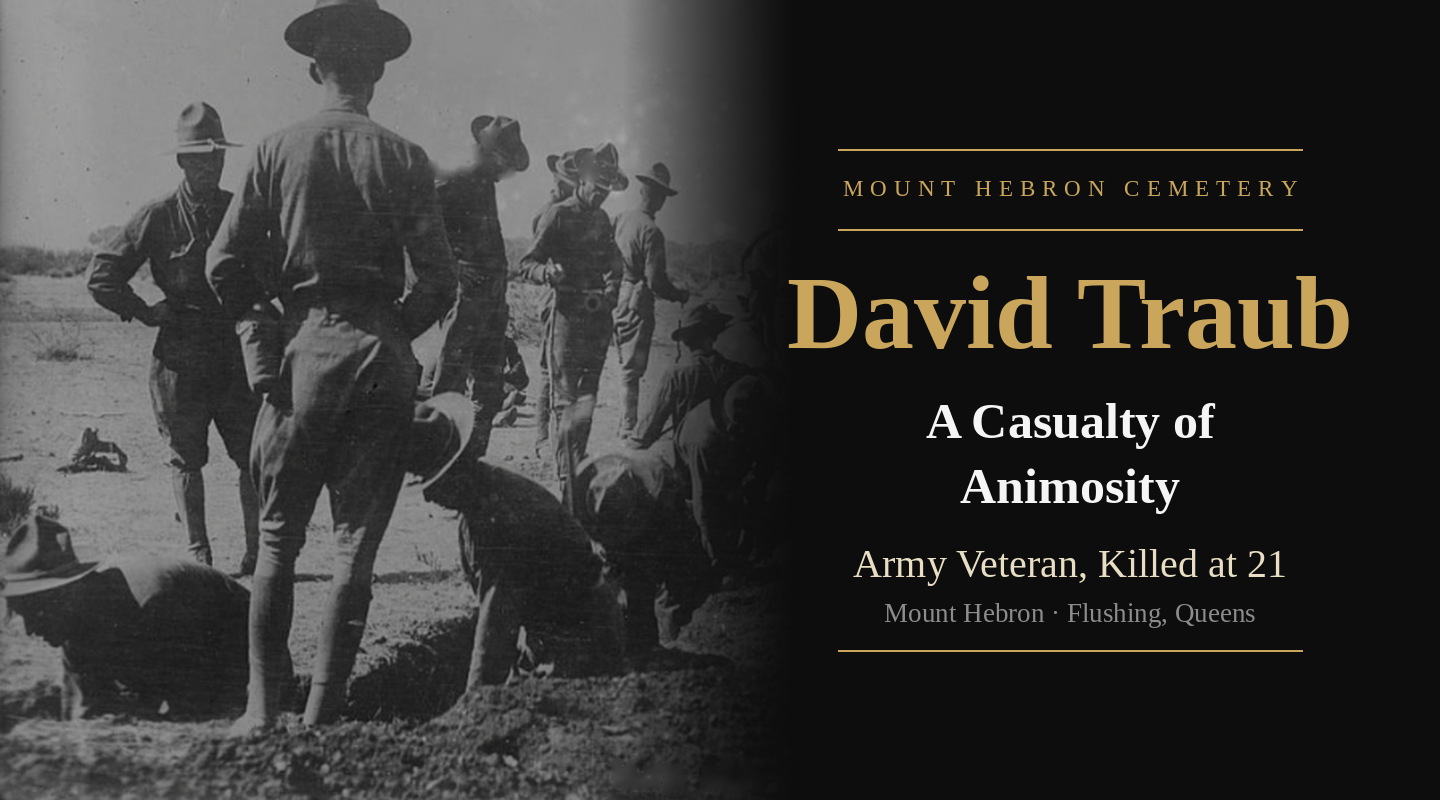
In 1913, sixteen-year-old David Traub sailed from Rotterdam to New York, leaving behind his home in Volhynia. He joined the U.S. Army to earn his place in his new country, and in September 1918 he signed a pledge to stay in America forever. Instead of France, the Army sent him to the Mexican border, where revolution and mistrust had turned the line into a battlefield. On December 27, 1918, a Mexican lieutenant shot him near El Paso. David was unarmed, witnesses said. He was only 21 years old. His killer vanished before he could stand trial. At Mount Hebron, his stone reads, "Died in service for his Country." ~Blog by Michael Ackermann
Learn More
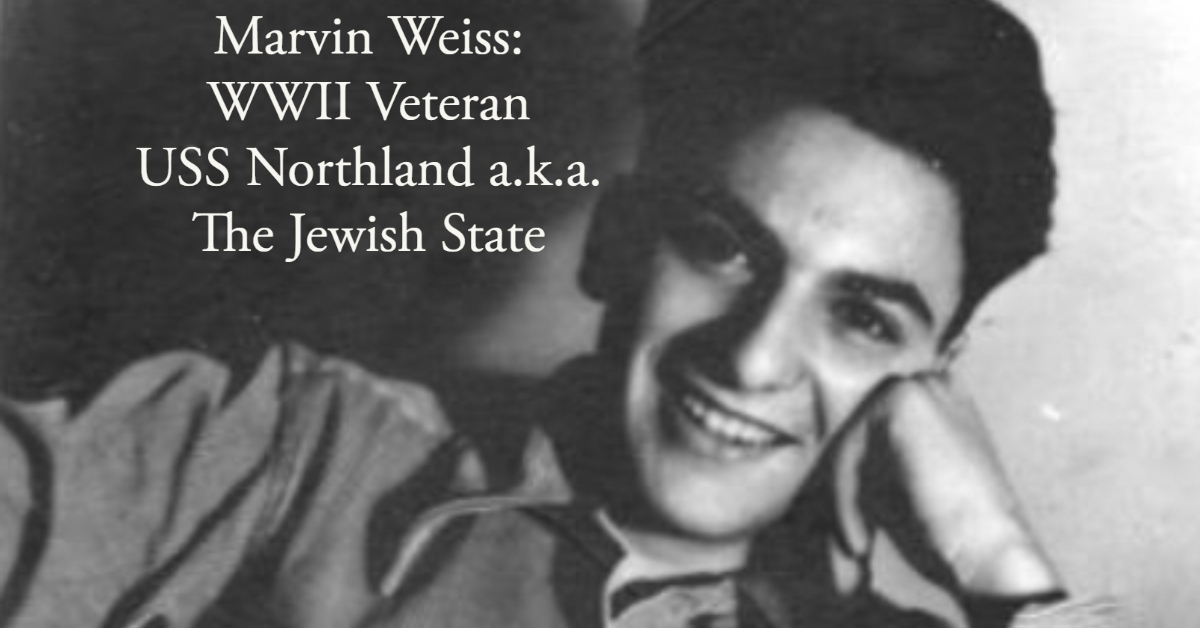
In 1947, Navy veteran Marvin Weiss of the Bronx could not get into engineering school, so he volunteered for something bolder. He became the electrician on the Northland, an old Coast Guard icebreaker renamed The Jewish State. She carried 2,664 Holocaust survivors from Bulgaria toward Palestine. When six British destroyers gave chase, the steering motor began to smoke, and Marvin built a human telephone line of refugees shouting right and left down through the decks. The ship was captured, and Marvin hid among the passengers, bound for Cyprus. He later became an engineer with many patents to his name. His memoir, written for his grandchildren, tells it all. ~Blog by Michael Ackermann
Learn More
The brave die never, though they sleep in dust: Their courage nerves a thousand living men. ~Minot J. Savage
Tribute video created by lead Veteran researcher, Michael Ackermann.
Learn More
As his inscription reads, "I did my best.".
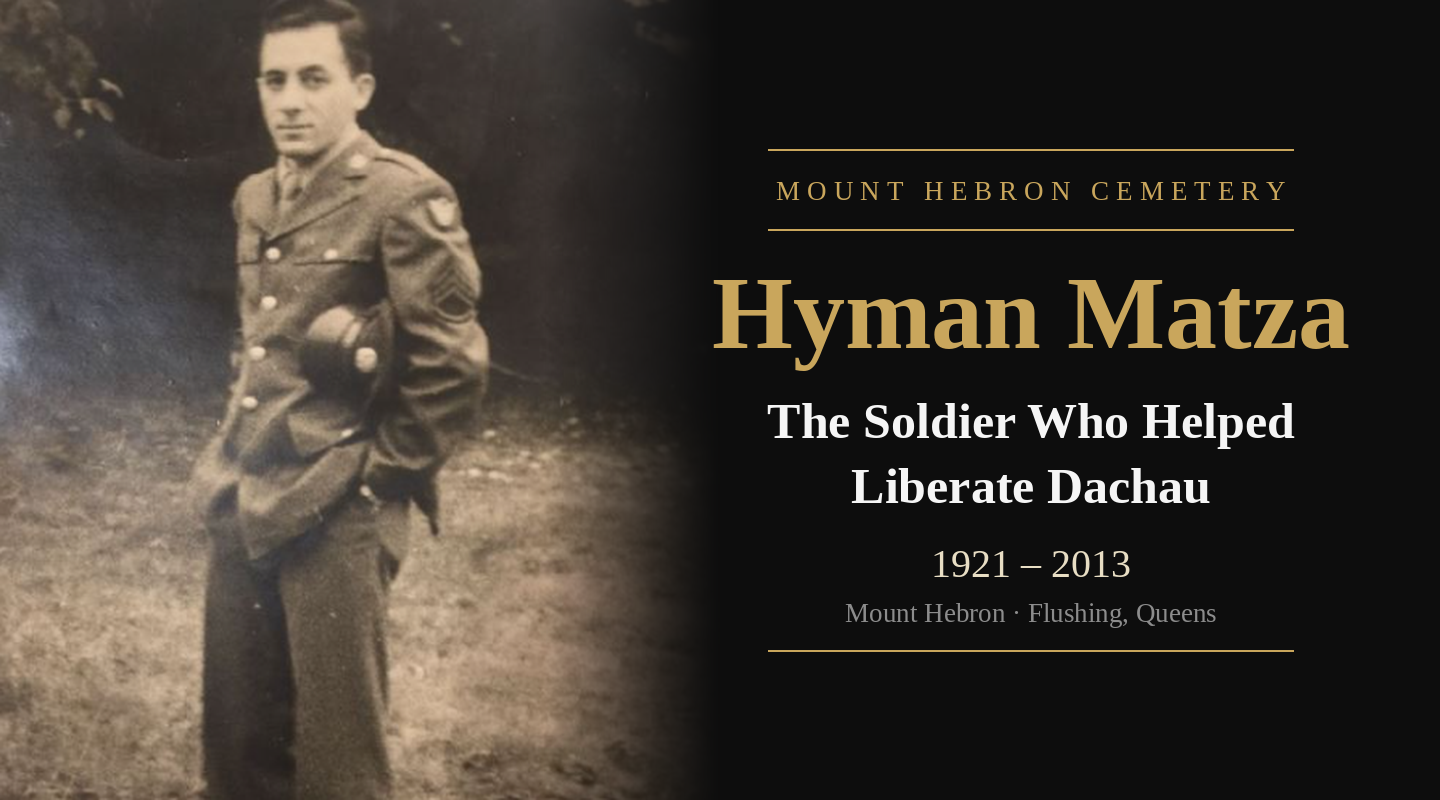
Hyman Matza selflessly and humbly helped to liberate the prisoners of Dachau concentration camp during WWII.
Learn More
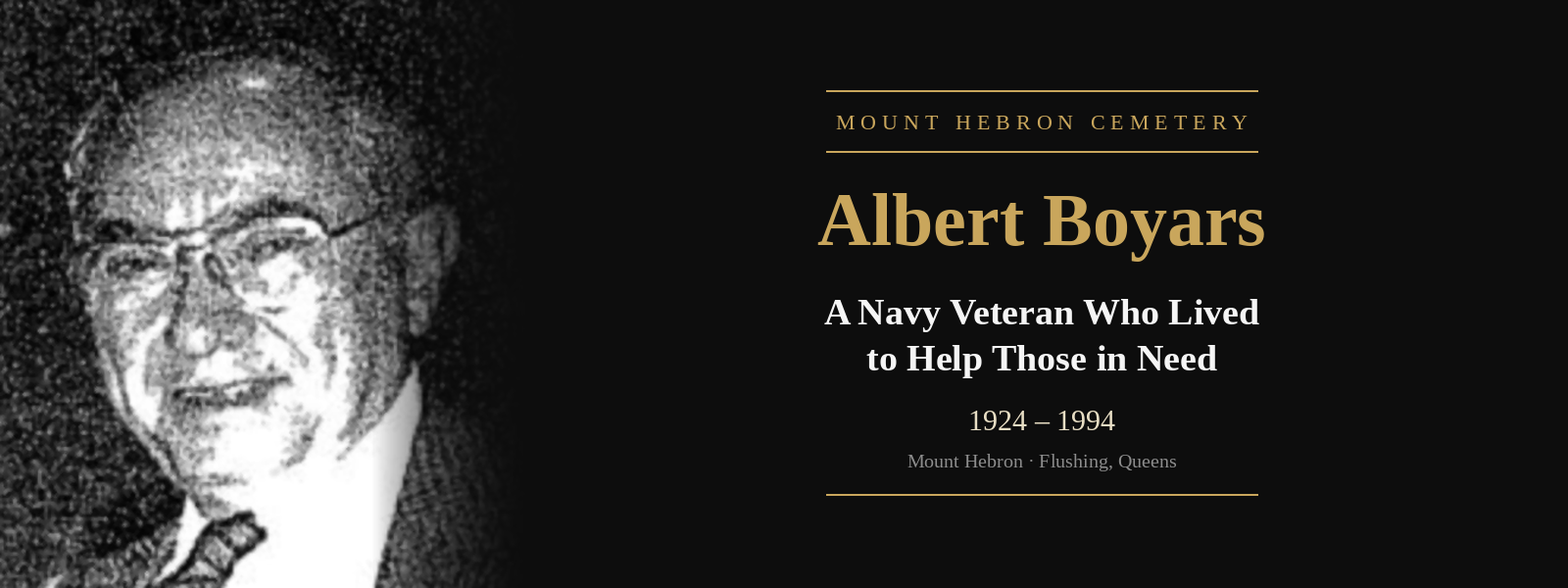
Albert Boyars was a Navy Veteran who became a New York Philanthropist. He lived his life helping those in need only to lose his life for his humane causes.
Learn More
Please read this beautifully written editorial from Hannah Berman, an intern who researched veterans. She shares the unique experience of studying veterans through the lens of a religious upbringing.
Read More