Hebron's Stories
If a story is important, then it must be told. We can portray dreams of what the future may hold, or allow introspection on what has occurred in the past. A story is a narrative that can relay lessons and warnings. A story can teach us about hope and remind us how important and meaningful our lives are. We are unearthing stories about those buried at Mount Hebron Cemetery.
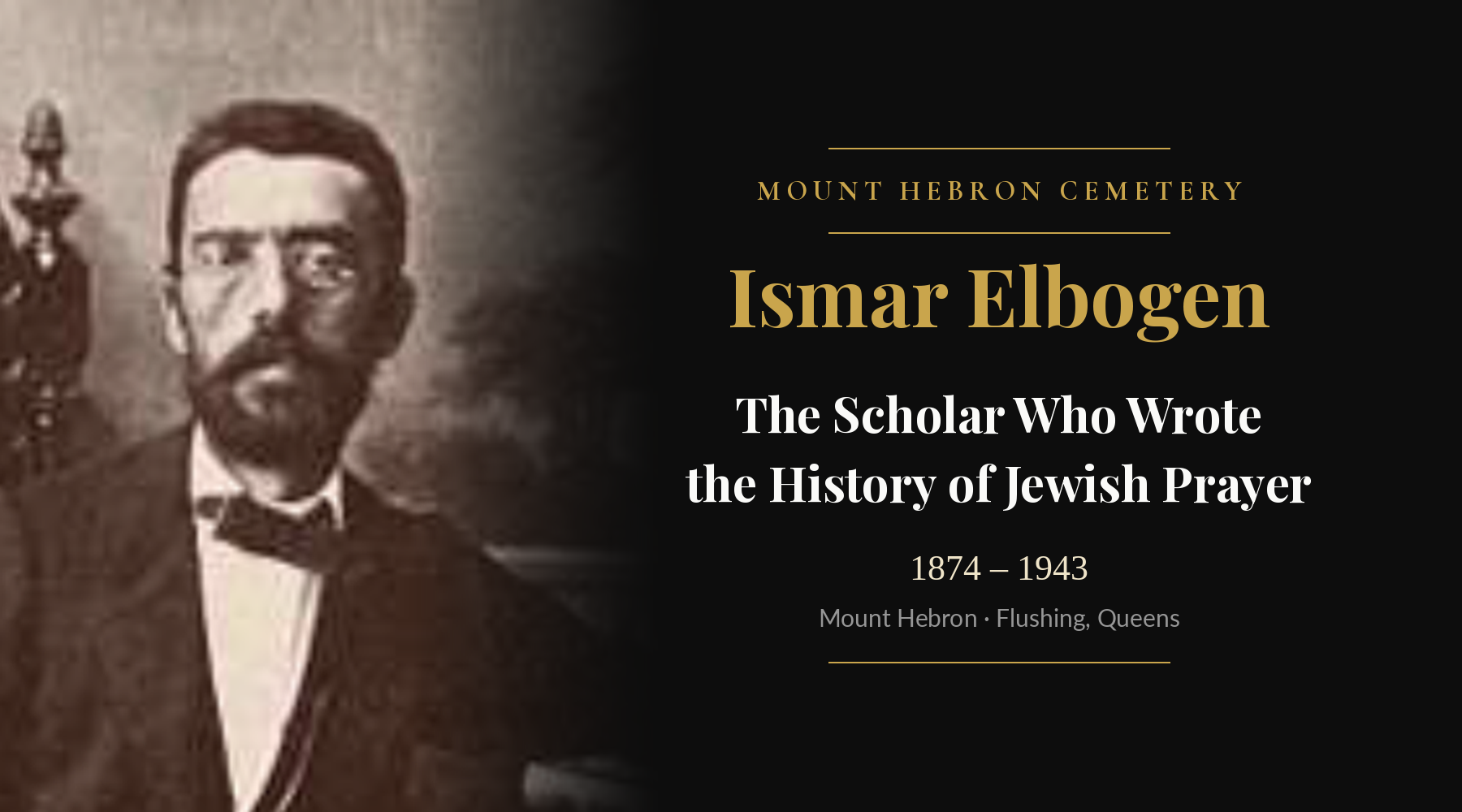
Rabbi and historian Ismar Elbogen was born in Schildberg (Ostrzeszow, Poland) in 1874. He studied in Breslau at the University and at the Juedisch-theologisches Seminar, receiving his doctorate in 1898 and his rabbinical ordination the following year. Elbogen taught at the Collegio Rabbinico Italiano in Florence from 1899 to 1902 and at the Hochschule fuer die Wissenschaft des Judentums in Berlin from 1902 to 1938, when he emigrated to the United States. Elbogen was the author of Jewish Liturgy- A Comprehensive History, which was, at the time, the most thorough academic study of Jewish Liturgy ever written. ~Blog by Renee Meyers
Learn More
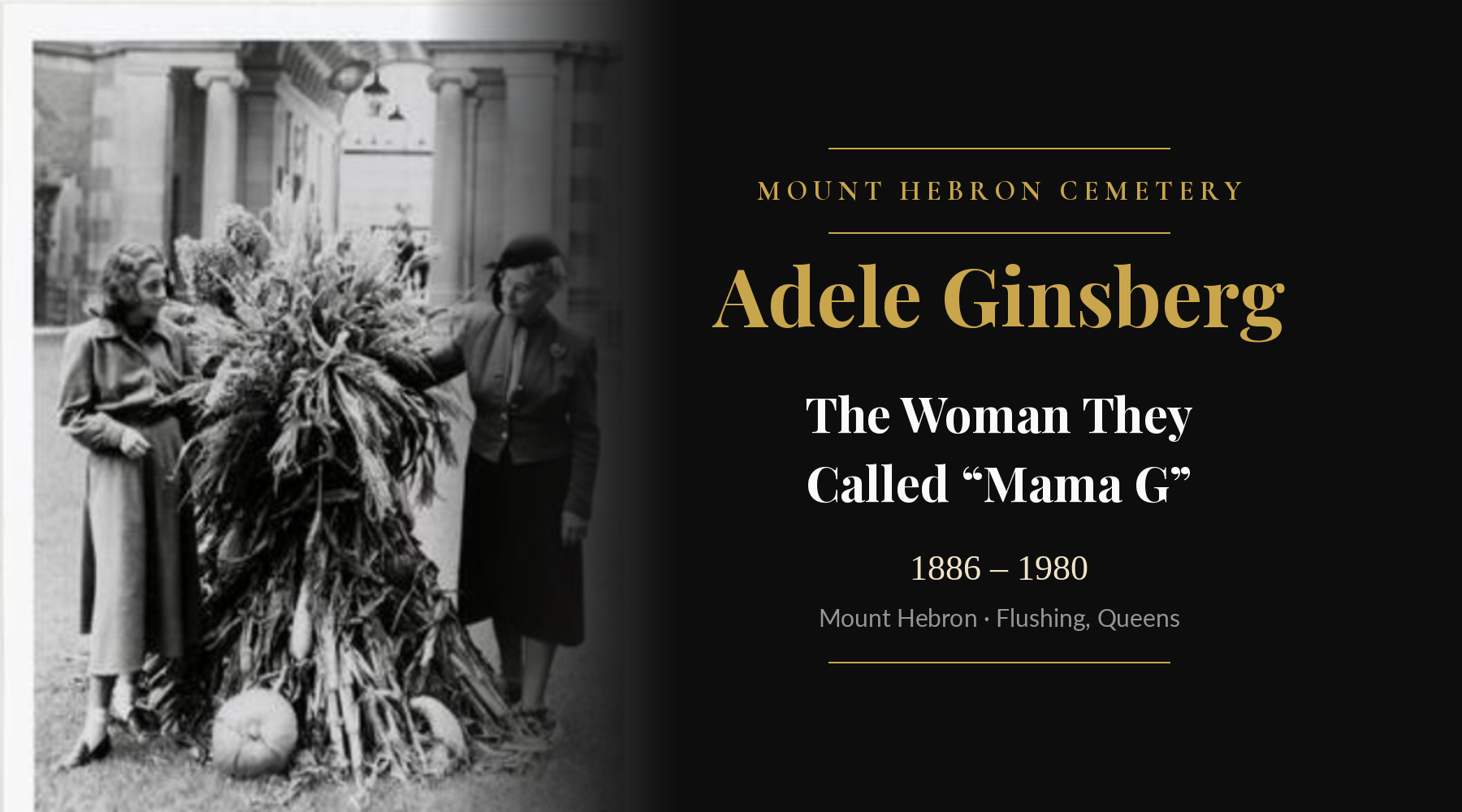
She was insistent on decorating the Jewish Theological Seminary's sukkah, which would be named in her memory. She used the status of her husband to encourage and educate Jewish women especially to think forward and on their own terms, keeping a separation of church and state so as not to muddy the two equally important pillars of life.
Blog by Rebecca Winn
Learn More
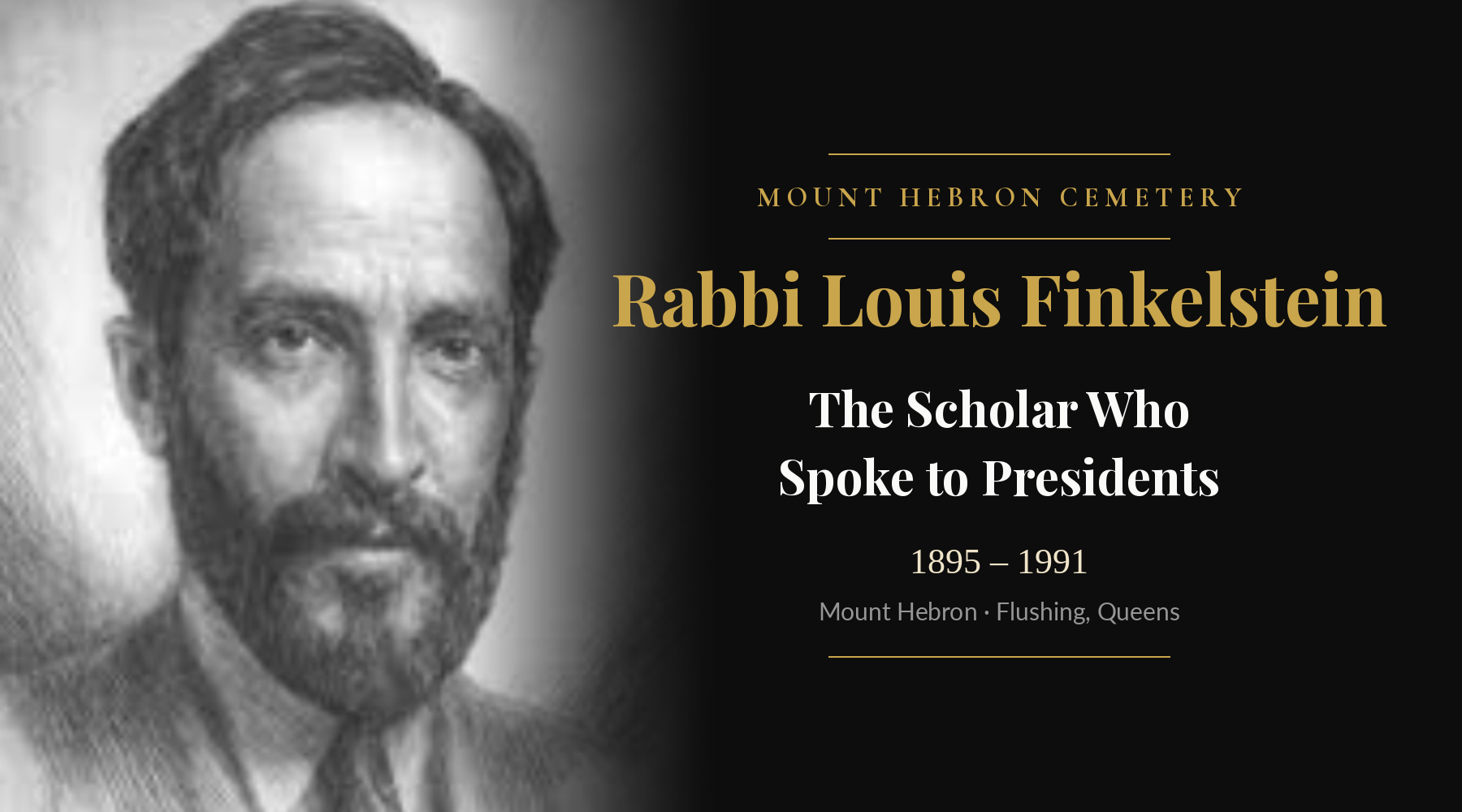
Rabbi Louis Finkelstein was the Chancellor Emeritus of the Jewish Theological Seminary of American and the main leader of conservative Judaism in the 20th Century. As the head of the largest denomination of Judaism in America, Rabbi Finkelstein made such significant accomplishments throughout his life that he became an American celebrity who hob knobbed with religious leaders of many denominations, celebrities as well as US presidents. Rabbi Finkelstein was the advisor to Jewish affairs to President Franklin Roosevelt. He prayed at the inauguration of President Dwight Eisenhower and was invited by President John Kennedy to join the American delegation sent to the Vatican for the installation of Pope Paul Vl. President Richard Nixon invited Rabbi Finkelstein to give a sermon at the White House.
Learn More
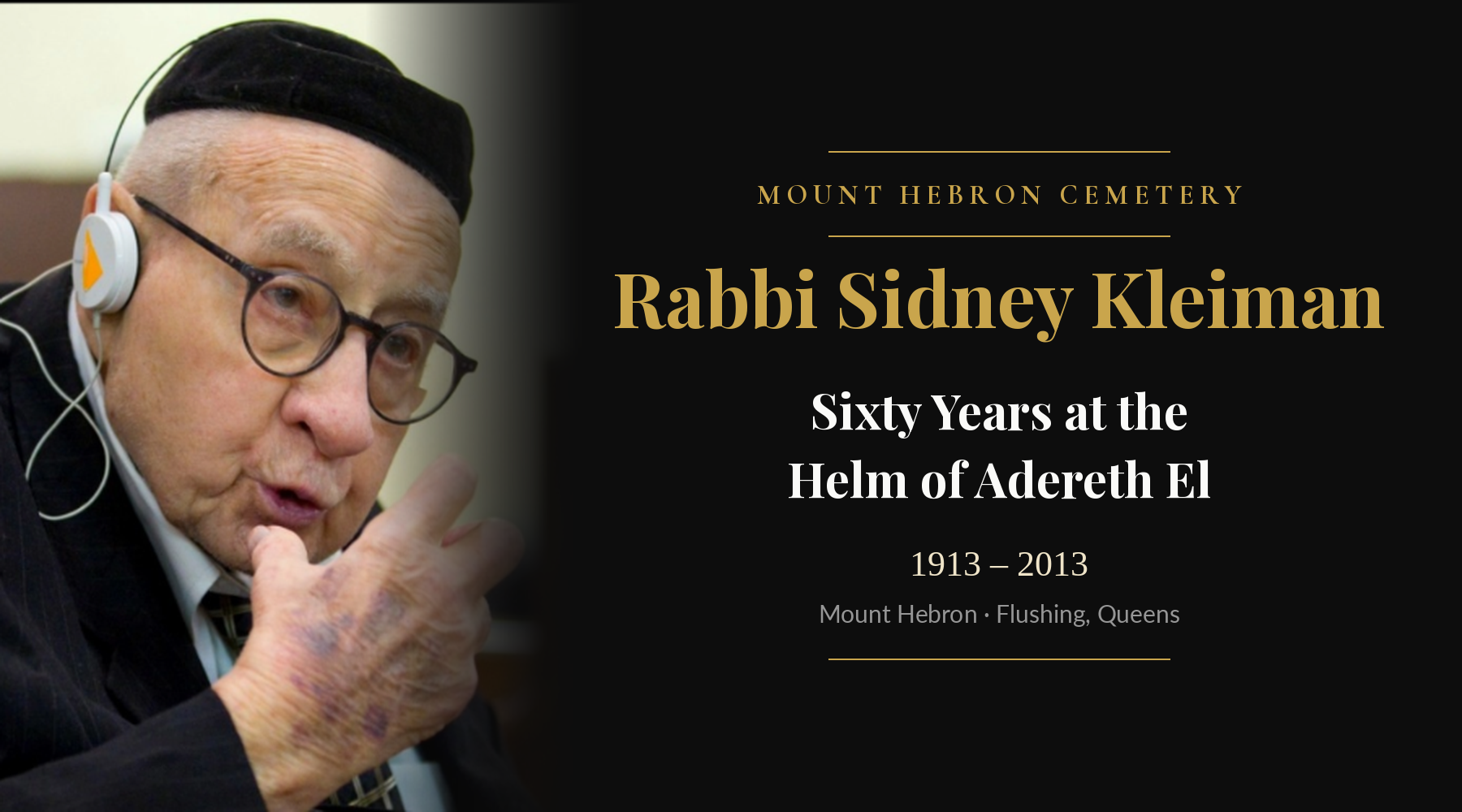
Rabbi Sidney Kleiman was a Rabbi who was known for his inspiring speeches,community service, and his ability to relate to Jews of all ages and from all walks of life. He was both the longest serving and the oldest active Congregational Rabbi in the United States. Rabbi Kleiman was at thehelm of Congregation Adereth El for close to 60 years. He succeeded in building up the Shul by bringing many people into the fold and introducing
new Congregants to the beauty and faith within the walls
of Adereth El.
Learn More
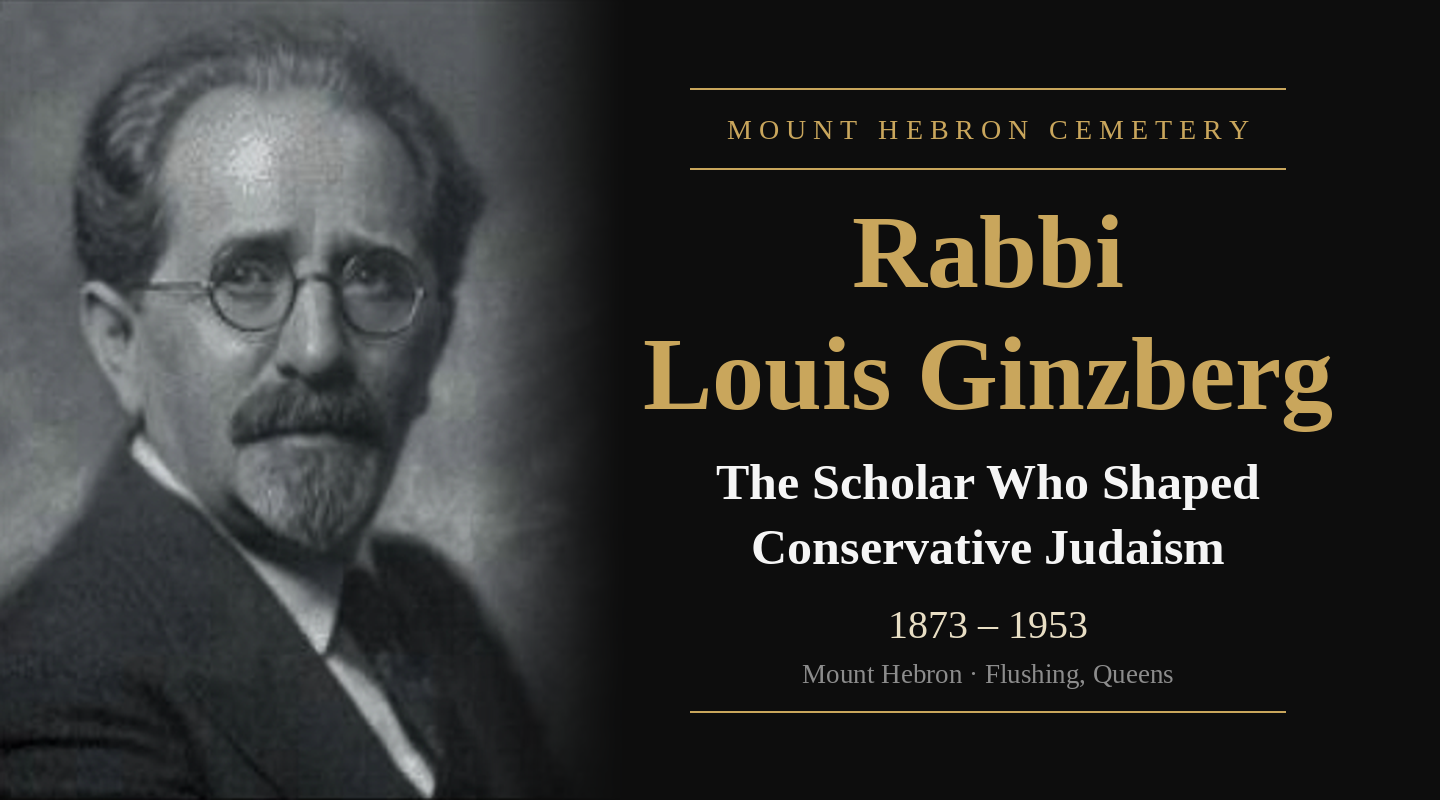
Adele Ginzberg was born in Frankfurt in 1886. Her mother died young, and her childhood was hard. In 1908 the scholar Louis Ginzberg saw her in a Berlin synagogue gallery and was smitten. He proposed by mail. They married in London in 1909 and came to New York, where they became known as Mr. and Mrs. Seminary at the Jewish Theological Seminary. She hosted students for Shabbat and decorated the Seminary sukkah, which now bears her name. She fought for women’s equal place in synagogue life and started the project that became the Girl Scouts' Menorah Award. Students called her Mama G. She died at 93, two days before her 94th birthday. ~Blog by Rebecca Winn
Learn More
Rabbi Eugene Kohn was born in Newark, New Jersey, in 1887, the son of Czech Jews. He studied at NYU and the Jewish Theological Seminary, then led congregations in Baltimore, New Jersey, Wisconsin, Ohio, and New York. His true calling came with words. Alongside Rabbi Mordecai Kaplan, he helped found the Reconstructionist movement, which sees Judaism as a living, evolving civilization. For decades, he served as the first managing editor of The Reconstructionist. He co-edited the movement’s prayer book and wrote books on faith and humanism. He believed his movement could help Judaism thrive in the modern world. He died in 1977 and rests at Mount Hebron Cemetery. ~Blog by Priya Perumal
Learn More
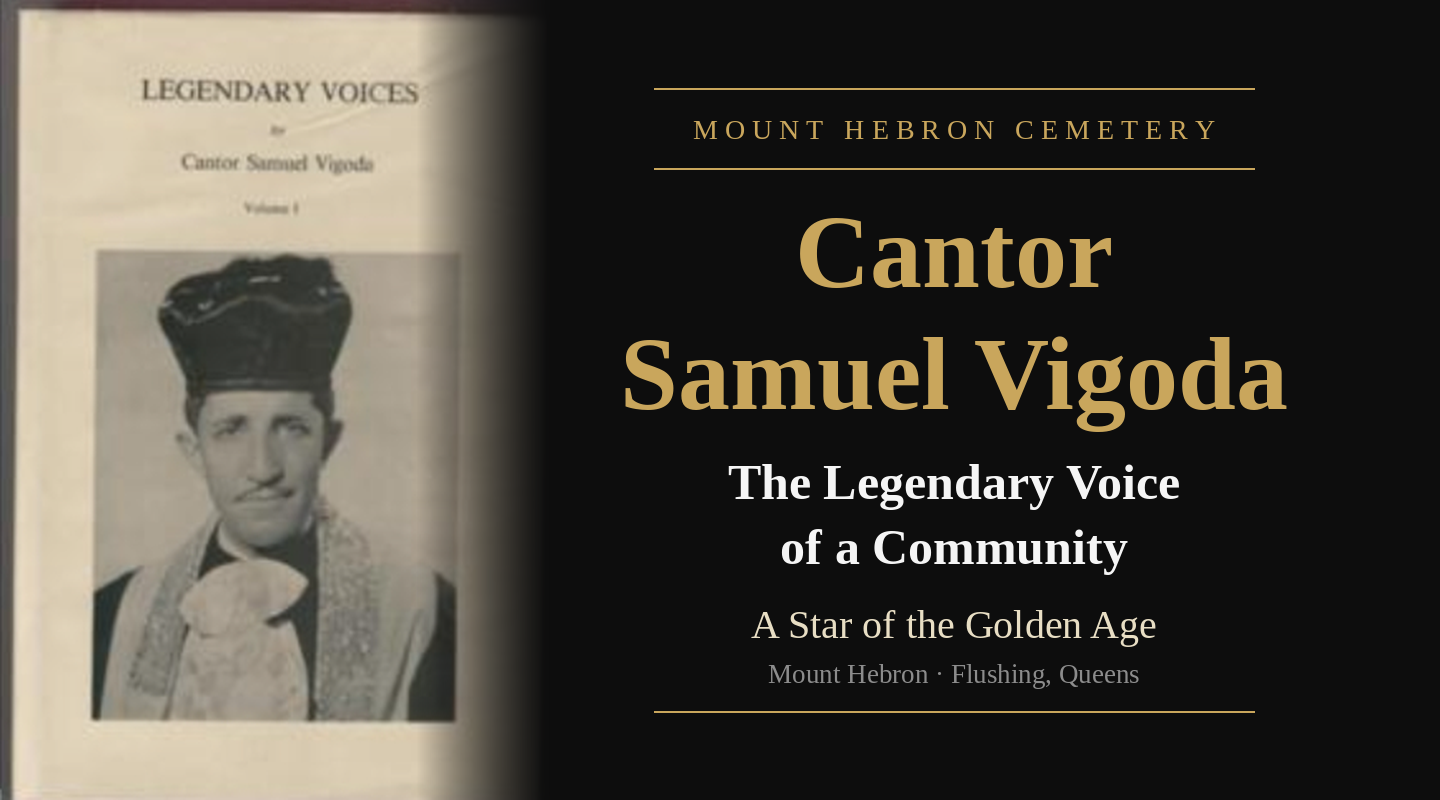
Cantor Samuel Vigoda was born in Poland in 1892, the son of a cantor and butcher who struggled to make ends meet. At a wedding in Hungary, the great Cantor Yossele Rosenblatt heard Samuel and his brother sing and took the boys to live and sing with him in Pressburg. Samuel later studied medicine, but war and quotas closed that door. So he turned to his voice. He sang across Europe and reached New York in 1923, where he took over Rosenblatt's pulpit at Ohab Zedek. He gave concerts across America and Canada, composed, recorded, and wrote Legendary Voices. He was one of the last true stars of the cantorial Golden Age. ~Blog by Priya Perumal
Learn More
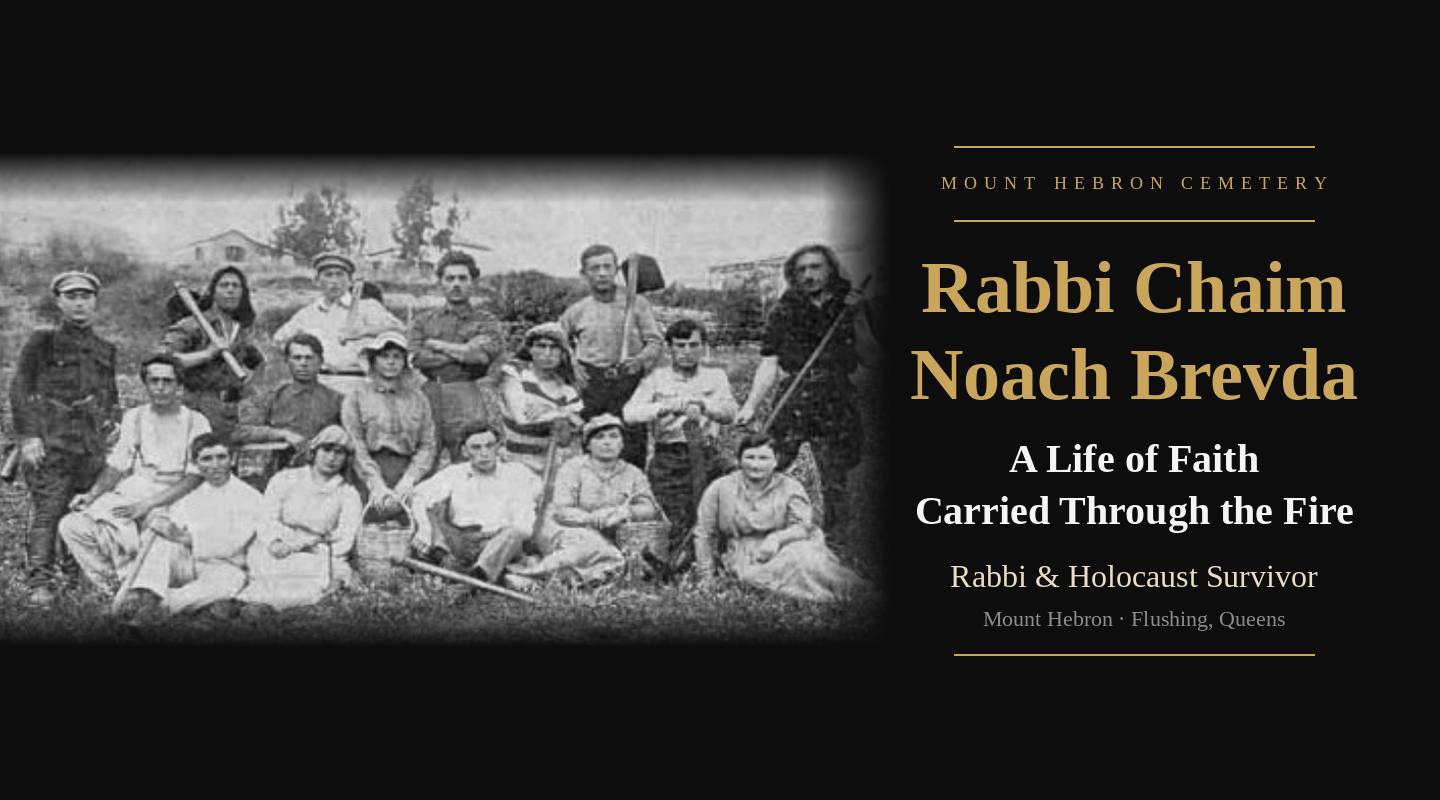
Rabbi Chaim Noach HaCohen Brevda was born in Baranovitch. He studied in the yeshivas of Lithuania, taught at the yeshiva in Radun, and received ordination from the Chofetz Chaim. When the war came, he escaped to Japan and then to Shanghai, where he studied with the Mir Yeshiva. After the war he came to New York. He taught at Yeshiva Chofetz Chaim and became known among survivors of Europe’s yeshivas for his knowledge of Torah. He led congregations in Brownsville and Brighton Beach and founded a rabbinical seminary of his own, Tiffereth Avrohum. He was also the American liaison for a Jerusalem yeshiva. He died in 1999 and rests at Mount Hebron. ~Blog by Chloe Baker
Learn More
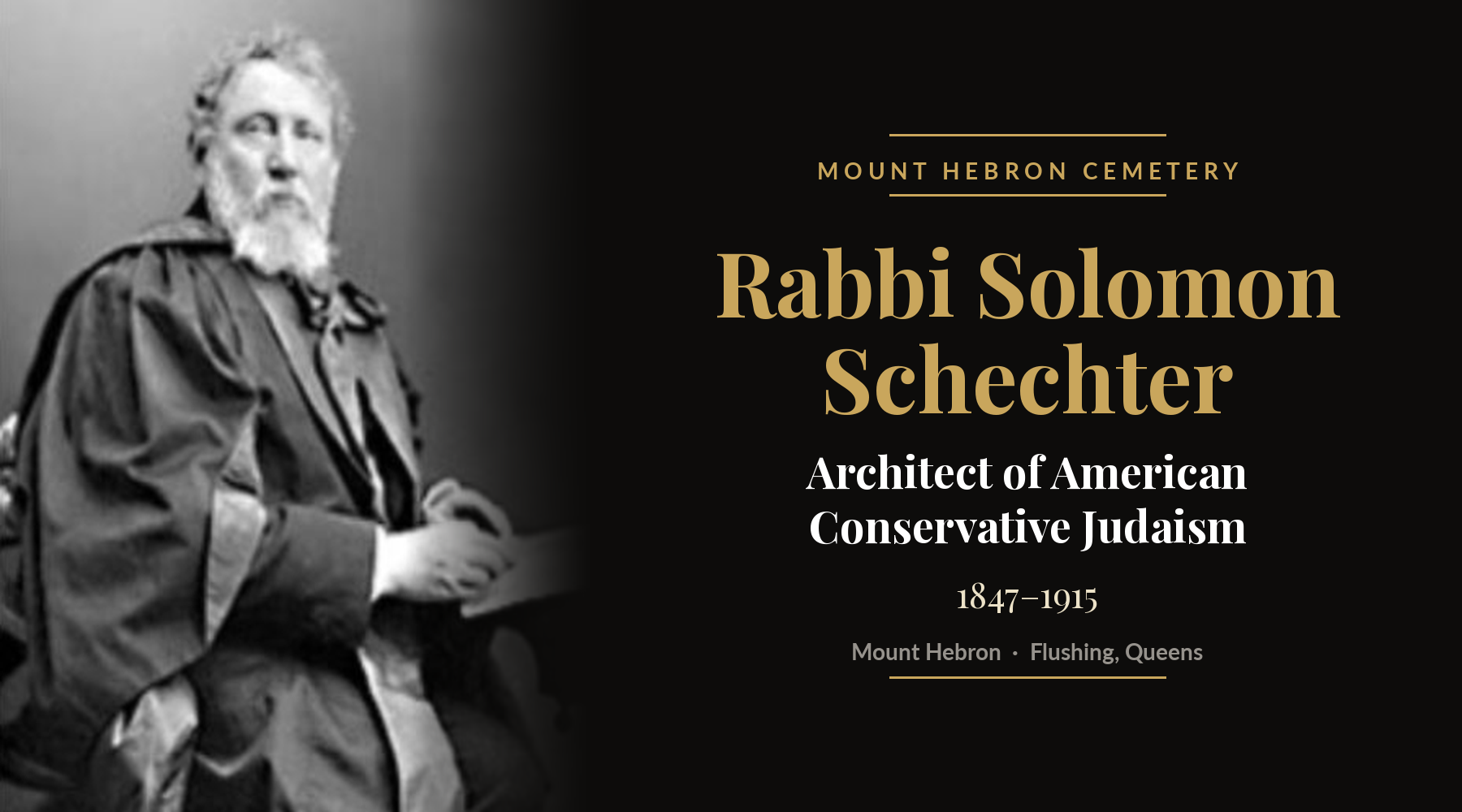
Solomon Schechter was born in Focsani, Romania, in 1847, the son of a Chabad Hasid who worked as a ritual slaughterer. His youth was given to the study of rabbinic texts. He became a scholar at Cambridge, and in 1897 he traveled to Cairo to reach a windowless chamber high in the wall of an old synagogue. Inside was the Cairo Genizah, nearly a thousand years of discarded Hebrew writings. He brought back some hundred thousand fragments. In 1902 he came to New York to lead the struggling Jewish Theological Seminary. He founded the United Synagogue and became the architect of Conservative Judaism. He died in 1915 and rests at Mount Hebron.
Learn More