Hebron's Stories
If a story is important, then it must be told. We can portray dreams of what the future may hold, or allow introspection on what has occurred in the past. A story is a narrative that can relay lessons and warnings. A story can teach us about hope and remind us how important and meaningful our lives are. We are unearthing stories about those buried at Mount Hebron Cemetery.
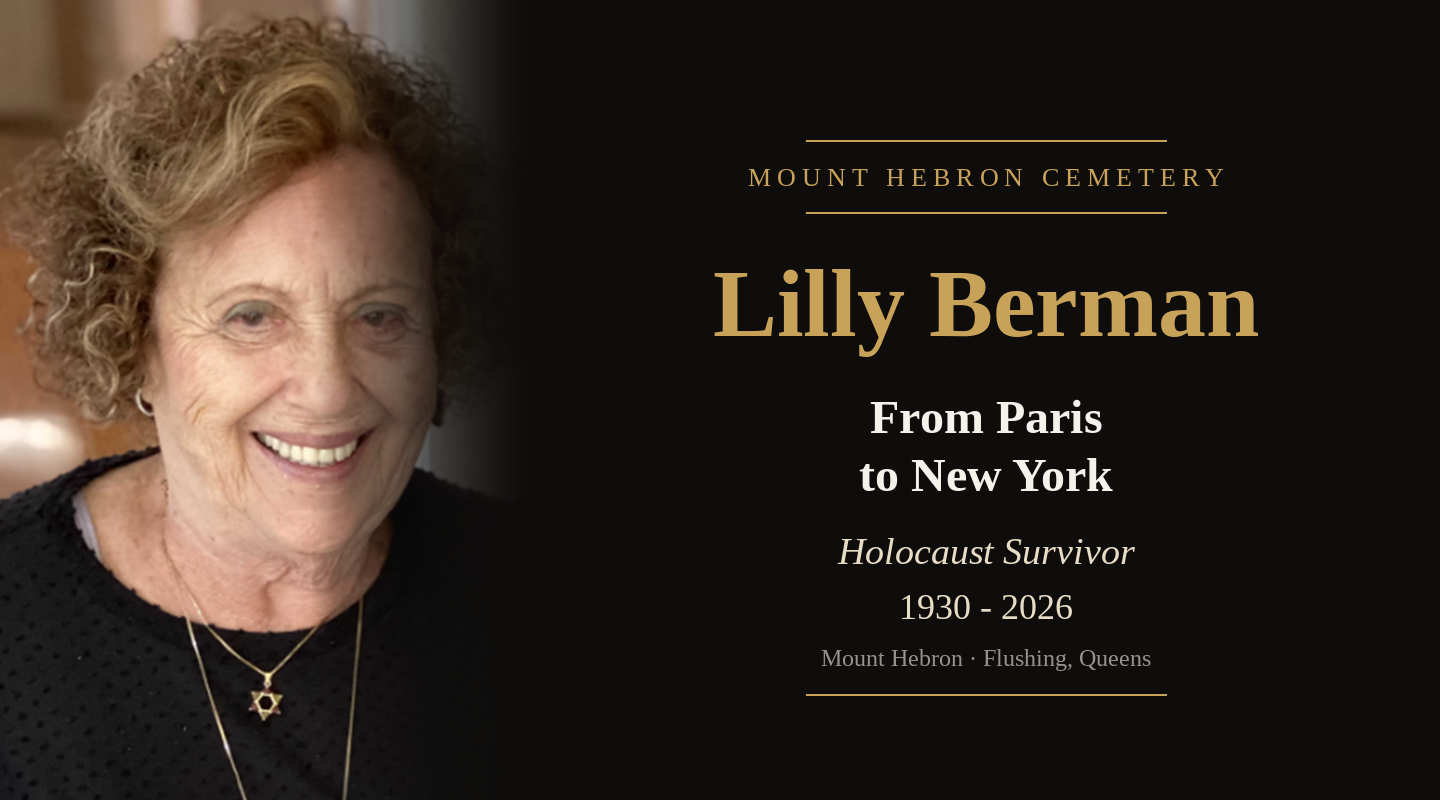
Amelie Gutnic was nine years old when the Nazis marched into Paris. A girl who loved to read, she watched her father, a tailor, waste away in the Drancy camp before he was deported to Auschwitz and murdered in 1942. When her uncle spotted her name on a roundup list, he got Lilly and her mother out of the city. Nuns, aunts, and strangers hid them in the French countryside until liberation. In 1953, Lilly sailed to New York on the S.S. Liberte with no money and no English. She married Seymour Berman, taught herself the language, earned her GED, and raised three children in Rego Park. This is her remarkable story.
~Blog by Daniel Khaitov
Learn More
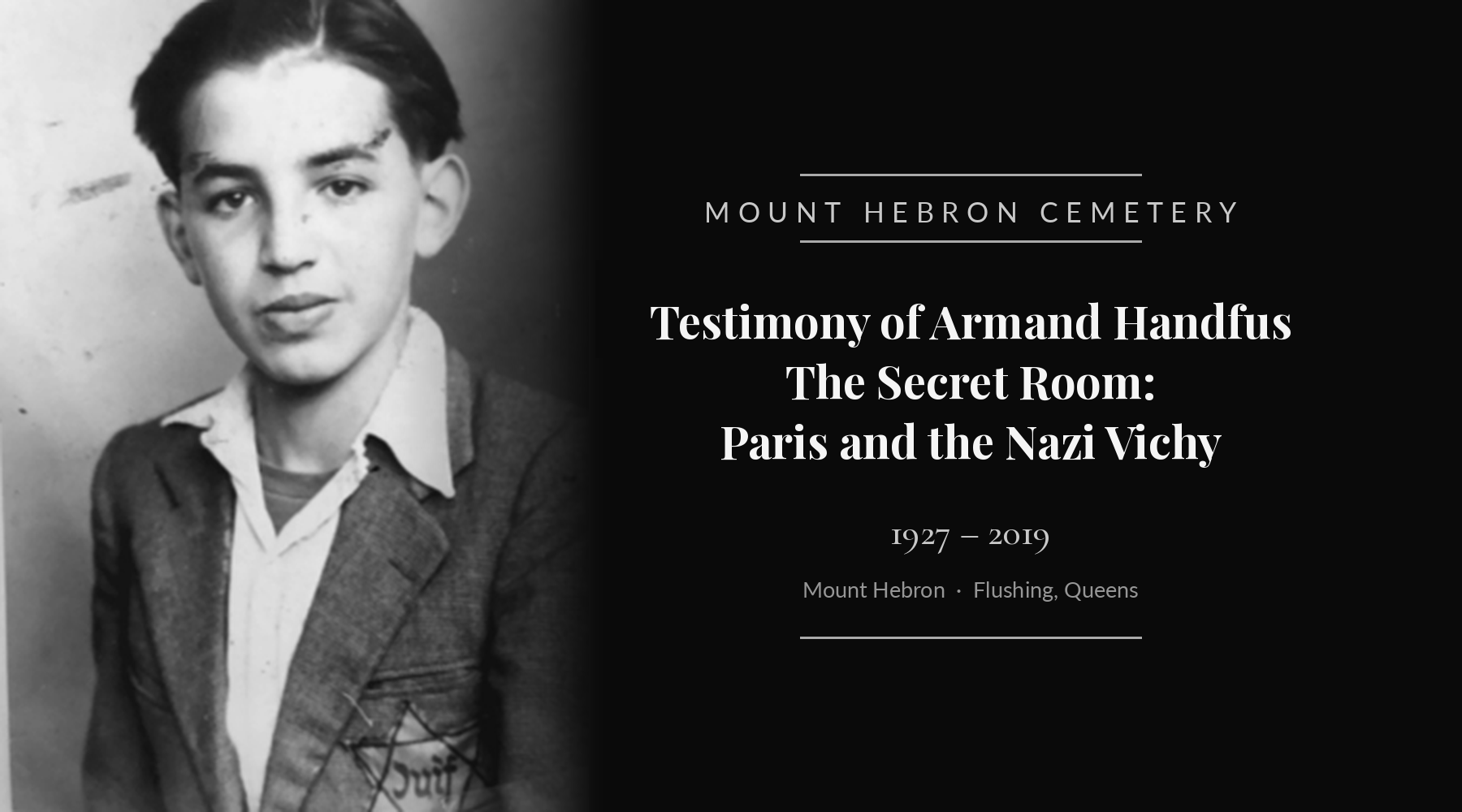
The Vel d'hiv Roundup of July 16-17, 1942 in which 13,000 French Jews were deported to death camps; the German Occupation of Paris and the Armistice signed between Petain and Hitler which insured the deportation and death of 72,000-78,000 French Jews; everyday raids, arrests, roundups; a process of selection for arrest and deportation which proceeded methodically, beginning with male stateless foreign Jews, in May, 1941, extending then to foreign Jews in 1942 and in the end, all Jews including French citizens.
Armand bears witness to history through his 15 year old eyes and later in life, recounts it in a testimony for the Museum of Jewish Heritage. ~By Handfus Family
Learn More
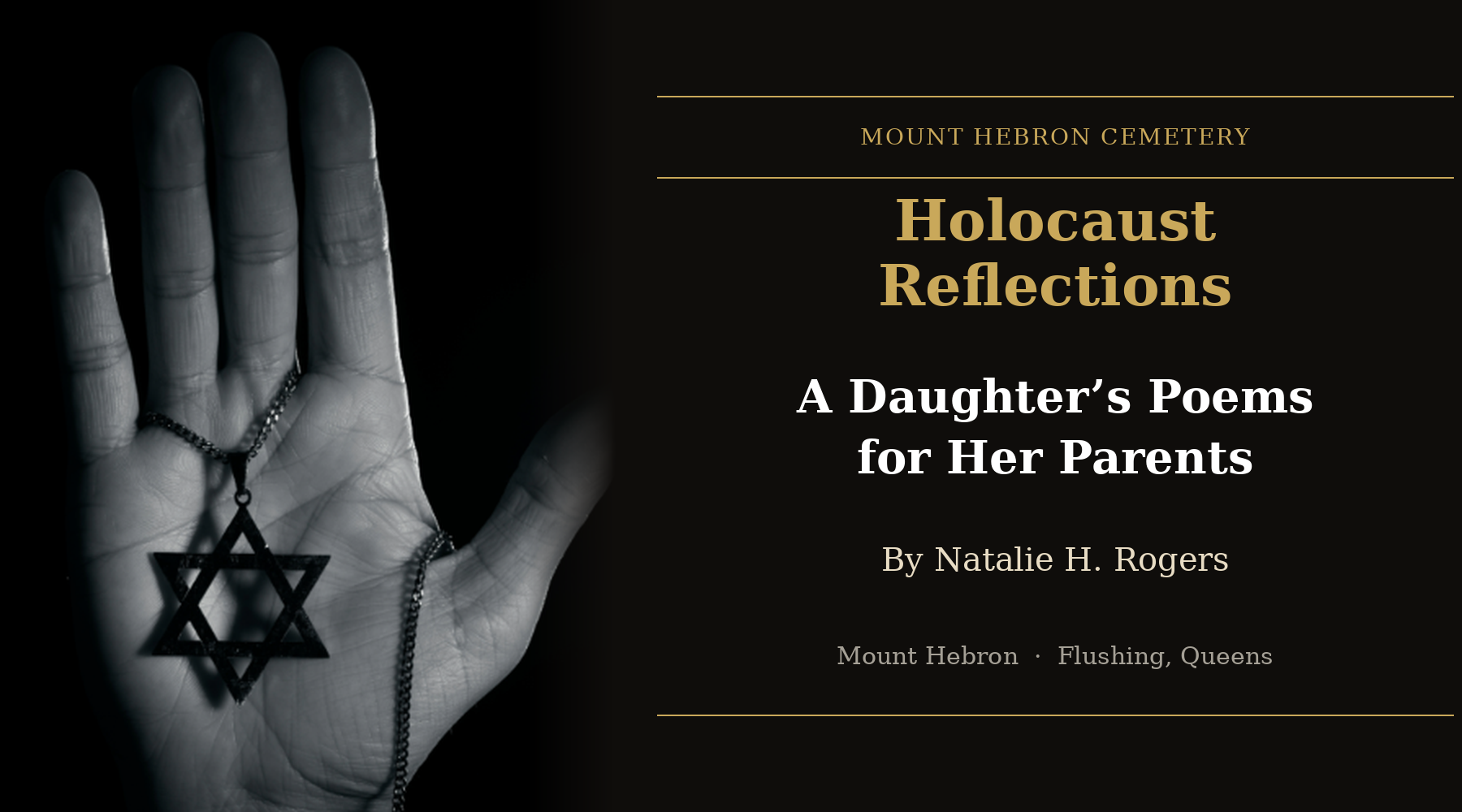
Natalie H. Rogers is a first-generation Jewish American poet whose work preserves the memory of her family and the Holocaust. Her father, orphaned in Amdura, Poland, lost much of his family, and her mother immigrated to the United States at age three. Through poems such as The Package, Natalie tells the stories of her parents' lives, their resilience, and the experiences of families affected by the Holocaust. Her writing honors their memory and keeps alive the history and identity of Jewish families for future generations.
Learn More
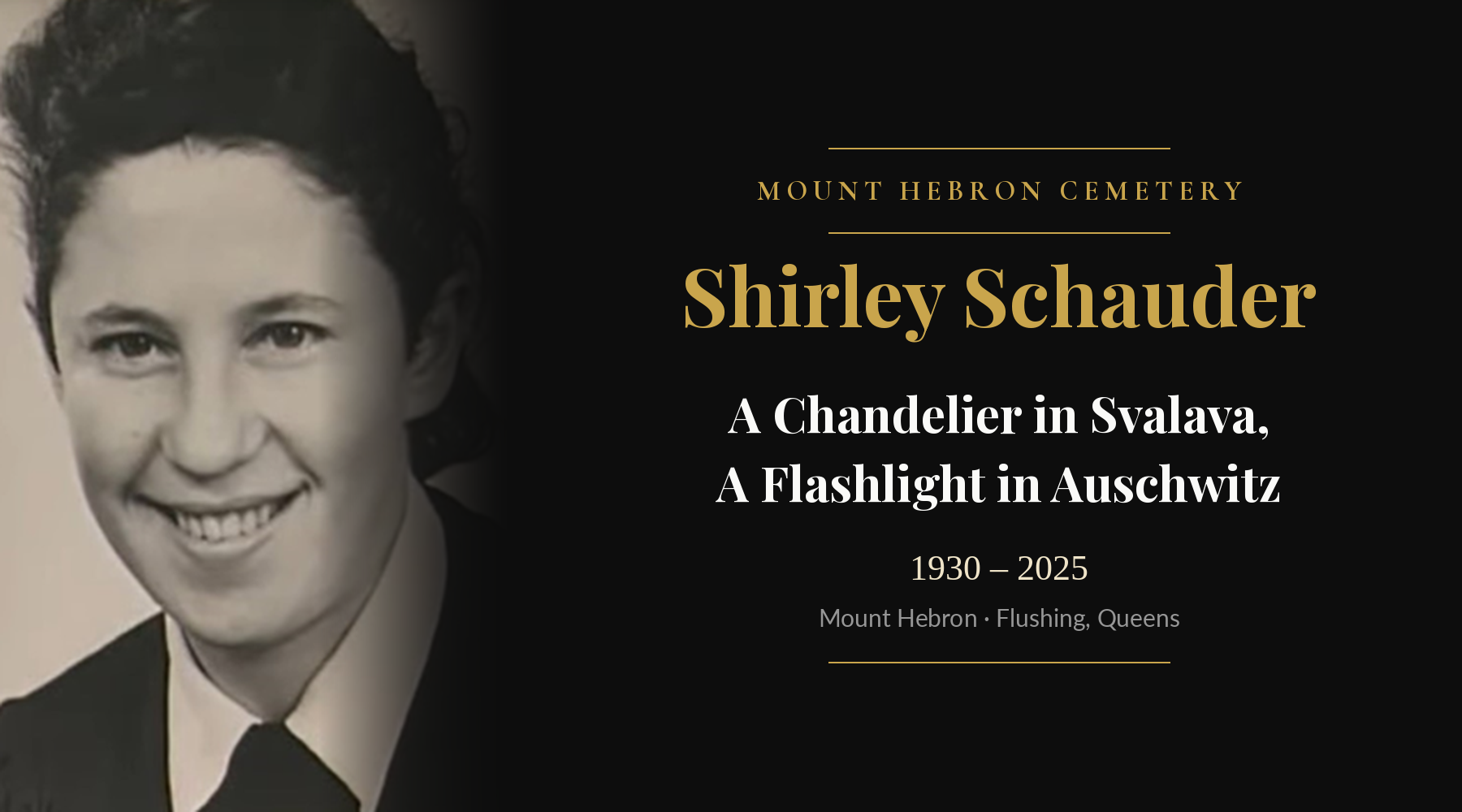
In 1943, young Shirley Ackerman walked her father to the train station in Svalava, Czechoslovakia, and gave him a flashlight. He carried it through the war. A year later, Shirley was sent to Auschwitz with her mother and two little brothers. She never saw them again. She survived Bergen-Belsen, a grenade factory, a death march, and typhus. In 1947, she found her father alive in Germany. He handed back the flashlight and told her it had saved him. In America, she married Alfred Schauder and raised two sons. She wrote poems and painted clowns, sad people who make people happy. Shirley Schauder rests at Mount Hebron Cemetery. ~Blog by Adam Har Shemesh
Learn More
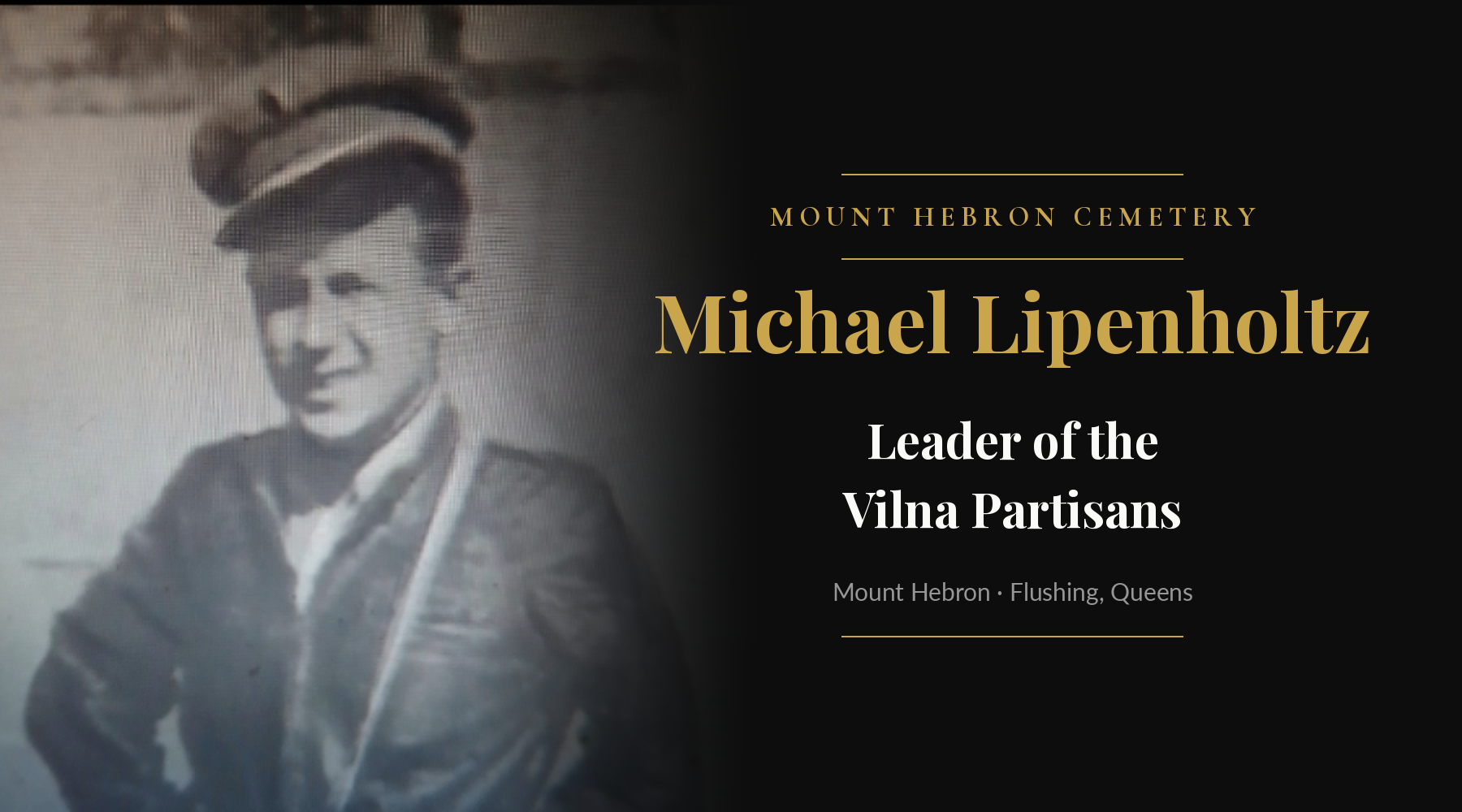
Michael Lipenholtz considered himself to be a Jack of all Trades. Technical jobs were his specialty including electrical work and plumbing.
He also knew how to pick locks and how to handle guns. Other Partisans found Michael to be an intelligent man whom they all could
rely on. He was chosen to be the Leader of the Partisans in Vilna. Both during and after the war, people would seek out Michael's
help and advice due to his expertise in many areas. Michael Lipenholtz was a multi talented leader who used his gifts to help both himself and
others survive the War.
Learn More
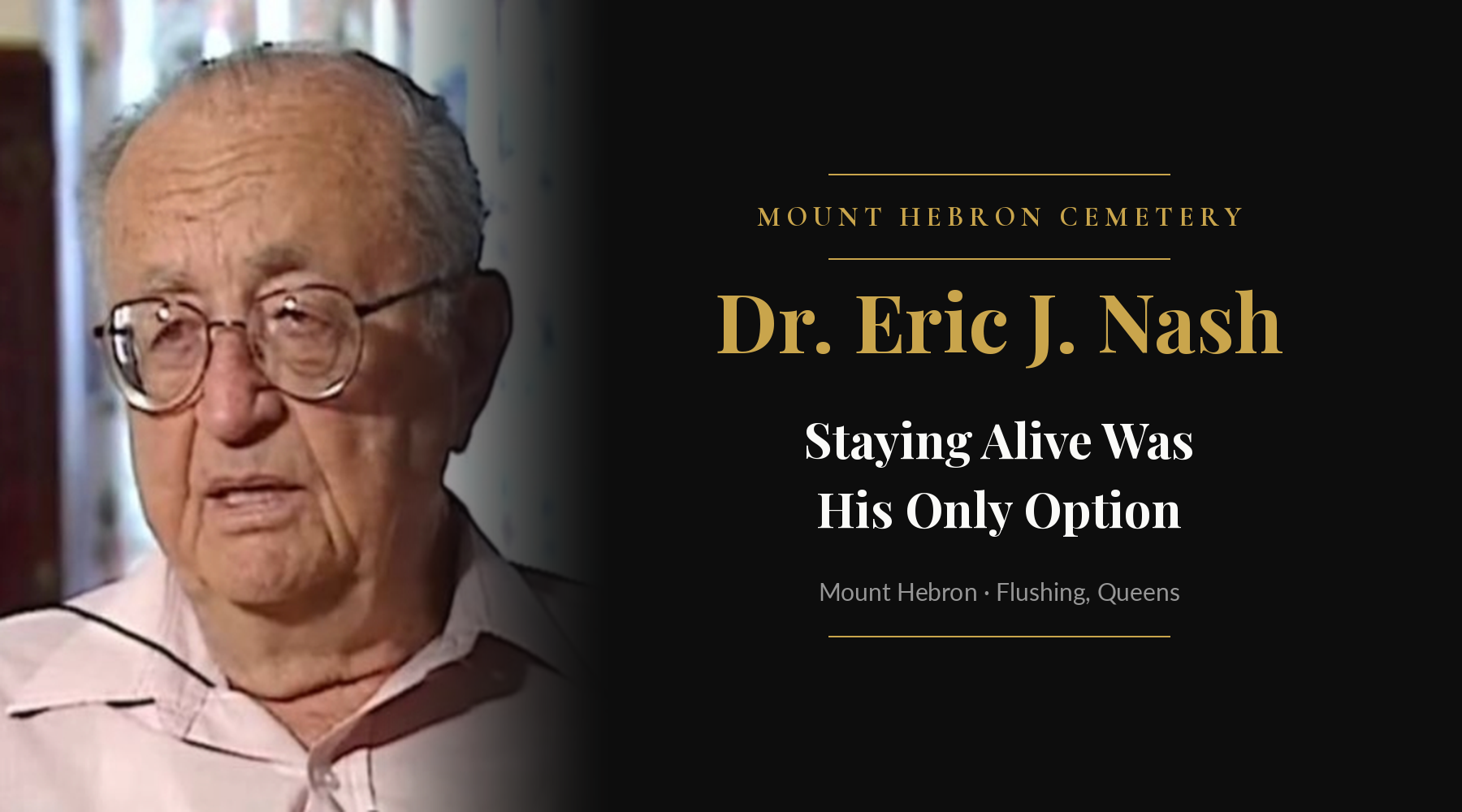
. Eric J. Nash was a determined man. Determined to stay alive. Eric did everything he could to survive, mostly because of his incessant longing to see his family again. Many times, Eric thought it would be much easier to just stop fighting and give up. He could simply stop caring about life, sit down and eventually die. Like a Musselman. It was so much harder to stay alive. But for Eric Nash, this was his only option.
Learn More
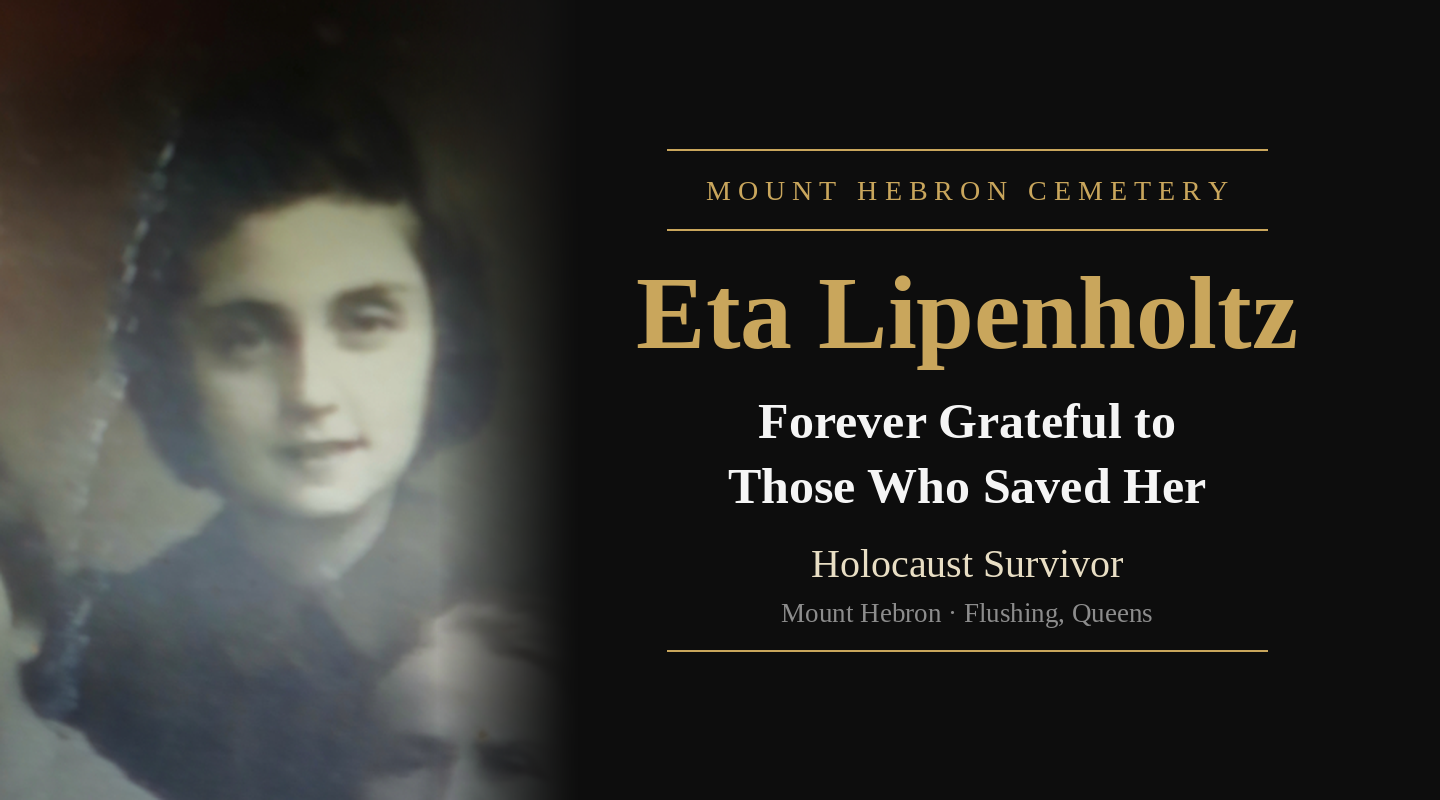
Eta Lipenholtz was born in Vilna in 1926. When the Germans came, her family was forced into the ghetto. Her father's work papers saved them more than once. Then Lodga, her grandmother's maid, found them a hiding place. She walked Eta and her sister across the city, holding their hands past German soldiers. A Polish man named Stan hid them under a floor for almost a year. When the bombs fell, he moved them to a cellar. Their old hiding place was destroyed. Eta survived. Her father was killed the day before liberation. Eta never forgot the people who saved her. She rests at Mount Hebron Cemetery. ~Blog by Renee Meyers
Learn More
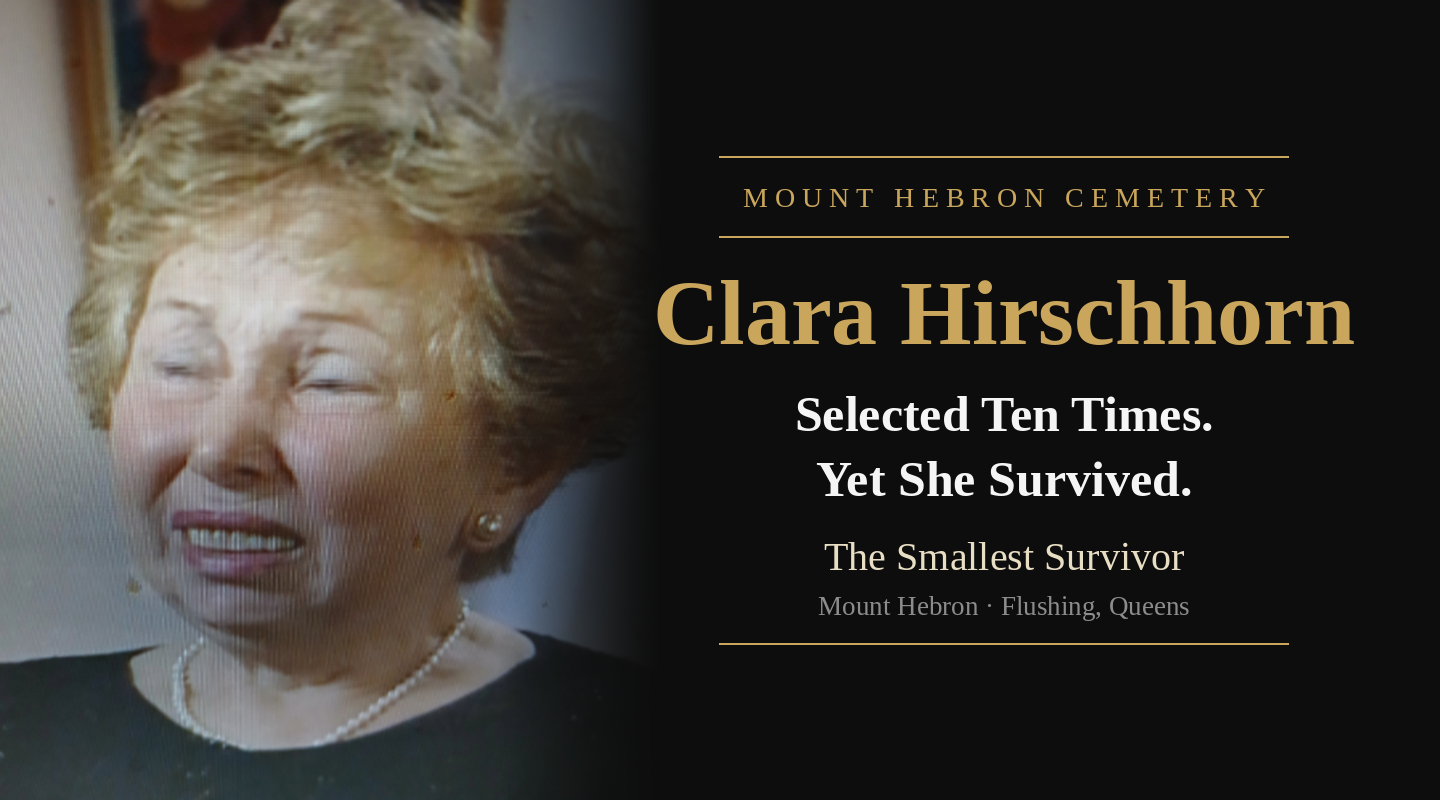
Clara was repeatedly told that she looked as tiny as an 8-year-old when she was 14! Yet she survived.
Clara was interred in 3 concentration camps where she was always the smallest. Yet she survived.
Clara was selected by Mengele ten times due to her size. Yet she survived.
Clara started to think that death would be preferable to her life in Hell. Yet she survived.
Clara Gluck Hirschhorn was, in the truest sense of the word, a survivor.
~Blog by Renee Meyers
Learn More
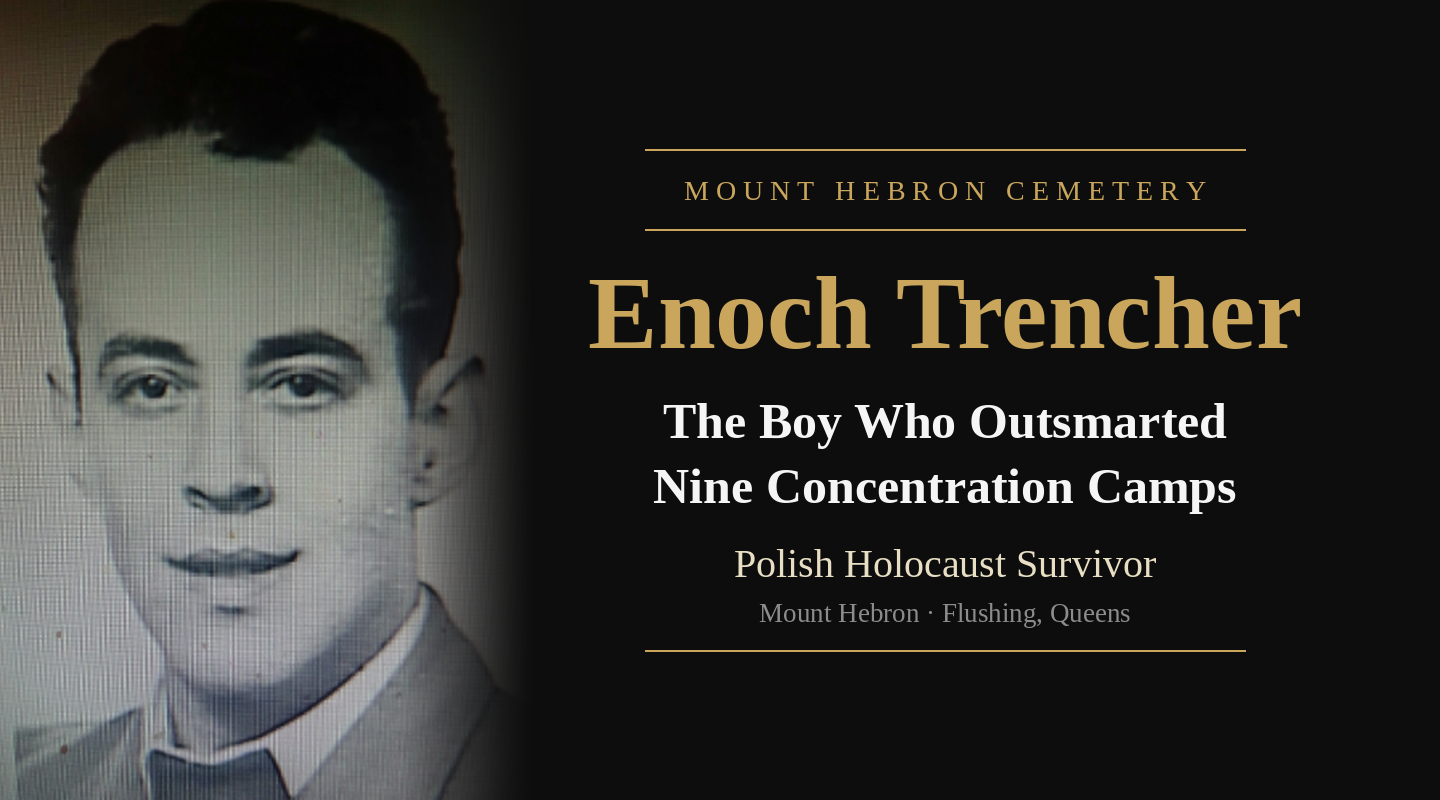
Enoch Trencher was a Polish survivor. He was just 13 years old when his family was caught in a Nazi roundup. Throughout the war, Enoch demonstrated many times over just how clever he was and how strong his survival instincts were. Enoch always looked for ways to outsmart the system and stay one step ahead of the Nazi machine. He contrived schemes and colluded with other inmates with his objectives being to obtain food, maintain good heath and stay alive. Enoch had many close calls during the years that he was shuttled between nine concentration camps. However, Enoch always managed to triumph and he repeatedly credited Divine Protection for his survival.
Learn More
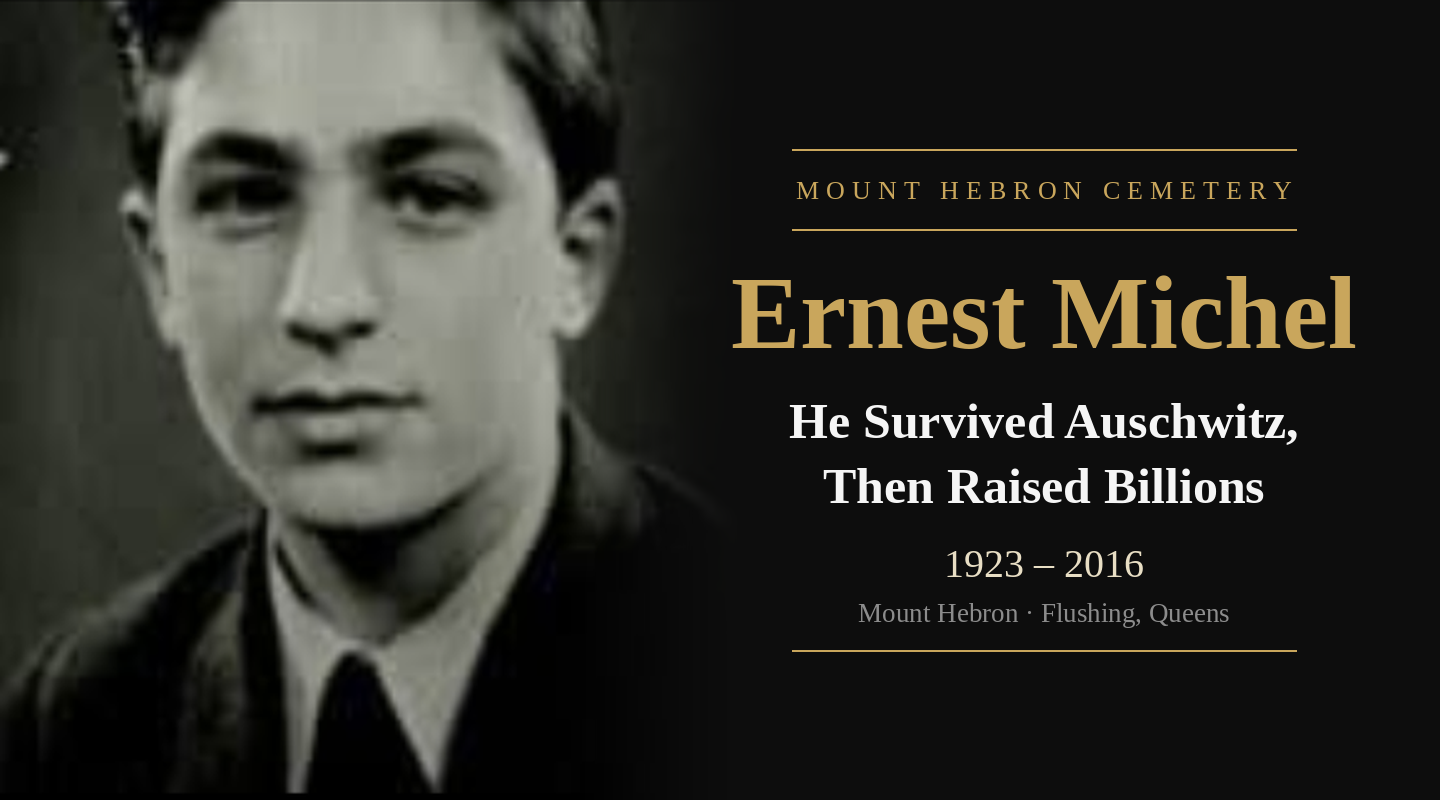
Ernest Michel's father insisted he learn one skill: beautiful handwriting. It saved his life. Born in Mannheim, Germany, in 1923, Ernest last saw his parents at a train station in 1939. They died in Auschwitz. He survived labor camps, Auschwitz, and two death marches. When the camp needed someone with good handwriting, Ernest stepped forward and lived. In 1945, he escaped into the forest and was soon liberated. He covered the Nuremberg trials as Auschwitz Survivor 104995 and refused to shake Hermann Goering's hand. In America, he led the United Jewish Appeal and raised billions for Jewish causes. Ernest Michel died in 2016 and rests at Mount Hebron Cemetery. ~Blog by Renee Meyers
Learn More
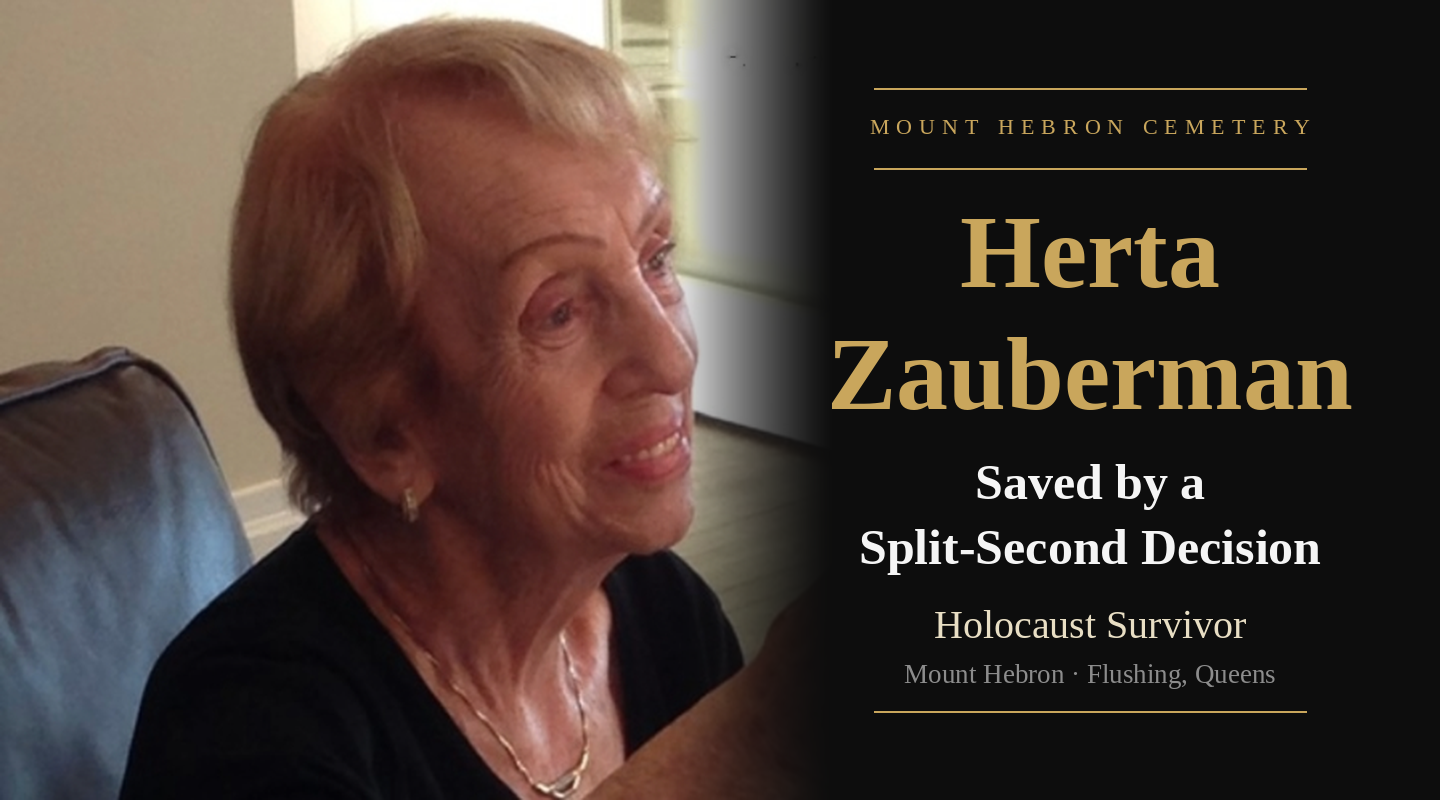
Herta Munk Zauberman lost her entire family in World War 2. She was sent to several Concentration camps where she saw her friends and fellow Jews
tortured and murdered. Herta herself was starved and beaten.
When she was on a Death March, Herta made a split-second decision that would save her life. She usually was not one to take chances and usually followed orders. But this time, Herta had had enough. She did not follow her instincts, took a gamble, and ultimately won.
Blog by Renee Meyers
Learn More
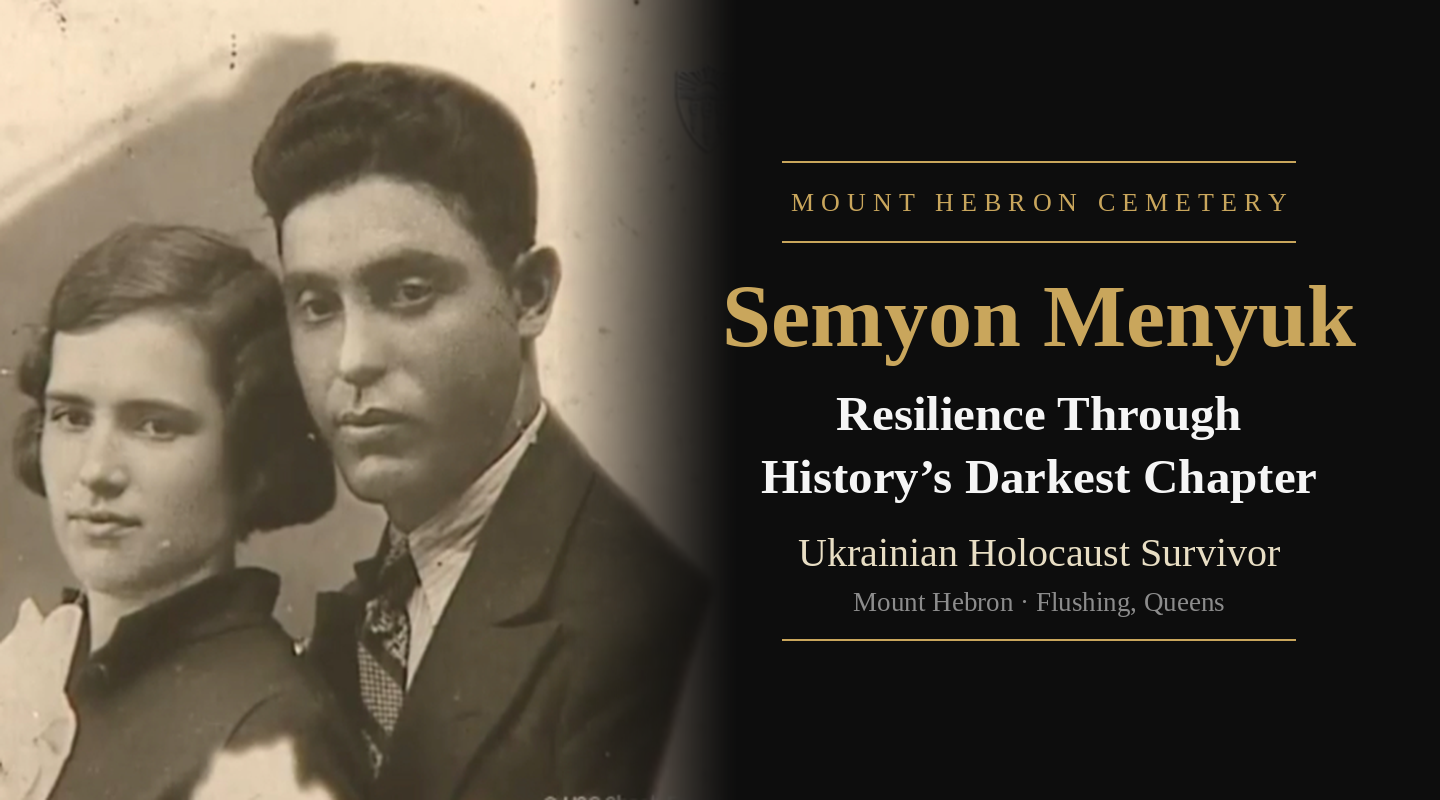
Semyon Menyuk was born in 1922 in Komorovo, a small village in Ukraine with only a handful of Jews. When the Germans came, his family was forced into the ghetto in Kolki. His mother and sister were murdered there. Taken to the forest to be shot, Semyon jumped from the truck and ran. He hid in a barn and heard the women and children cry until it went quiet. He crossed a river rowing with a pitchfork. He survived a winter in a hole in the ground, then joined the partisans and the Russian army. He married Mina in Kyiv. In 1977 he and his family reached America. He died in 2009. ~Blog by Avigail Meyers
Learn More
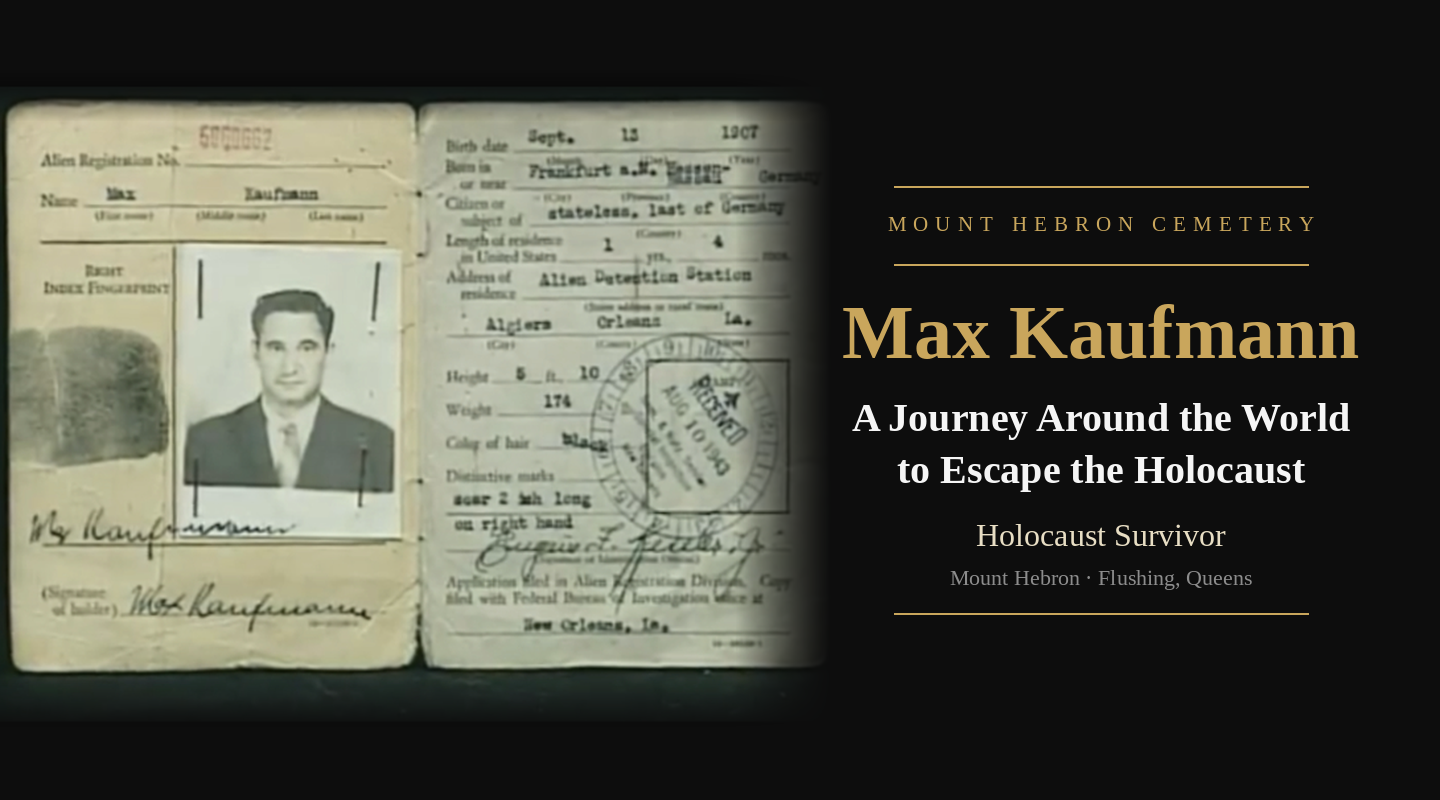
Max Kaufmann was born in Frankfurt in 1907 and grew up in Kippenheim, raised by a family who loved him as their own. Boys called him a dirty Jew. One night he was beaten on his way to the movies, and he knew it was time to go. He sold flowers for his father until Hitler came to power. Then he began a journey that crossed France, Paraguay, Argentina, Ecuador, Colombia, and Panama, working as an oyster fisher, a cotton worker, and a waiter. He was jailed, smuggled, and sick with malaria. He reached America, served in the Army, married Adelaide, and became a citizen. He never stopped calling himself a Jew. ~Blog by Avigail Meyers
Learn More
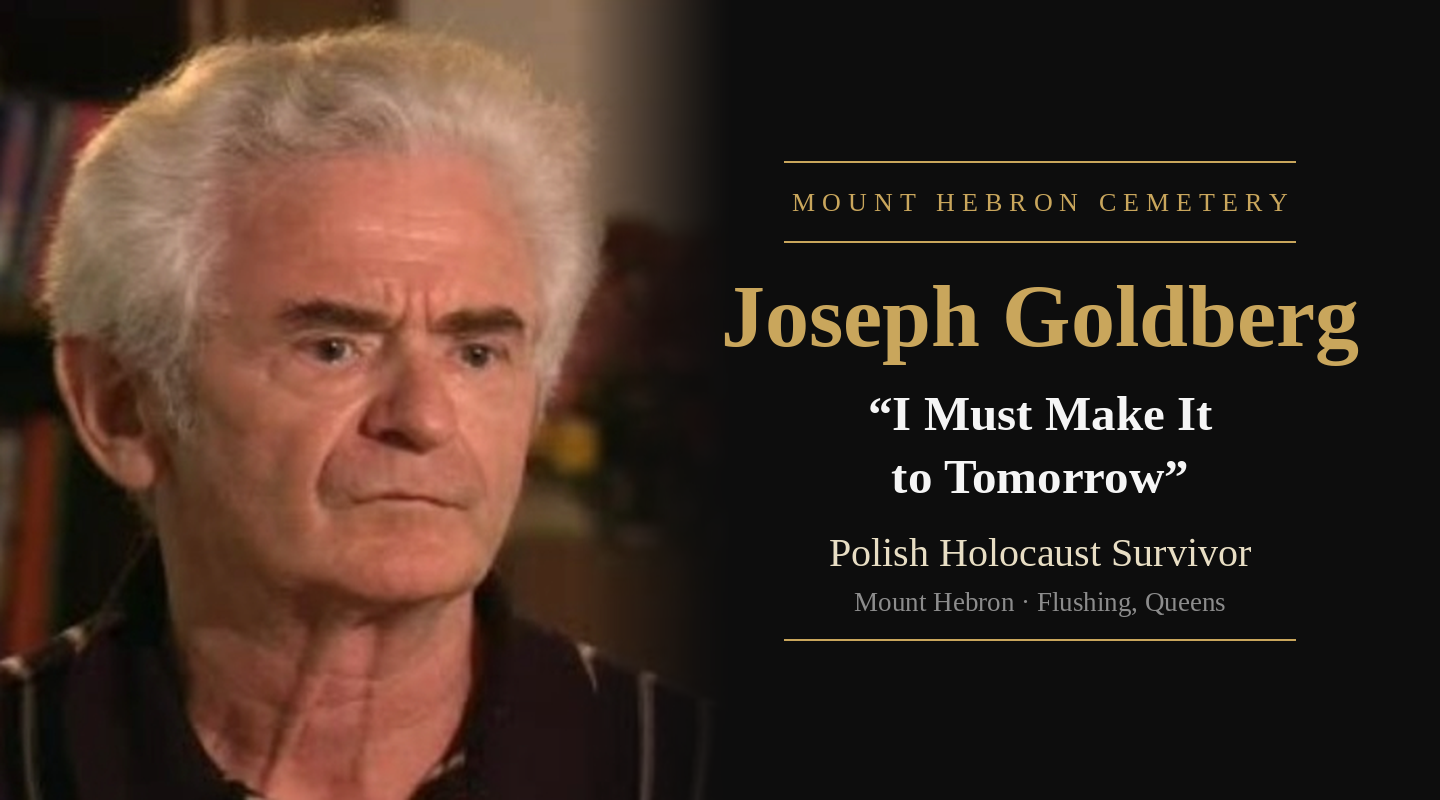
Joseph Goldberg was born in Kleczew, Poland, in 1928. He was his parents' only son. On Shabbat, neighbors sat on the porch to hear him sing with his father. In 1942, Joseph went to work in his father's place and never came home. In Szyszki, he was forced to watch the SS murder about 30 men in the forest. He was fourteen. He survived Birkenau, Buna-Monowitz, death marches, and Buchenwald, and was liberated at Theresienstadt in May 1945. He never learned what became of his family. So he built a new one, with four children. His goal had always been simple: I must make it to tomorrow. ~Blog by Avigail Meyers
Learn More
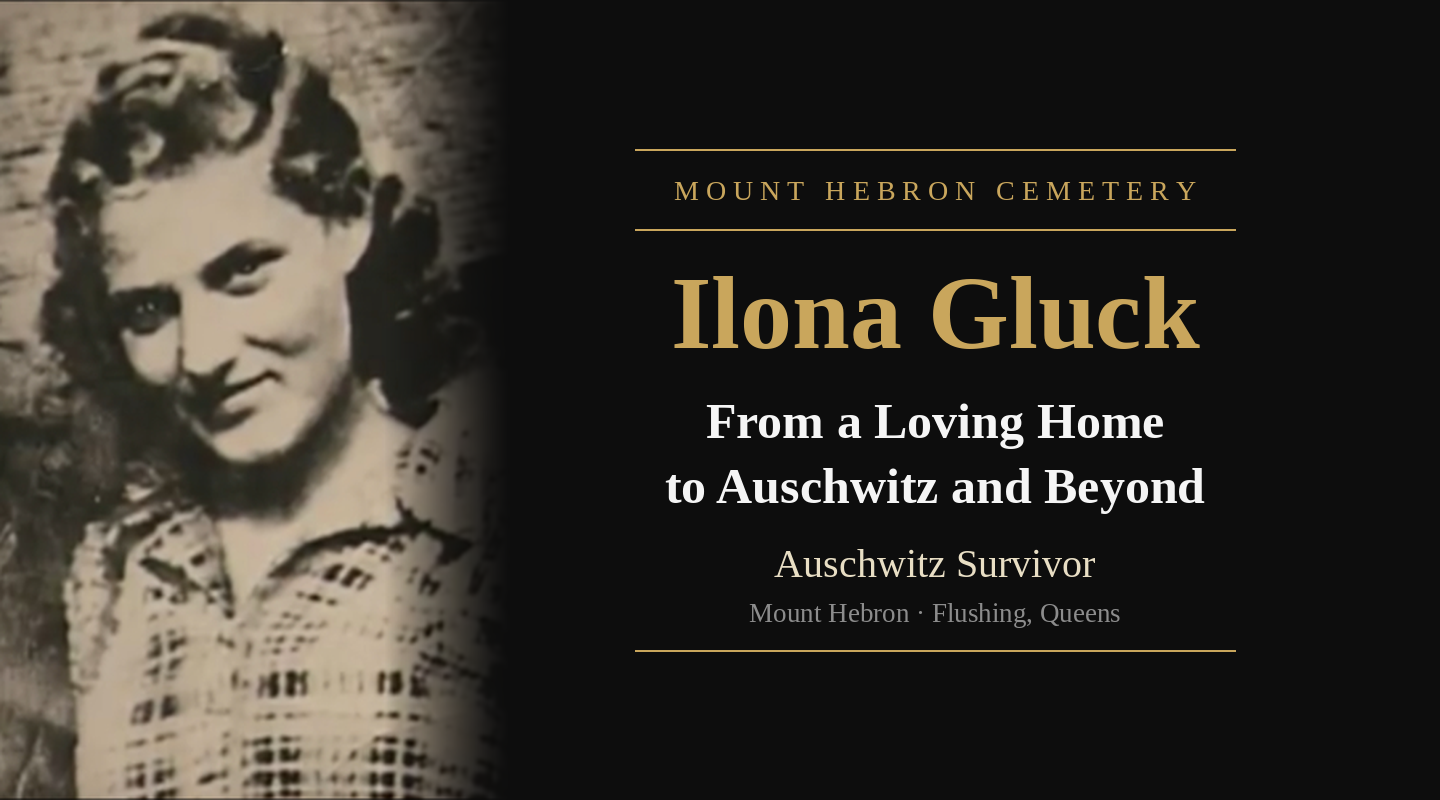
Ilona Zicherman was born in Berehove, Czechoslovakia, in 1920. Her parents taught her to be friendly to everyone she met. When the Hungarians came, an officer struck her and tore off her birthday watch. At Auschwitz, she followed her mother into the selection line. A guard pulled her away by the ear. She never saw her mother again. Then, on the way to get food, she found her sister Fonica. Ilona shared her bread and kept her close. Her sister died after they reached Mauthausen. Ilona survived. In America, she kissed the ground. She married Joseph Gluck and raised two daughters. Ilona Gluck rests at Mount Hebron Cemetery. ~Blog by Avigail Meyers
Learn More
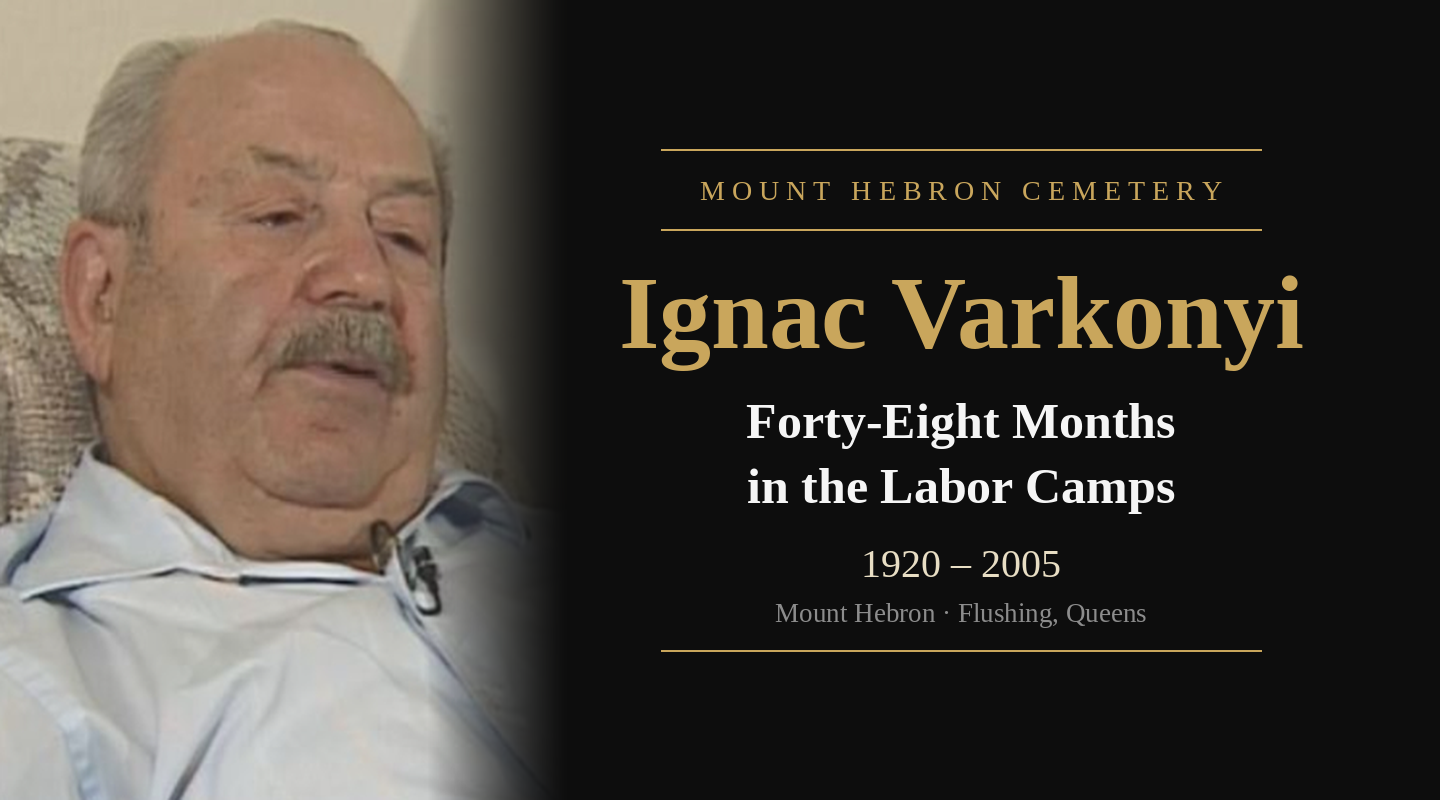
Ignac Varkonyi was born Ignac Weiss in 1920 in Hajduboszormeny, Hungary, the youngest of six children. On October 22, 1941, he was taken from home to the labor camps. It was the start of forty eight months of brutal work and endless marching. He passed through five camps, including Mauthausen. On one march, only seven of three hundred men survived, and he was one of them. He lived because he was a baker. His parents were murdered in Auschwitz. After the war he changed his name, married Gyongyi in 1950, and brought his family to Brooklyn, where he opened a bakery. He died in 2005 at 84, having told his story. ~Blog by Avigail Meyers
Learn More
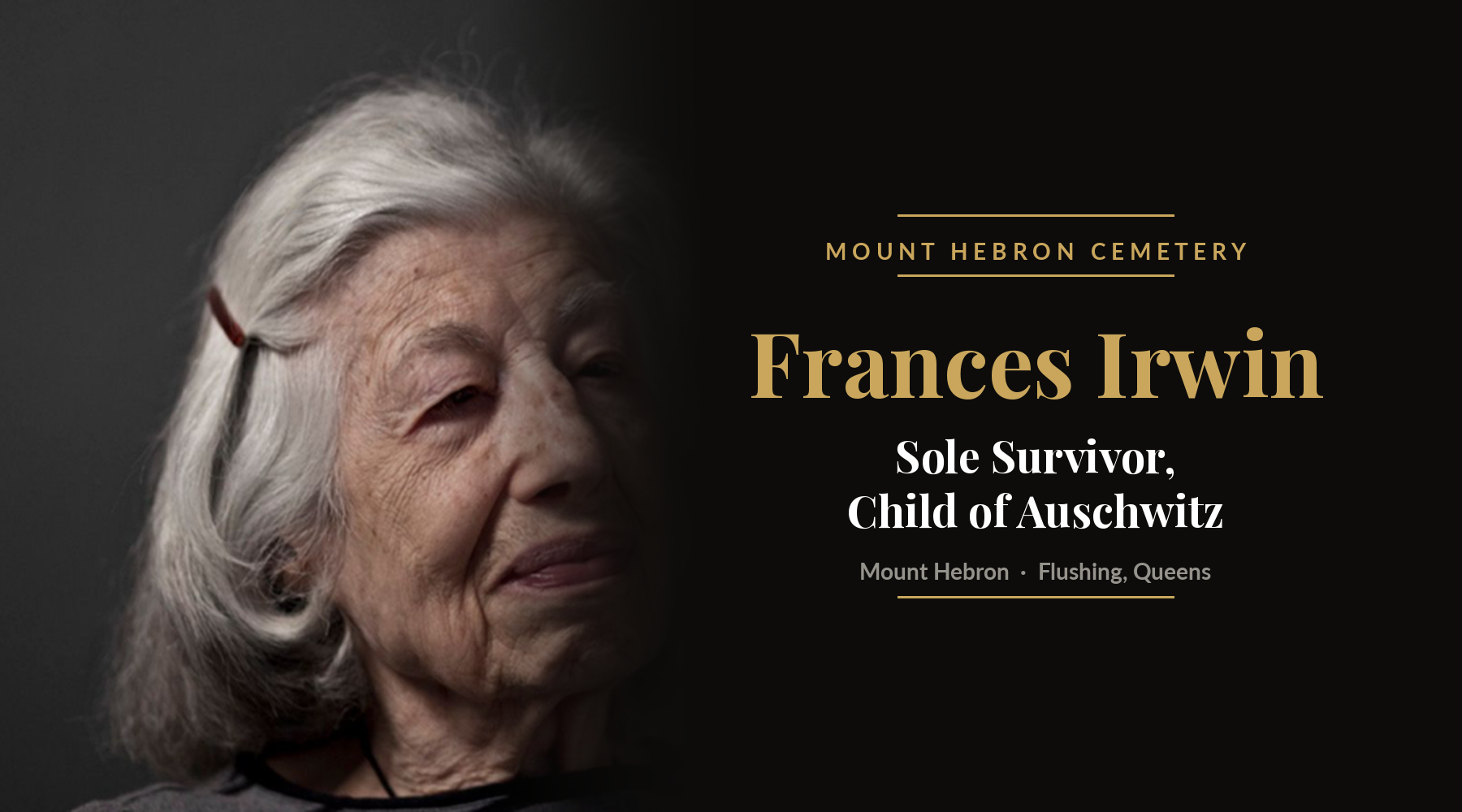
Frances Irwin was born in Konskie, Poland, in 1922, the fifth of seven children. When the ghetto was about to be emptied, her father told her to run. His last words to her were: remember to be a good human being. She escaped through the sewers and hid in the woods, eating berries and raw potatoes. When the SS threatened to kill ten Jews a day, she and her friends gave themselves up. She survived Auschwitz and a death march. Her whole family was murdered. In Brooklyn, she raised a son, named him for her father, and gave her life to Jewish causes. She rests at Mount Hebron Cemetery. ~Blog by Elisheva Schuster
Learn More
Mount Hebron Cemetery, in Flushing, NY is the final resting place for a quarter million extraordinary individuals. The Cemetery is home to over 1,200 societies. Many of these societies were born from emmigration from Eastern Europe to America after World War II. We have several Holocaust Memorial monuments on these grounds that pay tribute and honor to those who lost their lives.
Learn More
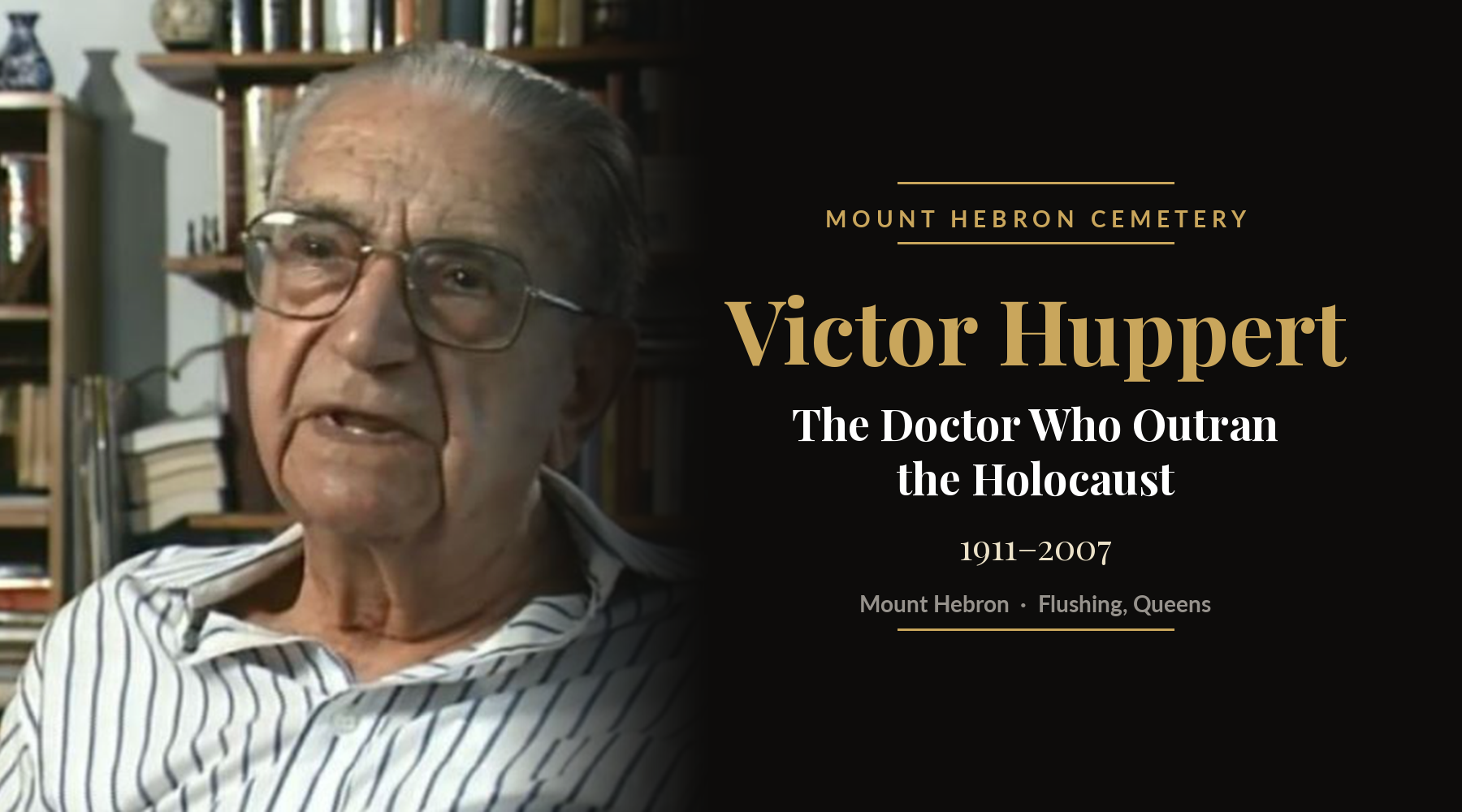
Victor Huppert was born in Austria and became a Prisoner of War during the Russian Revolution and was released. During the rise of Anti-Semitism in he attended Medical school with the help of a Catholic Priest. He went on to become a doctor in a Russian work camp rather than be sent to Germany and travelled the world to survive the Holocaust.
Learn More
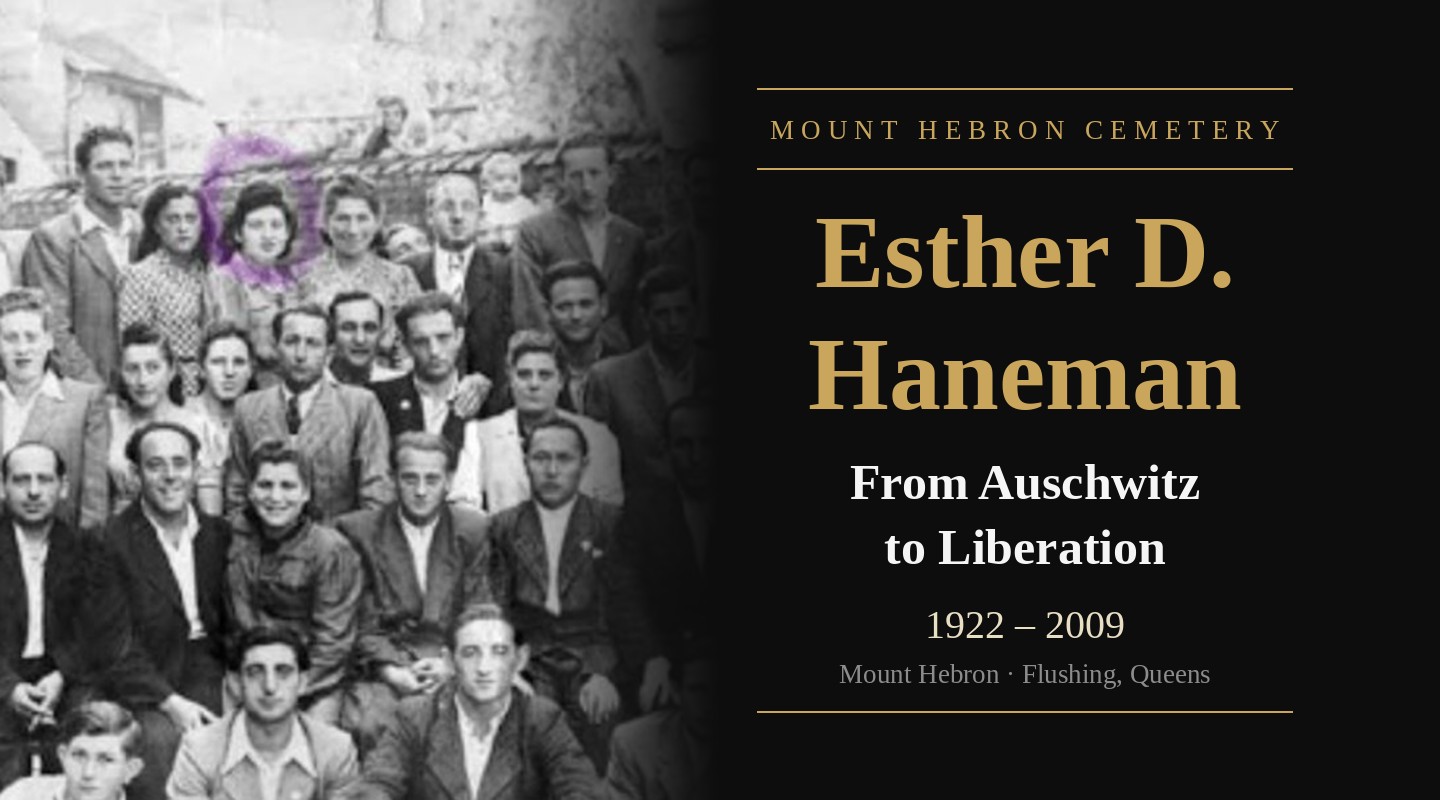
Eather Haneman was born in Belchotow, Poland. Her harrowing tale of survival at Auschwitz Concentration Camp during World War II and liberation is a tribute to the triumphant human spirit.
Learn More