Truly One of a Kind: The War of Abraham Lineal
He went to war with a pen.
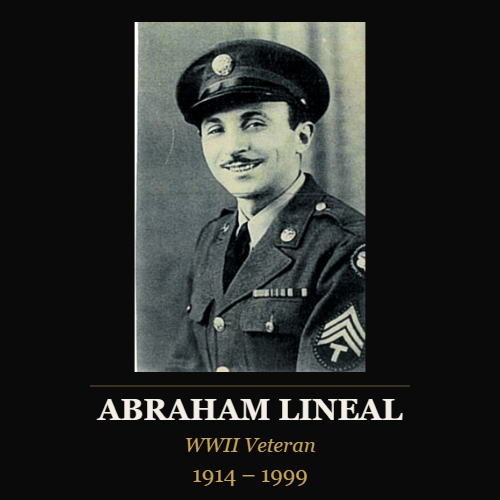
Not a rifle. A pen, a typewriter, and a way of keeping track of men. Abraham Lineal was a clerk from McKibbin Street in Brooklyn, born in New York City on the 29th of October, 1914. McKibbin Street cut through the crowded Jewish blocks on the Williamsburg side of Brooklyn, a neighborhood of tenements and pushcarts and a shul on the corner, where immigrant families packed in close and raised children who would grow up to be Americans. Al's work was quiet and careful, all names and numbers and files kept in order, the sort of work nobody thinks about until the day it goes missing.
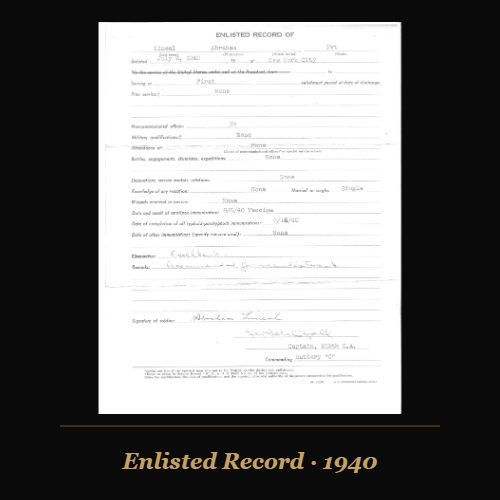
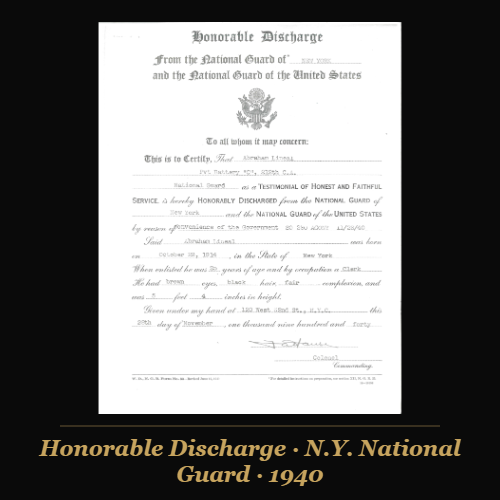
He first put on the uniform in July of 1940, more than a year before Pearl Harbor, back when the country could still tell itself the war belonged to someone else. This was the summer before the draft. Not until that September would Congress pass the Selective Training and Service Act and, for the first time in the nation's history, begin calling men to service in peacetime. Al did not wait to be called. He joined Battery C of the 212th Coast Artillery in the New York National Guard, one of the harbor-defense outfits that manned the big guns in the old forts along the Narrows, Fort Hamilton on the Brooklyn shore and Fort Wadsworth across the water on Staten Island. Their task was to guard the mouth of New York Harbor against an enemy fleet that, in 1940, still felt like a distant possibility. The record from that first enlistment says something plain and true about him. Character, excellent. Recommended for reenlistment. He was honorably discharged that November, a young man who had already shown he could be counted on.
Then the world came apart, and the country called him back.
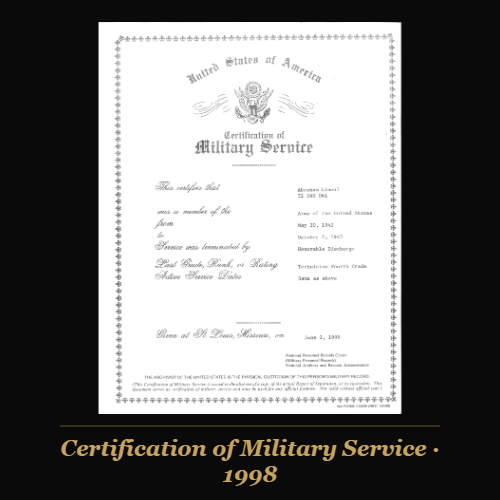
On the 7th of December, 1941, the attack on Pearl Harbor pulled America into the war it had tried so hard to avoid, and the whole country changed overnight. Factories that had built cars turned out tanks and shells. Before it was over, some sixteen million Americans would wear a uniform. In May of 1942, five months after Pearl Harbor, Al went into the Army for real.
They sent him south to Camp Livingston, out in the pine country near Alexandria, Louisiana. Livingston was one of those enormous camps thrown up almost overnight after 1940, a raw city of barracks and red mud where a nation that had never wanted a war turned ordinary men into soldiers. The countryside around it had just hosted the great Louisiana Maneuvers of 1941, the largest peacetime exercises the Army had ever run, where officers with names like Eisenhower and Patton learned how to move men by the hundreds of thousands. From there Al went north to Camp Kilmer in New Jersey, named for Joyce Kilmer, the poet who wrote "Trees" and was killed in the first war. Kilmer was the busiest staging area in the country, the last stop before the ships, and more than a million and a half men would pass through its barracks on their way to the piers of the New York Port of Embarkation and the gray transports waiting in the harbor. In January of 1943 it was Al's turn to go. He crossed the Atlantic to Scotland, into the great buildup the Allies called Operation Bolero, the slow gathering of American strength in Britain for the invasion everyone knew was coming. It was a crossing made under the shadow of the U-boats, in a war still a long way from won.
The Army did not hand him a rifle. It handed him the wounded.
Al served with the Medical Corps, in the 16th Station Hospital and the Office of the Chief Surgeon of the European Theater, in the Department of Records. His title was Classification Specialist. He was a Technician Fourth Grade and wore the three stripes of a sergeant. To understand what that meant, you have to picture the machine behind the fighting. The American medical service in Europe was one of the largest ever assembled, a chain that began with the aid man crouched beside a wounded soldier at the front and ran back through field and evacuation hospitals to the fixed station and general hospitals in the rear, where the long work of saving and mending was done. That service treated hundreds of thousands of battle casualties before the war ended, and hundreds of thousands more felled by sickness and accident. Behind every hospital bed there was paper. Who the man was. Where he had been hit. What the doctors had done for him. Whether he was going home or would be buried where he fell.
That was Al Lineal's war. He kept the records of the wounded.
It would be easy to walk right past a job like that. Nobody strikes a medal for filing. But think about what it meant in a place that produced casualties faster than anyone could count them. Every entry in those files was a young man with a mother somewhere and a street he came from, and someone had to make certain that not one of them slipped through the cracks and became a body with no name. That is not paperwork. That is a kind of love. It is the stubborn insistence that every single life still counted, even in the middle of so much dying.
And he did not do it from some safe desk far behind the lines. Abraham Lineal came ashore at Omaha Beach.
Omaha. There is not much you need to add to that word. It was the worst of the five Normandy beaches on the 6th of June, 1944, the one where the landing very nearly failed, where men came off the ramps into machine-gun fire and more than two thousand Americans were killed or wounded before that single day was through. The assault troops went first. Behind them came the endless follow-on, the supply men and the engineers and the medical people, wading into a beachhead still raw with all that loss, pitching their tents and setting up their operating tables within sound of the guns. Al was one of them. Somewhere in that last hard year of the war he was wounded, and for that he was given the Purple Heart.
The records never say how it happened. That silence tells you something about the man. The one who spent the war making certain that everyone else's wounds were written down never left a word about his own.
When it was over, he was discharged in France and came home to Brooklyn. He was one of about 550,000 Jewish Americans who served in the Second World War. More than 11,000 of them did not survive it. For these men the fight was never an abstraction. They had taken up arms against a regime that had set out to murder every Jew it could reach, and as the Allies pushed into Germany, some of them would be among the first to see the camps with their own eyes. Al came home carrying the European-African-Middle Eastern Campaign Medal, the Good Conduct Medal, the World War II Victory Medal, a New York State medal, and the Purple Heart. Like so many of that generation, he put the medals in a drawer and got on with living. And he lived a long time.
The honors kept finding him anyway. His name was inscribed on the Wall of Liberty by the Battle of Normandy Foundation, among the Americans whose sacrifice helped free a continent. The Jewish War Veterans of the United States, the oldest active veterans' organization in the country, gave him a Certificate of Merit. And in 2008 the State of New York awarded him the Conspicuous Service Cross, the honor the state reserves for those who have rendered conspicuous service to their people.
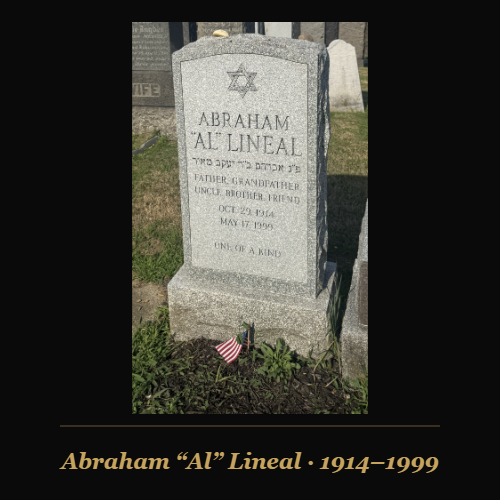
Abraham "Al" Lineal died on the 17th of May, 1999. He rests at Mount Hebron Cemetery in Flushing, Queens, among generations of the New York Jewish community he came from. His family chose the truest words they had and carved them into his stone. Father, grandfather, uncle, brother, friend. And underneath that, three more.
One of a kind.
They were right.
May his memory be a blessing.
Blog by Deirdre Mooney Poulos & The Lineal Barry Family
Sources:
Abraham Lineal, Enlisted Record and Report of Separation (WD AGO Form 53-55), 1945; Honorable Discharge, New York National Guard, 1940; Certification of Military Service, National Archives and Records Administration; Jewish War Veterans of the U.S.A. Certificate of Merit; New York State Conspicuous Service Cross, 2008; Battle of Normandy Foundation, Wall of Liberty Certificate of Registration. Family collection, courtesy of Lorraine Lineal Barry.
Background on the Selective Training and Service Act of 1940, the Louisiana Maneuvers, Camp Kilmer and the New York Port of Embarkation, Operation Bolero, and the U.S. Army medical service in the European Theater draws on the U.S. Army Center of Military History. Figures for the Omaha Beach landings draw on the U.S. Army Center of Military History and the National WWII Museum. The figure of approximately 550,000 Jewish Americans who served in the Second World War, and the more than 11,000 who were killed, comes from the National Museum of American Jewish Military History.