Menasha Skulnik: The Little Man in the Too-Small Hat
The curtain rises on Second Avenue. The house is full. Somewhere in the wings, a small man adjusts his hat.
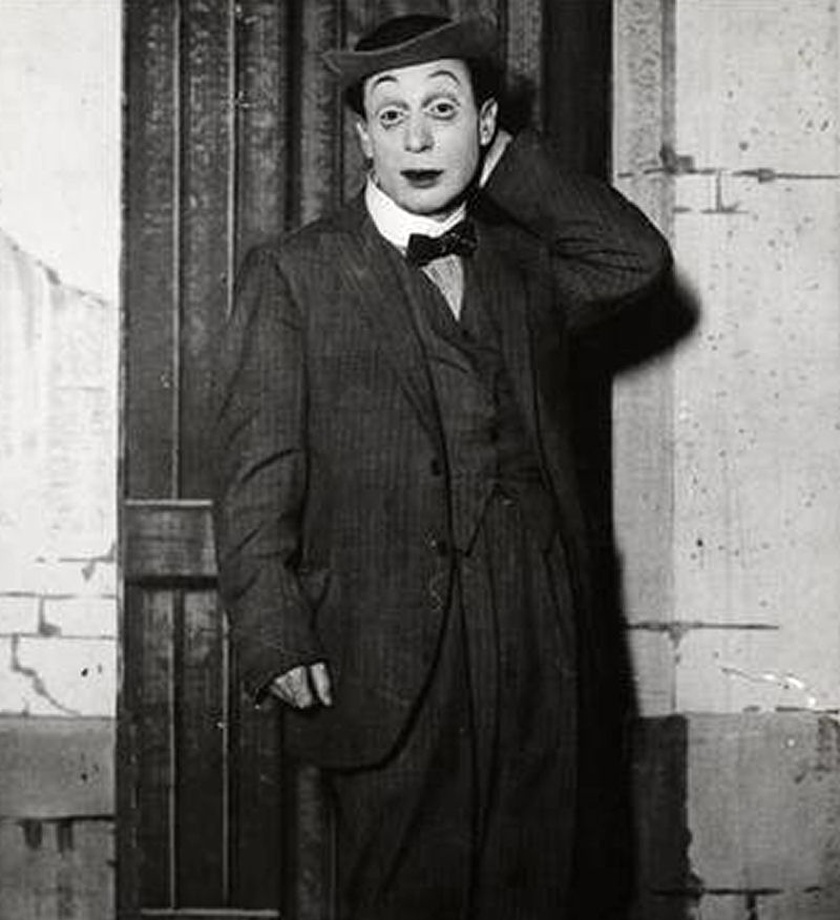
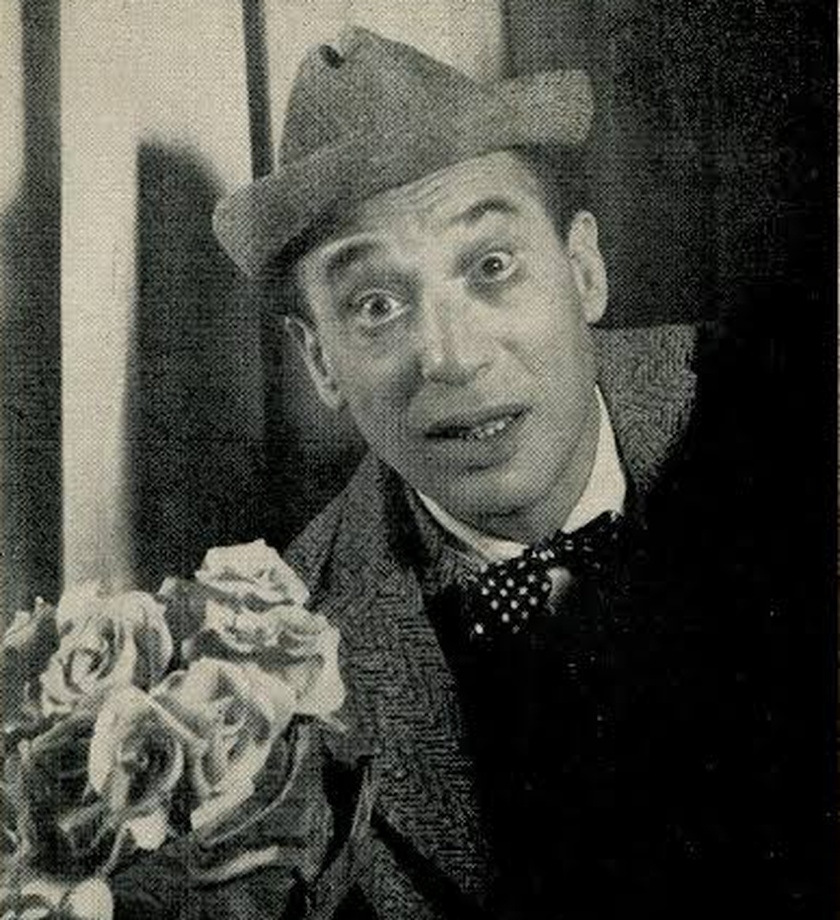
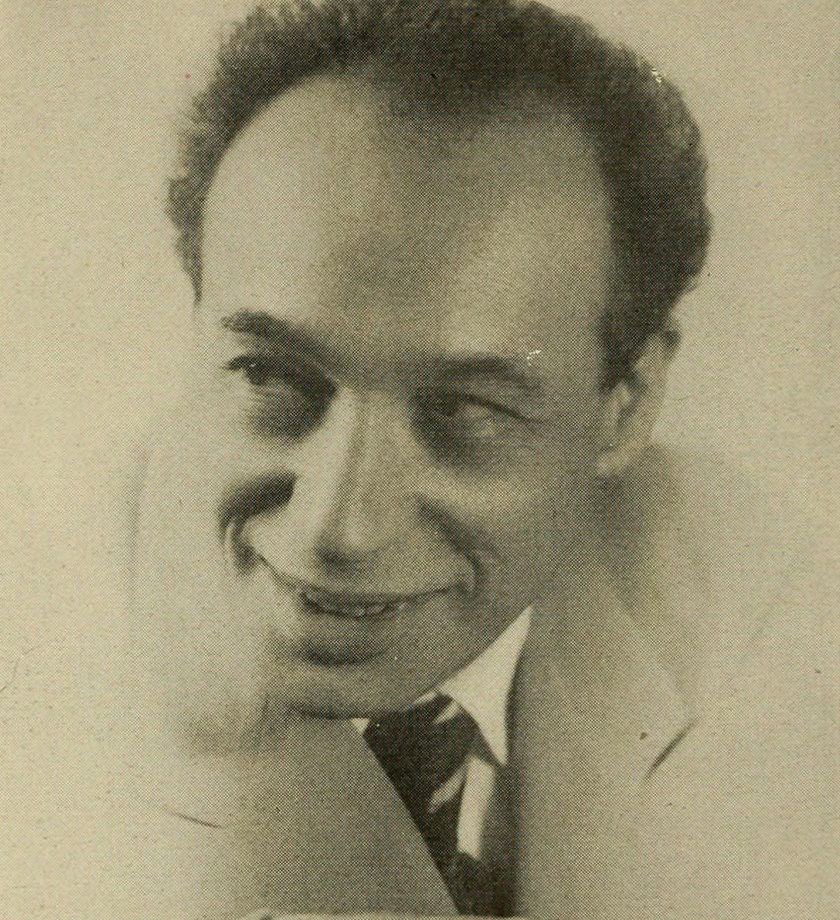
It is not much of a hat. It is tight in the brim and several sizes too small. He does not pull it down over his ears. He perches it on the very top of his head, like a bird that landed there by accident and decided to stay. He is five foot four. When he finally opens his mouth, his voice comes out high and nasal. But by then it hardly matters. The audience is already laughing. They started the moment he walked on.
And then, just when they are sure they know what kind of evening this will be, he turns his sad eyes toward them. The room goes quiet. A shift of his face. A small movement of his hands. Suddenly the same people who were wiping away tears of laughter are wiping away a different kind of tear.
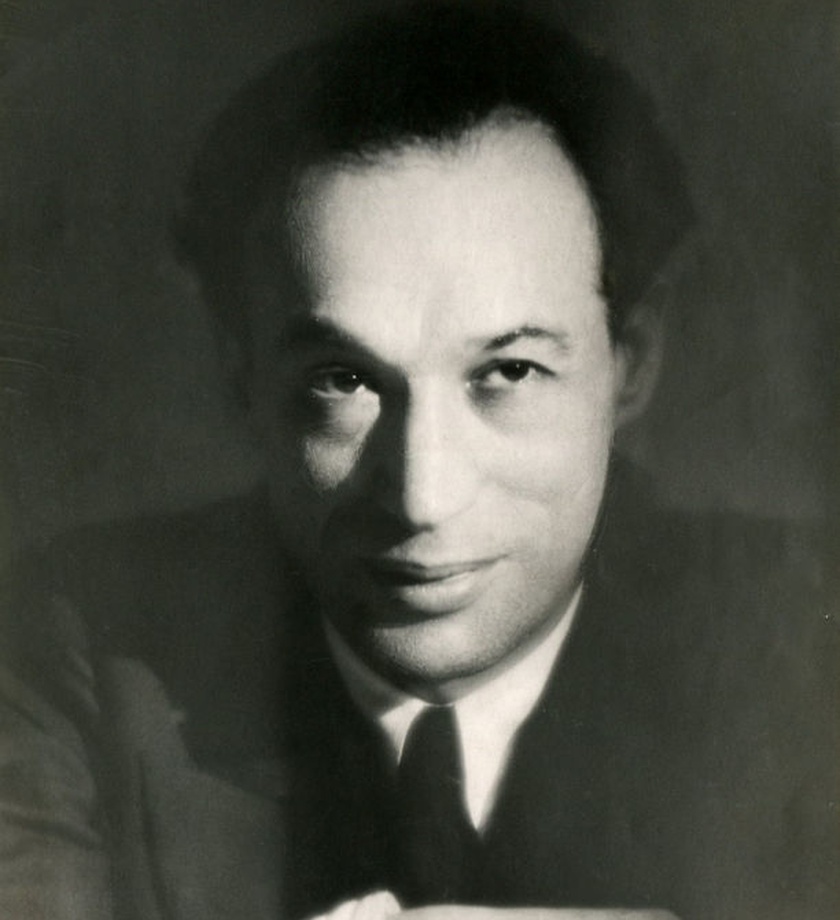
His name was Menasha Skulnik. For more than fifty years, he was the little man of the Yiddish stage. Today he rests at Mount Hebron Cemetery in Flushing, in the section set aside for the stars of the Yiddish theater. To understand why he belongs there, among the greatest names of that world, you have to go back to Warsaw.
Menasha was born there on May 15, 1890. He was the seventh of nine children. Some records place his birth in 1892, a small confusion that would have suited a man who built a career on being a little bit lost. Picture the household. Nine children. Little money. Plenty of noise. In a family that size, the seventh child learns early how to get noticed.
School did not interest him. Sitting still did not interest him. As a boy, the story goes, he ran away and joined a circus. We do not know exactly what he did there. Perhaps he swept up after the animals. Perhaps he watched the clowns from behind a tent flap and studied every pratfall. What we do know is this. The boy who ran off to the circus spent the rest of his life making strangers laugh.
In 1913 he crossed the ocean to New York. He was in his early twenties. Like so many young Jews arriving from Poland, he came with very little. What he had was a face that made people smile and a restless need to perform.
He did not become a star overnight. Far from it. He found work in a Yiddish stock company in Philadelphia. Among the young actors on that stage was a girl named Molly Picon, who would one day become a legend herself. Imagine the two of them in those early years, young and hungry, learning their trade in front of audiences who had paid hard-earned coins to forget their troubles for an evening.
Through the 1920s, Skulnik lived the life of a working actor. He went where the jobs were. Philadelphia. Chicago. Detroit. Toronto. Montreal. Train stations and boardinghouses. New towns and new audiences. Every night, a chance to find out what made people laugh. Every night, another lesson.
Then, in 1928, came an invitation that changed everything.
The actor Joseph Schoengold had a contract to perform at the Teatro Excelsior in Buenos Aires. Schoengold came from Yiddish theater royalty. His parents were actors. His wife, Frances Adler, was the daughter of the great Jacob P. Adler. Schoengold needed a comic to round out his company, and he asked Skulnik to come along.
The arrangement was clear. Schoengold would play the leading roles in the serious dramas, the melodramas, and the operettas. Skulnik would supply the comic relief. A secondary part. A supporting player. Nothing more.
But Buenos Aires had a large and lively Jewish community, and the audiences there fell in love with the little comedian. When Skulnik was finally given a vehicle of his own, a comedy called The Big Earner, the theater was packed. It stayed packed for three straight weeks. For a Yiddish show in that era, it was unheard of. Schoengold, to his great credit, was generous about it. Years later, Skulnik still remembered that season with gratitude. "The audience there was actually the first one to discover me," he wrote. He would return to Buenos Aires again and again.
Back in New York, Second Avenue was ready for him now.
In those years, the stretch of the Lower East Side known as the Yiddish Rialto glowed with marquees. Families poured in from the tenements. They came for the music, the tears, and the jokes in their own language. Skulnik would spend some 35 years in those theaters. By one count he mastered more than 700 roles. He played yeshiva boys and milkmen. He played tailors and wise fools. The titles of his shows tell you everything about the man. The Perfect Fishel. Schlemiel. Yossel and His Wives. The Little Tailor. Mazel Tov, Rabbi.
Whatever the costume, the man underneath was always the same. He was the little guy against the whole world. The one who meant well. The one who never quite understood why everything kept going wrong. The audience saw themselves in him. They were immigrants in a confusing new country, working hard, getting cheated, misunderstanding the rules. When Menasha stumbled, they laughed. And then they loved him, because they knew exactly how it felt.
Critics searched for a comparison. They settled on Charlie Chaplin. In 1935 the New York Evening Journal called him the East Side's Chaplin. Skulnik politely disagreed. Chaplin's tramp, he explained, was a bit of a wiseguy. He had a little larceny in him. Skulnik's character had none. "I am a pure schlemiel, with no string attached," he said. It was not a complaint. It was a statement of purpose. He knew exactly who he was on that stage.
And always, there was the hat. That tight little brim, perched too high on his head, told the audience everything before he said a word. Over the years it became his trademark. People who never learned the name of a single play he starred in remembered that hat.
Soon his voice traveled far beyond Second Avenue. Radio was the new hearth of the American home, and for 19 years Skulnik played Uncle David on The Goldbergs, the beloved program about a Jewish family in the Bronx. Every week, millions of listeners, Jewish and not, welcomed him into their kitchens and living rooms. Many of them would never set foot in a Yiddish theater. But they knew Uncle David. When television arrived, he followed it there too, starring in his own program in 1950, Menasha the Magnificent.
Offstage, life brought him sorrow. His wife, Sarah Kutner, died in 1943. She was only 49 years old. The house that had held their life together must have felt very empty. Menasha left Manhattan and moved to Queens. He made a new home in an apartment on Yellowstone Boulevard in Forest Hills, not far from where he rests today.
He did not stay alone forever. In 1955 he married the actress Anna Teitelbaum, known on the stage as Anna Roman. Love had found the little man a second time.
By then the world he had grown up in was changing. The Yiddish theater was shrinking. Its audiences were aging. Their children spoke English and went uptown for their entertainment. Many of the great stars of Second Avenue faded along with the marquees. Menasha Skulnik did something very few of them managed. He followed his audience to Broadway.
In January 1953 he opened at the Cort Theatre on West 48th Street in The Fifth Season, a comedy by Sylvia Regan about two partners struggling to keep a dress business afloat. It was his first Broadway play. Think about that. He was past sixty. He had already played hundreds of roles. And here he was, making his debut all over again. The show was a hit. It ran for 654 performances and did not close until October 1954. Even a modern critic who found the play itself forgettable singled out his role as the only one with real comic color.
He went straight from one success into a greater challenge. On December 28, 1954, he opened at the Belasco Theatre as Noah in Clifford Odets's The Flowering Peach. Odets retold the story of the flood as a family drama, full of Yiddish rhythm and affectionate bickering. His Noah was overwhelmed by God's enormous assignment. He was a little too fond of the bottle and short-tempered with his grown children. It was a role that needed exactly what Skulnik had spent his life perfecting. Humor and heartbreak in the same breath. He made Noah human. Variety praised his endearing quality and his delicious comic style.
More Broadway work followed. Uncle Willie. The 49th Cousin. And in 1965, Harold Rome's The Zulu and the Zayda, in which he played a Jewish grandfather in South Africa opposite a young Louis Gossett. The boy who ran off to the circus in Warsaw was now a leading man on the Great White Way.
In 1963, he decided to tell his own story. The Yiddish Forverts ran his memoir in installments every Sunday and Wednesday for nine long months. He called it Menashe Skulnik dertseylt, The Menashe Skulnik Story. In it he traced his whole journey, from the streets of Warsaw to Broadway, radio, and television. He filled the pages with photographs of himself and his fellow players, in costume and out. Readers who had laughed at him for decades opened their newspapers twice a week to hear the story in his own words.
He never really stopped working. He did not know how. In 1970, he was preparing yet another show for Broadway. During a dress rehearsal in New Haven, Connecticut, he collapsed on the stage. It is hard to imagine a truer ending for a man who had spent his whole life under the lights. He died a few weeks later, on June 4, 1970.
Menasha Skulnik was laid to rest at Mount Hebron Cemetery, among the actors, singers, and composers who built the Yiddish stage alongside him. It is a fitting neighborhood. These were the people who knew the long train rides and the cheap boardinghouses. They knew the packed houses and the hungry seasons. They knew the sound of a theater full of laughter in their own language.
When you visit, take a moment to imagine him there. A small man. A small hat, perched just a little too high. A face that could make you laugh and cry in the same moment. He never pretended to be a hero. He was simply the little guy, doing his best in a confusing world. That is exactly why so many people loved him.
Menasha Skulnik.
Sources
- "Menasha Skulnik." Wikipedia. Draws on Alden Whitman, "Menasha Skulnik, Yiddish Star And a Broadway Success, Dies," New York Times, June 5, 1970.
- "Menasha Skulnik got some laughs in Forest Hills." Queens Chronicle, "I Have Often Walked" column.
- Zachary Baker. "Menashe Skulnik Becomes a Star in Buenos Aires." Digital Yiddish Theatre Project, University of Wisconsin–Milwaukee. Excerpt translated from Skulnik's memoir, Forverts, April 17, 1963.
- Zachary Baker. "The Menashe Skulnik Story in the Forward." Digital Yiddish Theatre Project, University of Wisconsin–Milwaukee.
- "Skulnik, Menasha." Encyclopaedia Judaica, via Jewish Virtual Library.
- "The Flowering Peach." Internet Broadway Database.
- "Cort Theatre Postcards from the 1950s." PostcardHistory.net, August 2023.
- Review of The Flowering Peach. Variety, January 5, 1955, via Media History Digital Library.
- "Menasha Skulnik." Museum of Family History.
- "The Literary Society of Broadway (XXI): 1953 Edition." Jackson Upperco.
- Menasha Skulnik photograph collection. Museum of the City of New York.