Story Summary:
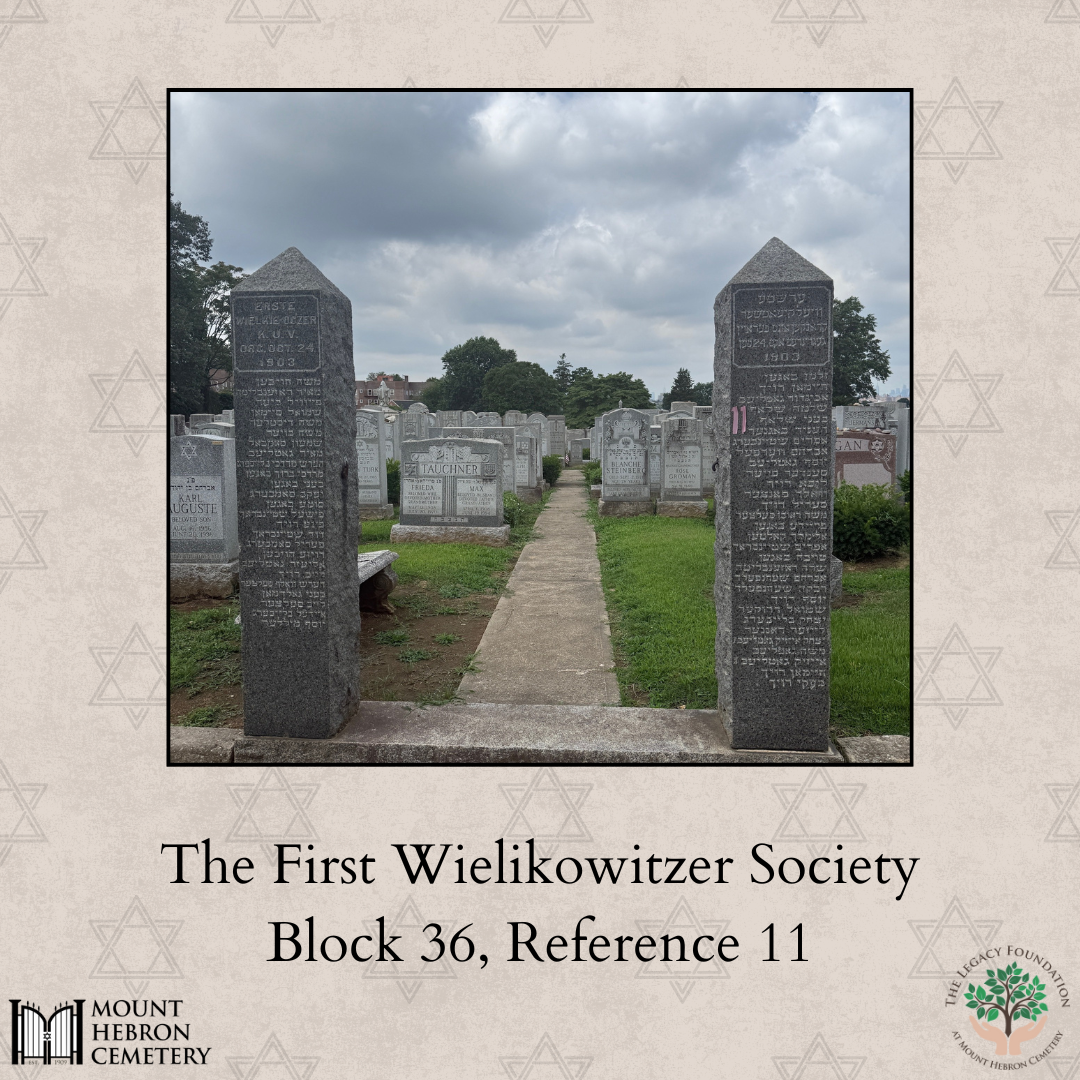
The First Wielikowitzer Society, founded by Jewish immigrants from Wielopole Skrzyńskie, Galicia, supported newcomers in New York City while preserving their cultural and religious identity. Fleeing poverty and rising antisemitism, these immigrants built a strong mutual-aid network that offered help with housing, employment, and burial needs. Those who remained in Wielopole were deported or murdered during the Holocaust, leading to the destruction of the once-thriving Jewish community. Today, the society's legacy lives on through cemetery plots and historical records, honoring the memory of a community lost. ~Blog by Deirdre Mooney Poulos
The First Wielikowitzer Society: From Galicia to Queens
In the late 19th and early 20th centuries, as Jewish immigrants fled the economic hardships and rising antisemitism of Eastern Europe, many made their way from Galicia, then part of Austria-Hungary, to New York City. Among them were families from Wielopole Skrzyńskie, a small village that numbered about 550 Jewish residents by 1921. Seeking mutual support and a sense of home in a strange new world, these settlers founded the First Wielikowitzer Society, a type of “landsmanschaft” or hometown mutual-aid association common in immigrant Jewish communities of that era. These societies provided vital lifelines: they helped newcomers find housing and work, navigate American bureaucracy, learn English, and offered life insurance, unemployment relief, and burial support. Scholars have even described landsmanshaftn as “pit stops” where immigrants could refuel emotionally and socially before integrating more fully into American society.
The First Wielikowitzer Society likely echoed this model. Based in New York, it would have hosted social events, charity functions, and religious gatherings conducted in Yiddish. It served as both a social anchor and a financial safety net for those arriving with limited resources. In the 1920s and 1930s, more than 2,000 landsmanschaftn operated in New York City, each tied to towns across Eastern Europe. These clubs frequently pooled funds to support relatives who remained abroad and cultivated a shared memory of the shtetl: its traditions, festivals, and communal institutions.
Back in Wielopole Skrzyńskie, daily life revolved around farming, small commerce, kosher bakeries, butchers, and a vibrant synagogue and cemetery. Local Jews participated in markets and fairs, and 20 small workshops existed by the early 19th century. But poverty was pervasive, and episodes of violence, including a pogrom in 1918, left emotional scars. The work of local benefactors such as Baroness Hirsch, who donated relief to the poor in 1896, underscored both the communal solidarity and the hardships of shtetl life.
When the Nazis invaded Poland in September 1939, the fate of Wielopole’s Jews took a tragic turn. By 550 to 935 in number at the onset of war, they were subjected to forced labor, expropriation, and confinement behind fences. In 1940 to 1942, many were sent to labor camps like Pustków, while others were executed in mass shootings by the Nazis on local grounds. On June 30, 1942, at least 42 Jews, including the elderly and infirm, were shot near the Jewish cemetery. Remaining inhabitants were deported to Mielec labor camp on June 9, 1942, and others were later sent to the Belzec extermination camp; very few survived.
After the war, the Jewish cemetery in Wielopole lay in ruins. Although 10 headstones were returned and a Holocaust memorial erected, much of the site remains neglected in a grassy field outside of town. Online projects like JewishGen’s Kolbuszowa region archives and the ESJF European Jewish Cemeteries Initiative now document site history and attempt to preserve its memory.
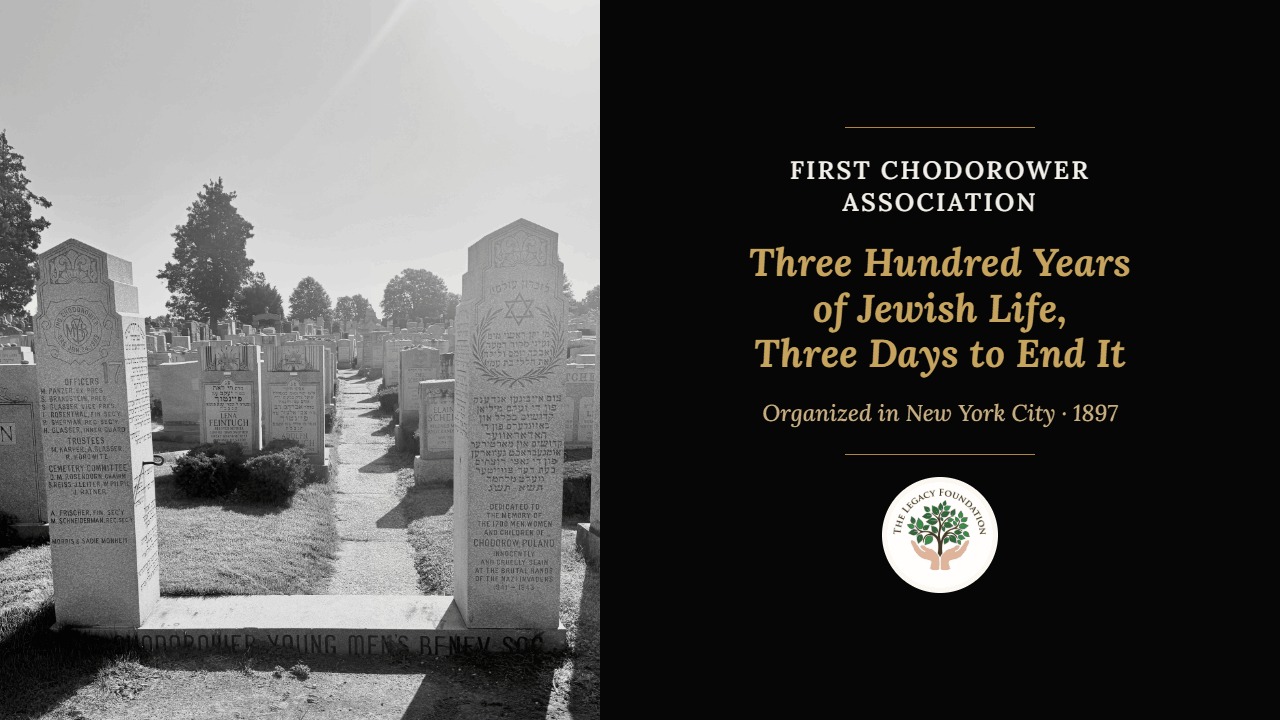
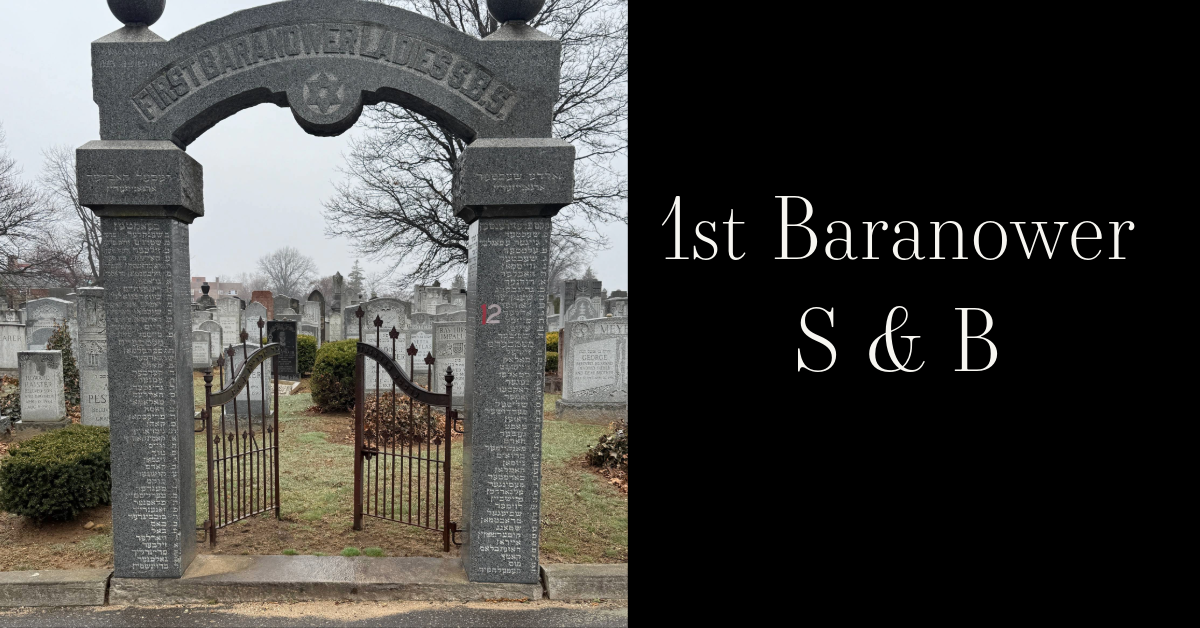
Meanwhile, the First Wielikowitzer Society in New York carried on the memory of their lost shtetl. Like hundreds of other landsmanschaftn, into the mid 20th century it focused on maintaining cemetery plots in New York, publishing Yizkor books, and channeling aid to elder statesmen and new immigrants. The society may have also collected Israel Bonds or contributed to postwar relief efforts, an extension of the old-world ethos adapted to new circumstances. But as their founders aged and American-born children assimilated, younger generations drifted away. By the 1950s and 1960s, landsmanschaftn began to decline, leaving behind disjointed cemetery plots and fading memories.
Today, records of the First Wielikowitzer Society may survive in archives such as the YIVO Institute, the Center for Jewish History, or the American Jewish Historical Society, while burial plots in New York cemeteries still bear its name. The Society’s story, a bridge between the Old World and the New, mirrors a broader Jewish immigrant experience: one marked by community, adaptation, pride, loss, and perseverance.
~Blog by Deirdre Mooney Poulos
Works Cited
“Landsmanshaft.” Wikipedia, Wikimedia Foundation,
https://en.wikipedia.org/wiki/Landsmanshaft
“Wielopole Skrzyńskie.” Wikipedia, Wikimedia Foundation, https://en.wikipedia.org/wiki/Wielopole_Skrzy%C5%84skie
“Wielopole Skrzyńskie.” JewishGen KehilaLinks, JewishGen, https://kehilalinks.jewishgen.org/Kolbuszowa/Wielopole/Wielopole1.html
“Wielopole Skrzyńskie.” Yizkor Book Project, JewishGen, https://www.jewishgen.org/Yizkor/pinkas_poland/pol3_00130.html
“Wielopole Skrzyńskie Jewish Cemetery.” ESJF European Jewish Cemeteries Initiative, https://www.esjf-cemeteries.org/survey/wielopole-skrzynskie-jewish-cemetery/
“List of Young Jews from Wielopole Skrzyńskie, Deported to Mielec Camp, 9 June 1942.” Yad Vashem Digital Collections,
https://collections.yadvashem.org/en/documents/13866709
“Landsmanshaftn of New York.” New York Genealogical and Biographical Society, https://www.newyorkfamilyhistory.org/blog/landsmanshaftn-new-york
“Landsmanshaftn in New York: A Quick Online Guide.” The New York Public Library, https://www.nypl.org/blog/2015/12/04/landsmanshaftn-guide