Story Summary:
The Zinkowitzer Podolier Society, likely founded by Jewish immigrants from Zinkovtsky and Kamenets-Podolski in the Podolia region of Ukraine, was a benevolent organization in New York that offered burial assistance, sick aid, and emotional support to its members. Like many landsmanshaftn formed by Eastern European Jews in the early 20th century, it helped preserve cultural ties and communal structures from the Old World while providing critical services in the New. Originating from towns with deep Jewish roots dating back to the 1500s, these immigrants fled economic hardship and persecution, later witnessing the destruction of their home communities during the Holocaust. The society's burial plots and memorial gates, especially in cemeteries like Mount Hebron, stand as lasting reminders of a once-thriving Jewish presence in Podolia and the resilience of those who carried its memory forward.
From Podolia to New York:
The Legacy of the Zinkowitzer Podolier Society
In the late 19th and early 20th centuries, Jewish immigrants from the Podolia region of the Russian Empire made their way to the United States in search of safety and opportunity. Among them were Jews from towns like Zinkovtsky and Kamenets-Podolski, who carried with them memories of tight-knit communities, religious life, and long histories of resilience in the face of persecution. Once in New York, these immigrants established landsmanshaftn, or hometown societies, to maintain their sense of belonging and mutual aid. One such organization was the Zinkowitzer Podolier Society, also referenced as the Zinkowitzer and Kamenetz Podolier Society. Like many other benevolent associations, it served as a lifeline to its members by providing burial assistance, aid during sickness, emotional support, and a communal network that helped preserve their cultural identity in a foreign land.
The Podolia region, located in what is now western Ukraine, was home to a vibrant and deeply rooted Jewish population for centuries. Jews had settled in towns such as Kamenets-Podolski and Zinkov from as early as the 1500s. These communities grew despite frequent threats, including military conflicts, legal restrictions, and pogroms. Podolian Jews built a rich culture of religious scholarship, Yiddish literature, and communal organization. However, the pressures of conscription, economic hardship, and antisemitic violence intensified in the Russian Empire during the 19th century, prompting mass emigration. By the early 1900s, thousands of Jews from Podolia had made their way to New York, forming societies that reflected their towns of origin and shared regional identity.
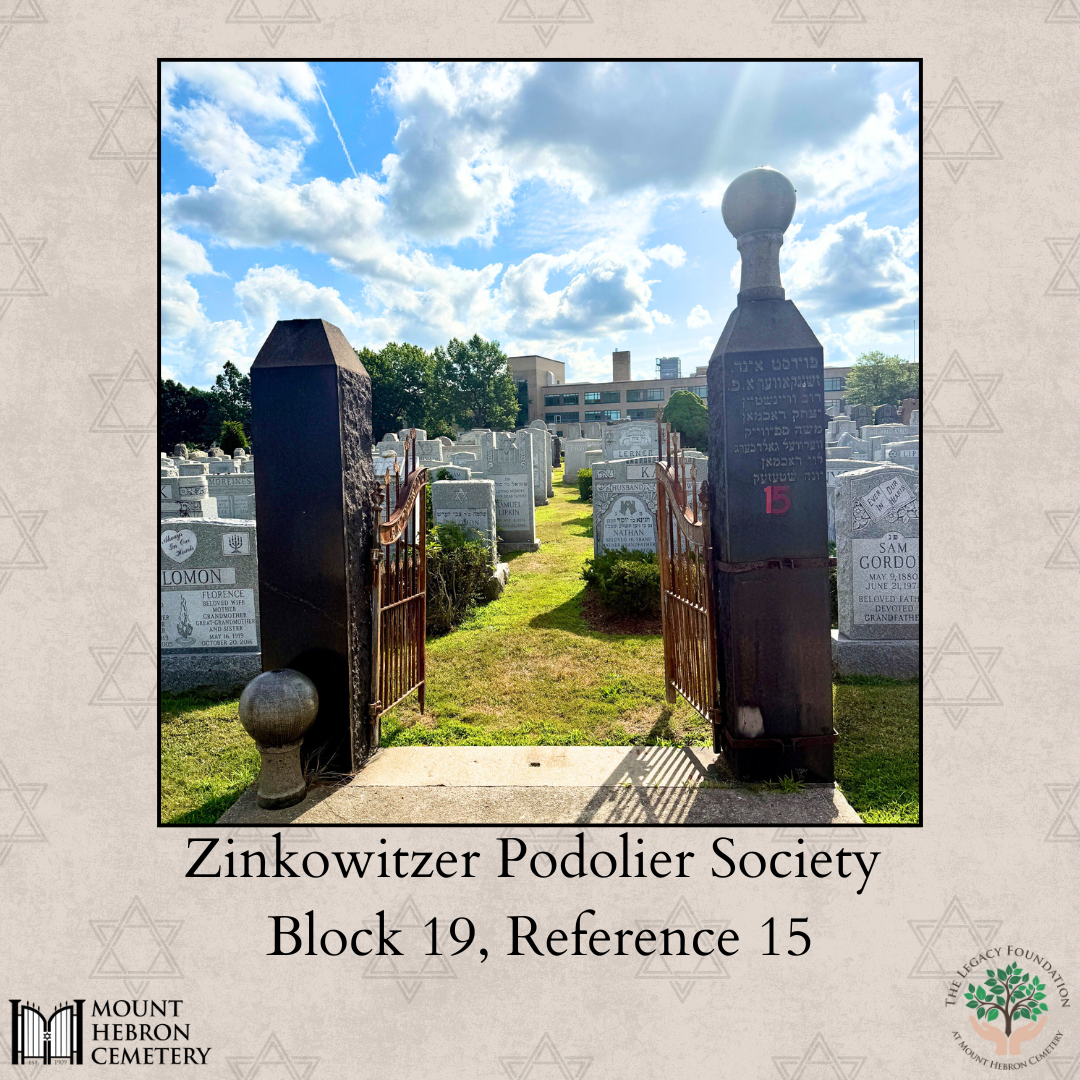
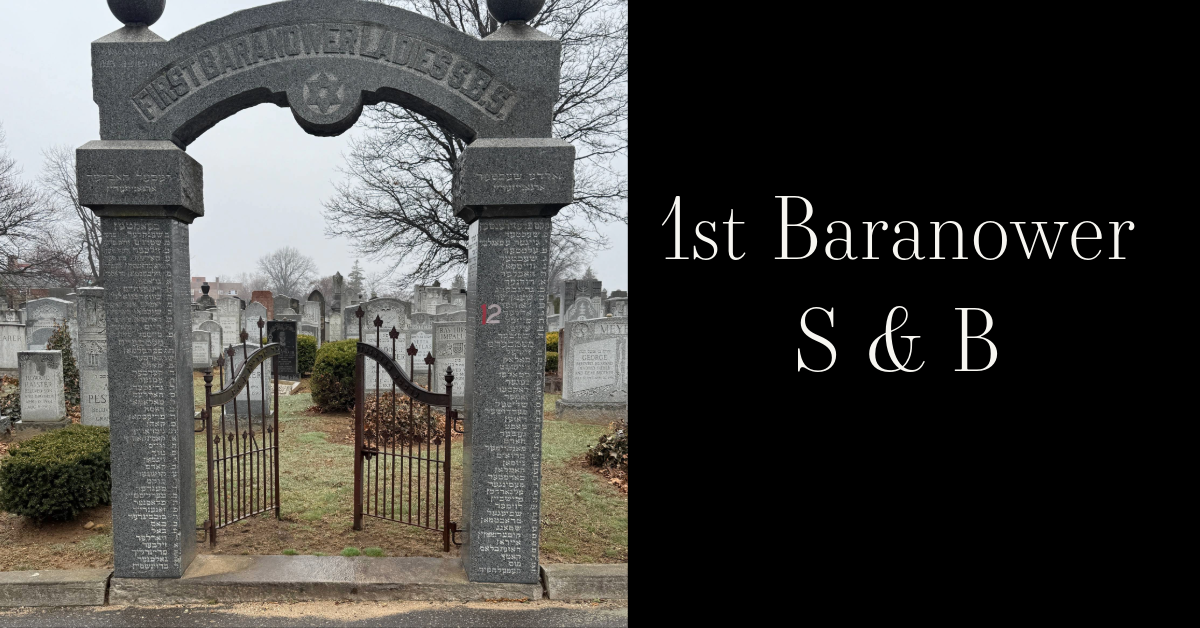
The Zinkowitzer Podolier Society was part of this wave of communal organization. It offered its members vital resources in an era before government social services were widely available. Through member dues and community fundraising, the society subsidized burials, paid shiva benefits, and provided support during illness and unemployment. These societies often purchased burial plots in cemeteries like Mount Hebron or Mount Carmel, ensuring that members could be laid to rest according to Jewish custom and in the company of fellow landsleit. The names of such societies still appear today on cemetery gates and tombstones, marking the enduring bond between immigrants and their hometowns in Eastern Europe.
The work of the Zinkowitzer Podolier Society did not exist in isolation. It was part of a network of regional societies, such as the Zwanitzer Podolier Sick and Benevolent Society and the Independent Podolier Society of Brownsville. These groups often collaborated or shared similar goals, holding charitable events, observing holidays, and preserving customs that otherwise might have been lost in the transition to American life. Even as members Americanized and future generations were born on new soil, these societies remained important cultural anchors. They created records, meeting minutes, and memorials that not only aided their members in life and death but also safeguarded the memory of the towns they left behind.
Tragically, the Jewish communities in Podolia, including Zinkov and Kamenets-Podolski, were largely destroyed during the Holocaust. Under Nazi occupation, thousands of Jews were deported, executed, or confined to ghettos in horrific conditions. The once-flourishing Jewish presence in the region was nearly erased. Today, few physical remnants remain in the towns themselves. However, the existence of burial societies like the Zinkowitzer Podolier Society and their preserved records in American cemeteries and archives serve as a form of historical testimony. These organizations not only provided care and structure to immigrants in the United States but also preserved the legacy of a vanished world.
The Zinkowitzer Podolier Society is a testament to the power of community and the resilience of immigrants who refused to let go of their heritage. Their gates in New York cemeteries, their names in archival documents, and the stories passed down through generations keep the memory of Podolian Jewish life alive. In the face of upheaval and displacement, they chose to rebuild together, weaving their old world into the fabric of a new one. ~Blog by Deirdre Mooney Poulos
Work Cited:
JewishGen Communities Database – Podolia Region: https://www.jewishgen.org/Communities/
Jewish Genealogical Society – Burial Society Index:
https://www.jgsny.org
Yad Vashem – Central Database of Shoah Victims’ Names: https://yvng.yadvashem.org
United States Holocaust Memorial Museum – Podolia: https://encyclopedia.ushmm.org
New York Public Library – Landsmanshaftn Records:
https://www.nypl.org
- Jewish Virtual Library – History of Jews in Ukraine: https://www.jewishvirtuallibrary.org
- Find A Grave – Mount Hebron and Mount Carmel Cemeteries: https://www.findagrave.com