Story Summary:
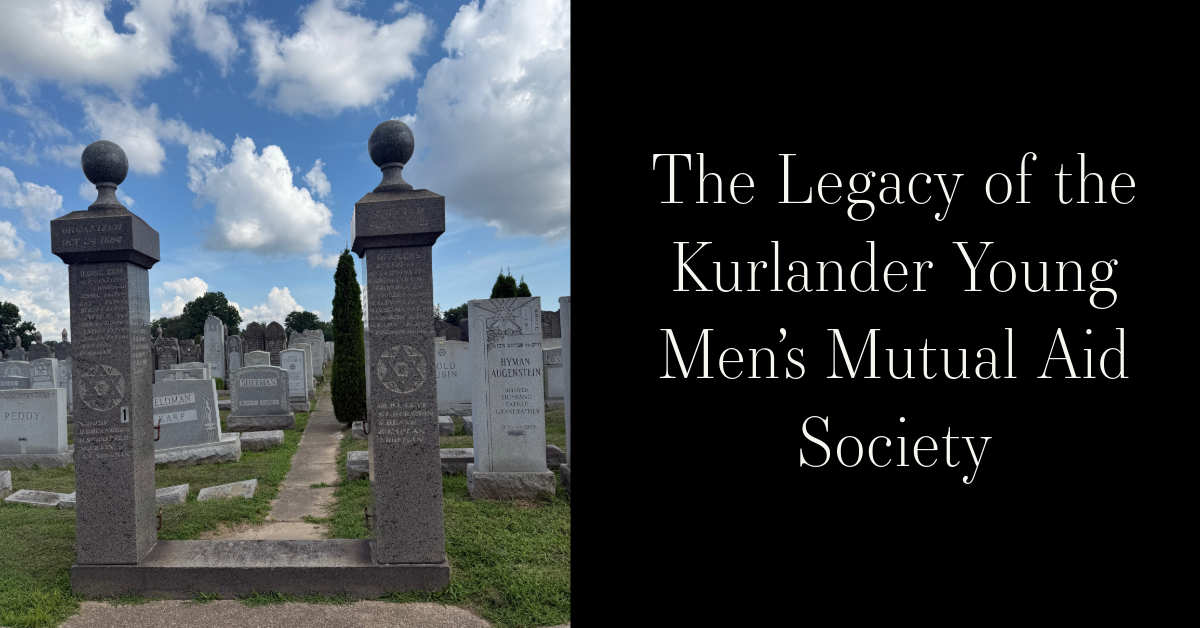
The Kurlander Young Men's Mutual Aid Society, originally founded in 1889 as the Gegenseitiger Unterstuetzung-Verein Kurlander Junger Manner in New York, was created by Jewish immigrants from Courland (now western Latvia) to support one another through unemployment, illness, burial needs, and community assistance. Initially limited to those with paternal roots in Courland, the society expanded in 1922 to include descendants of Courlander mothers, reflecting a progressive shift. Over time, KYMMAS added a Widows and Orphan Fund and a Loan and Relief Fund, becoming a vital resource for its members. During World War I, when Courland's Jewish communities suffered devastating expulsions and dislocation, KYMMAS raised substantial aid sent back to rebuild Jewish schools and provide relief, often in coordination with Rabbi Dr. Mordecai Nurock. The society stands as a powerful example of immigrant solidarity and enduring connection to ancestral towns across continents. ~Blog by Deirdre Mooney Poulos
Brothers Across Oceans:
The Legacy of the Kurlander Young Men’s Mutual Aid Society
In the closing decades of the 19th century, Jewish immigrants from Courland, a Baltic province of the Russian Empire, began arriving in New York seeking freedom, stability, and a future. On January 1, 1889, a group of these immigrants founded the Gegenseitiger Unterstuetzung-Verein Kurlander Junger Manner, or Mutual Support Association of Young Kurlander Men. This society would soon become better known under its American name, the Kurlander Young Men’s Mutual Aid Society, or KYMMAS. The organization was born out of necessity and pride. It offered its members practical support in the form of unemployment benefits, sick aid, burial services, and later, relief funds and loans. Initially exclusive to men born in Courland or descended paternally from Courlanders, KYMMAS expanded its eligibility in 1922 to include those with maternal roots in Courland, a move described at the time as a progressive and inclusive step forward for the community.
The province of Courland, located in what is now western Latvia, had a long-established Jewish presence dating back to the 16th century. Its Jews, while often marginalized under the Tsarist regime, built rich communal lives centered around synagogues, schools, and charitable institutions. Towns like Mitau (now Jelgava), Libau (Liepaja), and Talsen (Talsi) were hubs of Jewish religious and cultural life. Courlander Jews were known for their deep attachment to education and civic responsibility. When the Jewish population of Courland faced expulsion by the Russian military during World War I, entire communities were uprooted and displaced. The forced evacuation of Jews in 1915 caused immense suffering, loss of property, and dislocation. KYMMAS responded by raising significant relief funds to send back to the devastated towns. These donations supported the rebuilding of Jewish schools and the distribution of vital humanitarian aid, often coordinated through Rabbi Dr. Mordecai Nurock, a leading figure in Latvian Jewish life.
From its earliest days, KYMMAS served not only as a safety net for Jewish immigrants in New York but as a transnational bridge between the old world and the new. Members paid modest weekly dues that initially offered modest unemployment relief. As the society grew, it added sick benefits, funeral assistance, a Widows and Orphan Fund, and even a loan program to help members in financial distress. KYMMAS’s commitment extended beyond internal support. The society embodied the deeply rooted Jewish value of communal responsibility, raising money not just for members in need but also for families and towns left behind. This spirit of generosity helped sustain Jewish life in Courland at a time when it was under existential threat.
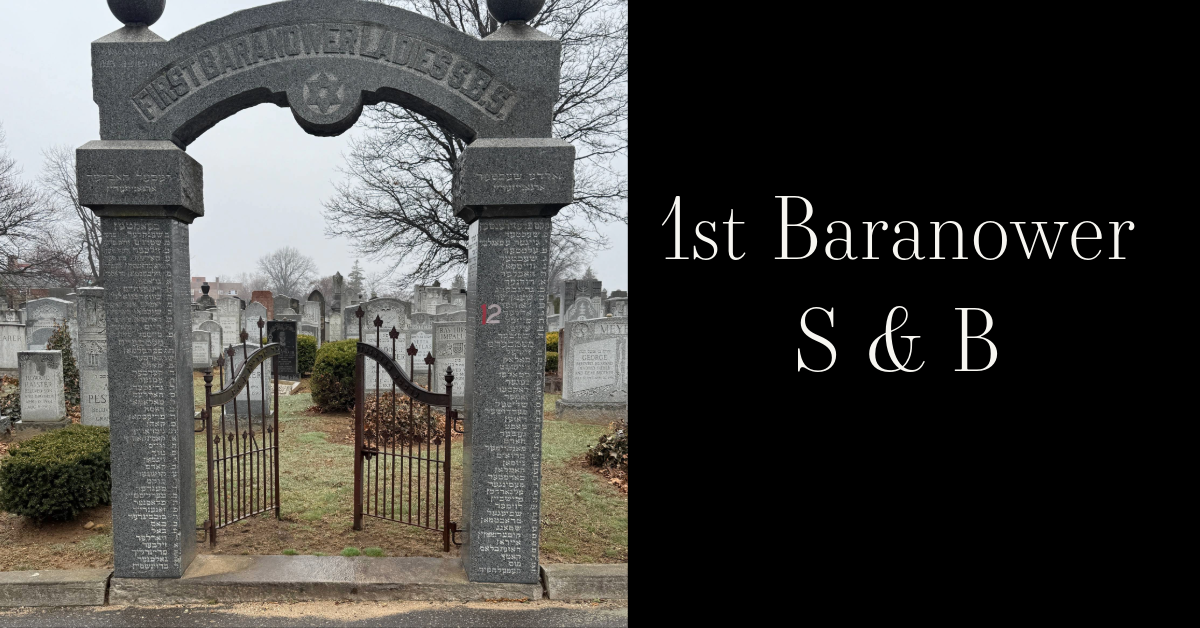
Though KYMMAS eventually faded as successive generations assimilated into broader American life, the society left a deep imprint on both sides of the Atlantic. Its burial plots, memorial books, and fundraising records provide a valuable historical window into the world of Jewish mutual aid and the profound emotional and financial connections that linked immigrant communities with their places of origin. The story of KYMMAS reflects the larger story of Jewish resilience and adaptation. It is a reminder that the immigrant experience was never just about escape or survival, but also about rebuilding and remembrance. The society’s contributions to Courland after the chaos of World War I represent a remarkable act of solidarity from those who had already endured their own upheaval. Today, as traces of Courland’s Jewish population grow fainter in physical form, the legacy of the Kurlander Young Men’s Mutual Aid Society endures in the records, cemeteries, and family memories that tell the story of a generation committed to lifting each other up—no matter where they were. ~Blog by Deirdre Mooney Poulos
Work Cited:
JewishGen Communities Database – Courland:
https://www.jewishgen.org/Communities/
Yad Vashem – Central Database of Shoah Victims’ Names:
https://yvng.yadvashem.org
New York Public Library – Landsmanshaftn Archives and Memorial Books: https://www.nypl.org
United States Holocaust Memorial Museum – Latvia:
https://encyclopedia.ushmm.org
Jewish Genealogical Society of New York – Burial Society Records:
https://www.jgsny.org
Find A Grave – Mount Hebron Cemetery:
https://www.findagrave.com/cemetery/65403/mount-hebron-cemetery
Jewish Virtual Library – History of Jews in Latvia:
https://www.jewishvirtuallibrary.org