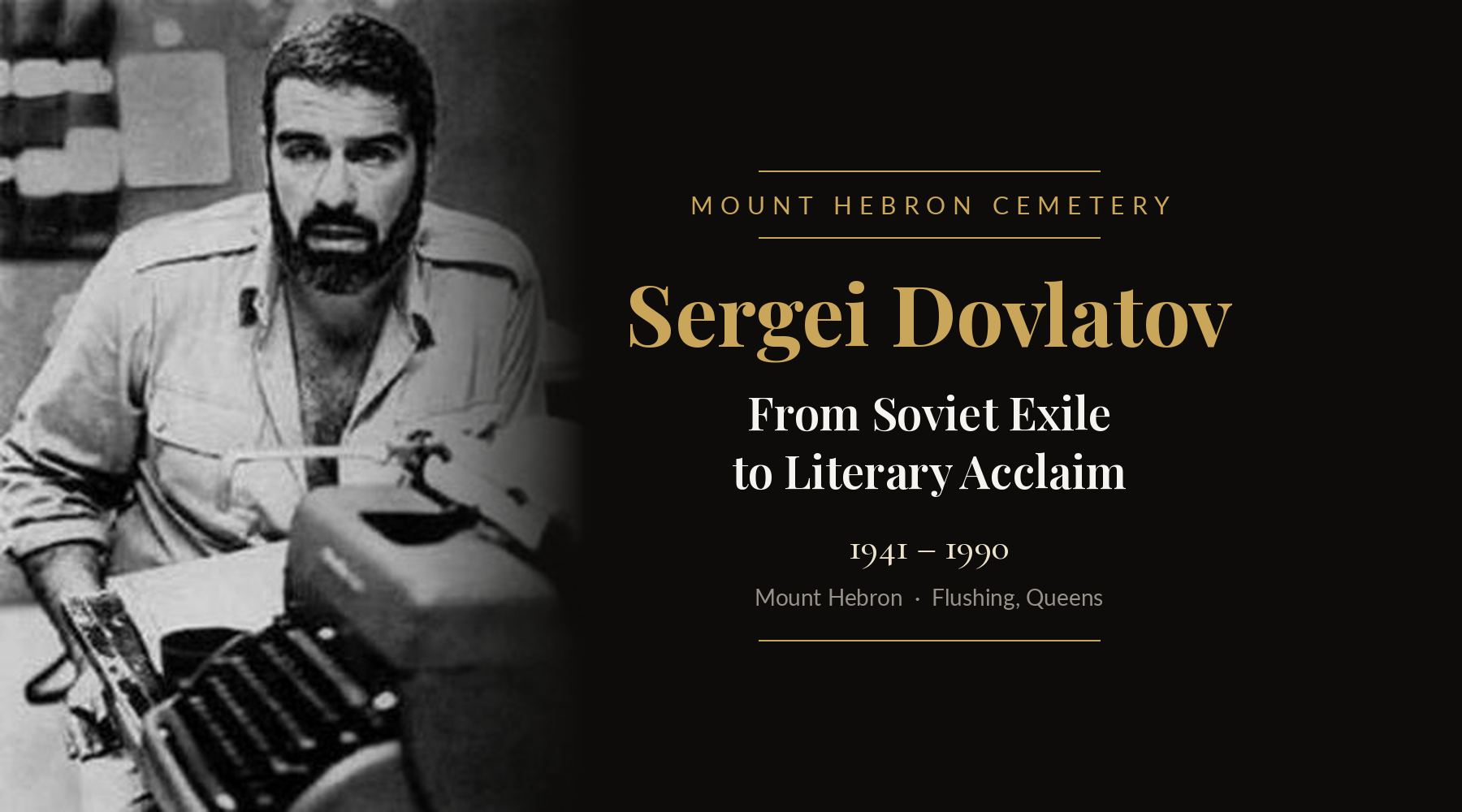
Sergei Dovlatov – From Exile to Acclaim
EARLY YEARS
The story of Sergei Dovlatov, the famed Russian emigre writer, starts before his birth, in the city he would call home, Leningrad (currently Saint Petersburg). Shortly prior to his birth, his parents, both artistically inclined (a theater director and an actress), were forced to evacuate to the central regions of Russia, as the city had come under siege by the German invasion in 1941. Two months later, in September of that same year, Dovlatov was born in the city of Ufa, two thousand kilometers from Leningrad. After another evacuation brought on by the advancing German army forced the family to Novosibirsk, a city in southern Siberia not far from the borders of Mongolia and China, Dovlatov and his family managed to return to Leningrad in 1944, the siege having battered the nation’s “window to Europe”. It was in these conditions that Dovlatov came to start his education – by the time he had ended up in Leningrad, he had moved twice over six thousand kilometers, finally settling at 23 Rubenstein Street, in the heart of the city. As he came of age, Dovlatov studied in the prestigious School 206, on the banks of the Fontanka River, and was admitted into the Leningrad State University, the most elite postsecondary institution in the city. While he enrolled in the Finnish-language department of philology at the university, his time there was short-lived. Two years into his studies, he was expelled for academic reasons and was therefore subject to the mandatory draft and subsequent military service. From 1962 to 1965, he served in the small village of Chinyavoryk as a guard at a penal colony for violent criminals, where the harsh conditions shaped his literary development. It was as a result of this experience that, upon his discharge from the military, Dovlatov’s creative voice was unearthed.
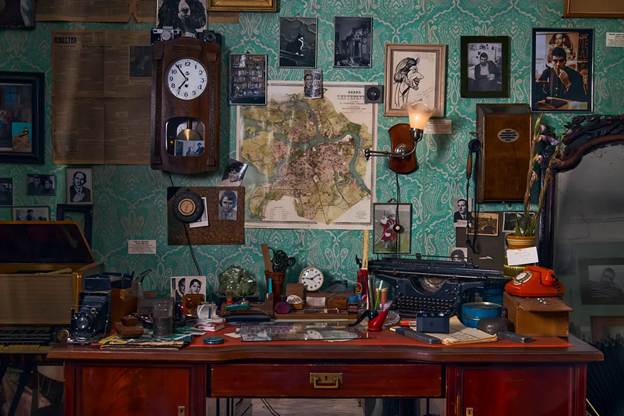
CAPTION: A recreation of Sergei Dovlatov’s writing desk at his communal apartment at 23 Rubenstein Street, St. Petersburg, now open as a house museum.
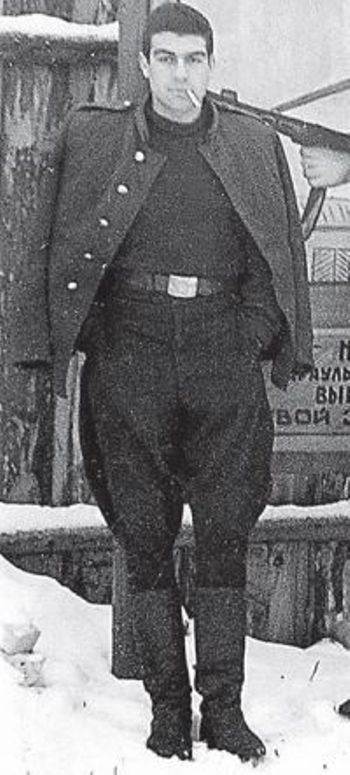
CAPTION: Dovlatov during his time serving in the military, working as a prison guard in Chinyavoryk, Komi ASSR.
WORK IN THE USSR
Upon his return from mandatory military service, Dovlatov returned to his home city of Leningrad and re-enrolled at the Leningrad State University in the journalism department. Concurrently, he worked at a student newspaper and joined an underground Leningrad samizdat literary group named “The Citizens”, which circulated self-published literature that was banned by the Soviet authorities. It was there, in Leningrad, that Dovlatov’s short stories began to take form, often satirical semi-autobiographical depictions of life inside the USSR, which were strictly banned, leaving Dovlatov to spend much of his time in the USSR working other tangentially related jobs, instead of pursuing his literary works. In 1972, Dovlatov moved to Tallinn, Estonian SSR, where he worked as a boiler room stoker to obtain residency, and was hired as a freelance correspondent for several Estonian newspapers. Together with his official work, Dovlatov continued writing his satirical short stories, focused on the mundane absurdities of Soviet life, strongly influenced by his own experiences, both as an ordinary working citizen and as a prison guard from his time in the military. It was in Estonia that Dovlatov finally managed to get one of his books approved for print by a local publisher, but those efforts were in vain. Shortly before the books were published, a KGB (Committee of State Security) raid on an acquaintance’s house uncovered several of Dovlatov’s unpublished manuscripts, which were being prepared for distribution using underground “samizdat” networks. Those originals were destroyed in the raid, and following orders from the KGB, the debut book was immediately pulled from publication, with the original typeset being destroyed. Further, Dovlatov was fired from his job at the newspaper and had to leave Estonia. He worked for a short time as a tour guide in the city of Pskov, at the Pushkin Nature Reserve, all while his writings were being published abroad in emigre journals, with some stories even making their way back to the USSR through Radio Liberty (Radio Free Europe) broadcasts. After his return to Leningrad in 1975, he was largely rejected by journals and newspapers, managing to publish only two short stories, as he had been expelled from the Union of Journalists of the USSR. Finally, in 1978, his political dissent came to a head when he was arrested for alleged hooliganism and jailed for several days. Faced with the choice of long-term imprisonment or exile, Dovlatov chose to leave his homeland behind, setting out on an arduous journey that would bring him to his new home, Queens.
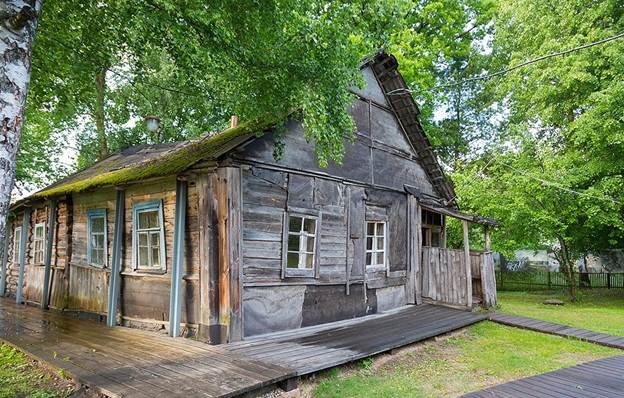
CAPTION: During his short time living in Berezino (Pskov region, where he worked as a tour guide), Dovlatov rented this house. It now operates as a house museum, with its dilapidated appearance being maintained, as this is how Dovlatov found the home.
IMMIGRATION AND WORK IN THE UNITED STATES
After his 1978 detention, Dovlatov was forced to exit the Soviet Union or face imprisonment. As there was no formal way for Soviet citizens to leave the country at the time, Dovlatov was forced to leave on an Israeli visa by the KGB, being exiled in all but name, having been forced to give up his Soviet citizenship. After he arrived in Vienna, he decided to apply for a visa to the United States instead of continuing on to Israel, settling in Queens, New York, joining his wife and daughter, who had emigrated prior to him. Upon his arrival, he was welcomed by other Soviet emigre writers who had moved to America prior to him, and he became the editor-in-chief of the newspaper “Novy Amerikanets” (New American). Freed from the bureaucratic and political restrictions of the Soviet Union, Dovlatov finally began freely publishing his works in many ways, especially in The New Yorker. In addition to being published in newspapers, he started compiling his works into completed books, publishing twelve books in as many years during his time in the United States. He rewrote all of his works that had been previously suppressed in the Soviet Union, as well as compiling new collections. He maintained his sardonic tone, with his works all being representations of his life in the Soviet Union in one way or another. The absurdities of Soviet life that would have been impossible to understand for any outsiders, yet completely mundane and normalized for Soviet citizens and emigres, are represented with his dry humor; the stories always border on the edge of realism by using his life as a loose framework, turning incredibly challenging circumstances into cultural landmarks.
Dovlatov’s work can be seen as a direct reflection of his life, constantly blending the lines between nonfiction and fiction, between the imagined and the real. As any Soviet citizen would know, the lines are never definite. In his book “The Compromise”, Dovlatov wrote about an unnamed journalist at the newspaper Soviet Estonia (representing himself), having to make twelve “compromises” in his journalistic work, each being reflected in a short story, such as when the journalist is compiling a list of countries at a linguistic conference, but is called in by his supervisor to fix an ideological problem – he has named the countries in alphabetical order, instead of in order of loyalty to the USSR. Such short anecdotes dominate his literary works, providing an only slightly fictionalized version of the absurdity Dovlatov experienced throughout his career. Possibly his most well-known work, The Suitcase, is written in a similar manner, where Dovlatov reflects on a metaphorical suitcase full of small, unimportant items he brought with him to the United States. One by one, each item unfolds into a short story about life in the Soviet Union, with the stories touching on all aspects of Soviet life, with the most mundane objects turning into memories of the absurd.
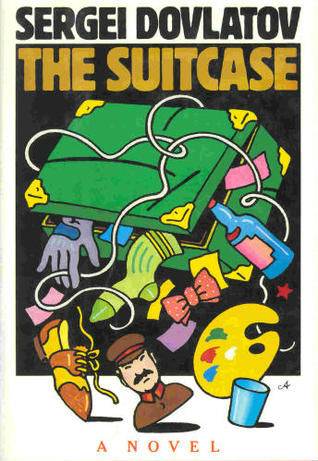
CAPTION: “I surveyed the empty suitcase. On the bottom – Karl Marx. On the lid – Brodsky. And between them – the past, priceless, and my only life”. – Dovlatov, The Suitcase.
One of his most famous books, The Zone, is directly informed by his experience as a prison camp guard back during his military service. Throughout the book, the main character’s short stories and anecdotes regarding life in the prison are balanced with fictional letters to “the publisher”, in which he (both the guard and the writer) tries to convince Igor Markovich of Hermitage Press to publish this very book (The real-life Igor Markovich Yefimov and his company, Hermitage Press, were the actual publishers of the book). Blending his experiences as a guard with the absurdities of bans and the difficulties faced by Dovlatov in getting published, the novel explores human dynamics from a philosophical view – while at first, the writer, Dovlatov, is separated from the fictionalized prison guard, they eventually merge into one man, capturing the two sides of Dovlatov’s persona. The absurdity of life in the camp is highlighted by the famous quote from the book, “Almost any prisoner would have been suited to the role of a guard. Almost any guard deserved a prison term”. On top of blurring the lines between prisoner and guard, depicting them as part of the same ecosystem, Dovlatov opens with his signature wit and dry humor, offering the “disclaimer” reading “The names, events, and dates given here are all real. I invented only those details that were not essential. Therefore, any resemblance between the characters in this book and living people is intentional and malicious. And all fictionalizing was unexpected and accidental.”
Indeed, it may have been harder to fictionalize Dovlatov’s life given everything he had endured, but Dovlatov’s razor-thin edge between the truth and fiction was what made his writing so appealing – the constant balance between the documented and the invented is what drew emigres, Soviet citizens, and Americans alike to see and experience his work, which had its own segment of truth and relatability to any one of the millions of Russians and Soviets around the world.
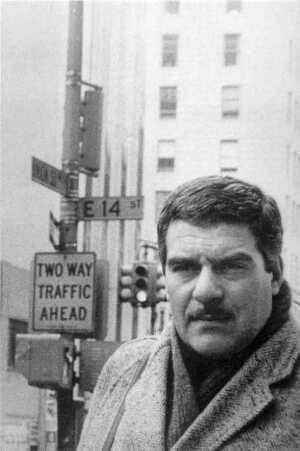
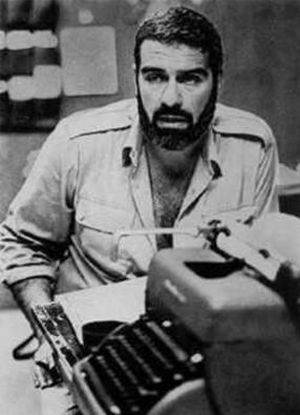
CAPTION: Sergei Dovlatov on the streets of New York City.
LATER LIFE AND LEGACY
As Dovlatov continued his work from his apartment on 63rd Drive in Forest Hills, the political landscape of the world shifted around him. As the Soviet Union as a political entity began to falter, General Secretary Mikhail Gorbachev introduced the political policies of Perestroika (rebuilding) and Glasnost (openness), characterized by the release of political prisoners, open elections and referenda, and critically, the publishing of previously banned writers and books. In 1989, Dovlatov was finally published in the Soviet media, and the previously underground writings exploded into the public, now being completely legal.
Throughout his life in the United States, Dovlatov lived in a state typical for emigres. Torn between the motherland that had abandoned him and the strange, foreign nation that had welcomed him, one of his largest personal tragedies was that he never lived to see the day that he would be revered as one of the greatest Russian writers in history. In his short story Inostranka (The Foreigner), Dovlatov noted with his signature wit that "Back home there was no freedom, but there were readers. Here there was freedom enough, but readers were missing.", having traded one key element of his writing for another. He had struggled throughout his life, never living without the extreme stress and trauma of political harassment in the Soviet Union, and after immigrating, never living without a sense of longing for his homeland, paired with an understanding that he could not return to the Soviet Union as it were. Dovlatov hoped for a brighter future, where once-censored authors would be celebrated, as he wrote in a 1982 essay that “I want to live to see the days when our dishonoured fatherland turned into scarecrow of the world, is revived; and these will be the days of rebirth of our long-suffering literature”, but unfortunately, he would not live to see his work accepted back home.
On August 24, 1990, just one year after the Soviet Union had finally allowed his work to be published legally under Glasnost, and one year before the Soviet Union itself would dissolve, Sergei Dovlatov passed away at Coney Island Hospital from heart failure at the age of 49. He was buried at Mount Hebron Cemetery.
In the years following his death, Sergei Dovlatov has come from being an underground writer to being celebrated internationally, including in his homeland. While he only managed to spend twelve years writing and publishing in complete creative freedom, with his career restricted on one end by heavy censorship and his eventual exile from the Soviet Union, and brought to an untimely close on the other end by his early death, his words ring true to anyone who had lived during the Soviet Union. Now, his legacy is far-reaching, with a plethora of monuments, memorials, and house museums scattered throughout New York, Estonia, and Russia. After his death, and especially through the 1990s, Dovlatov’s fame in New York City was reproduced in his homeland, with him becoming a household name. Having come from being silenced to being celebrated, Dovlatov is now widely considered one of the most influential Russian writers in history – in 2013, the Russian Ministry of Education published a list of one hundred books recommended for extracurricular reading for schoolchildren – four of Dovlatov’s works are on the list, placing him among the nation’s top authors, together with names such as Tolstoy and Nabokov, with Dovlatov continuing to be widely read internationally to this day.
Sergei Dovlatov’s childhood home, the small communal apartment in the center of Saint Petersburg at 23 Rubenstein Street, now operates as a house museum with original and recreated items, maintaining both the atmosphere of the quintessential Soviet communal apartment and the specific, well-known environment that formed Dovlatov as the writer we know him as today. A small memorial statue was unveiled outside of the apartment building in 2016, and the apartment itself was turned into a museum in 2022. Similarly to Dovlatov’s books, the house museum is made up of the simplest objects and spaces – Dovlatov’s library, the tiled stove that provided heating in the winter, the six other rooms that were all home to their own bustling families, and much more. This, along with the fact that the rest of the building remains residential, gives the apartment a lived-in feeling, creating a fitting site for the preservation of the memory of a writer who saw such value in the regular and mundane aspects of life.
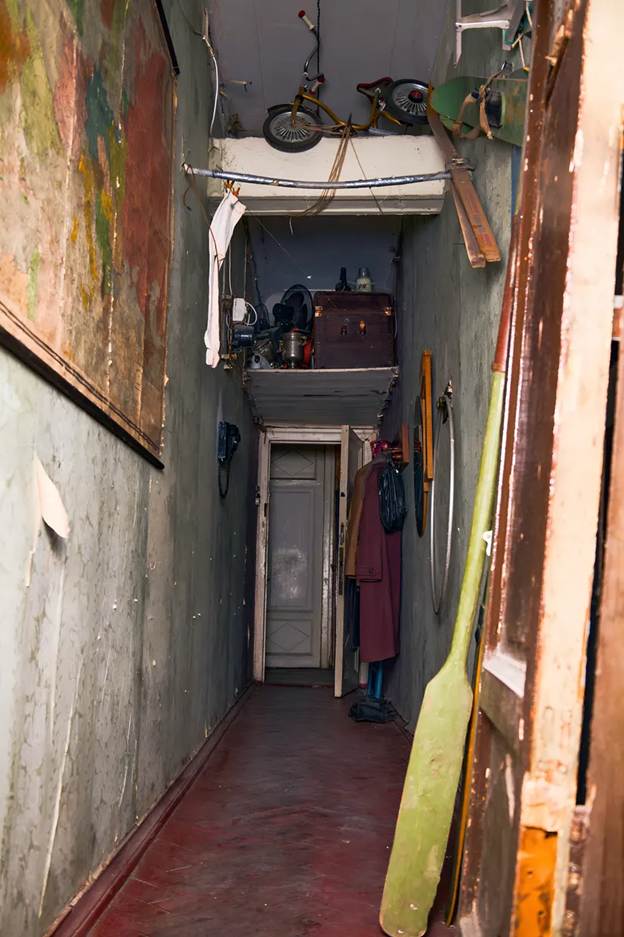
CAPTION: The corridor leading to Dovlatov’s room in the communal apartment, preserved in a state familiar to all who resided in the apartment’s seven rooms.
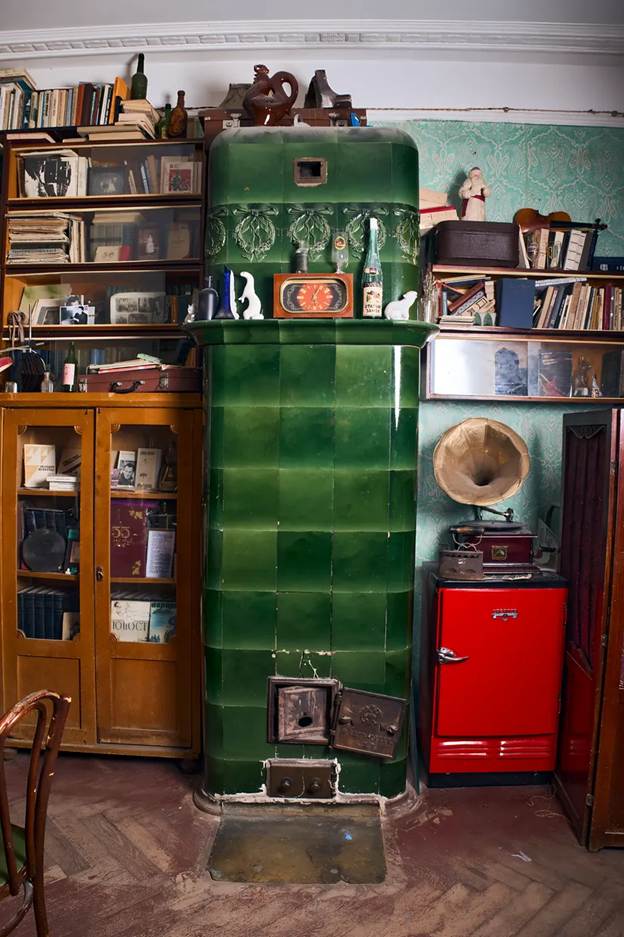
CAPTION: Dovlatov’s tiled stove, a familiar sight for former residents of Soviet communal apartments. Still functional today, it served as a meeting place for other underground writers, such as Rein and Brodsky.
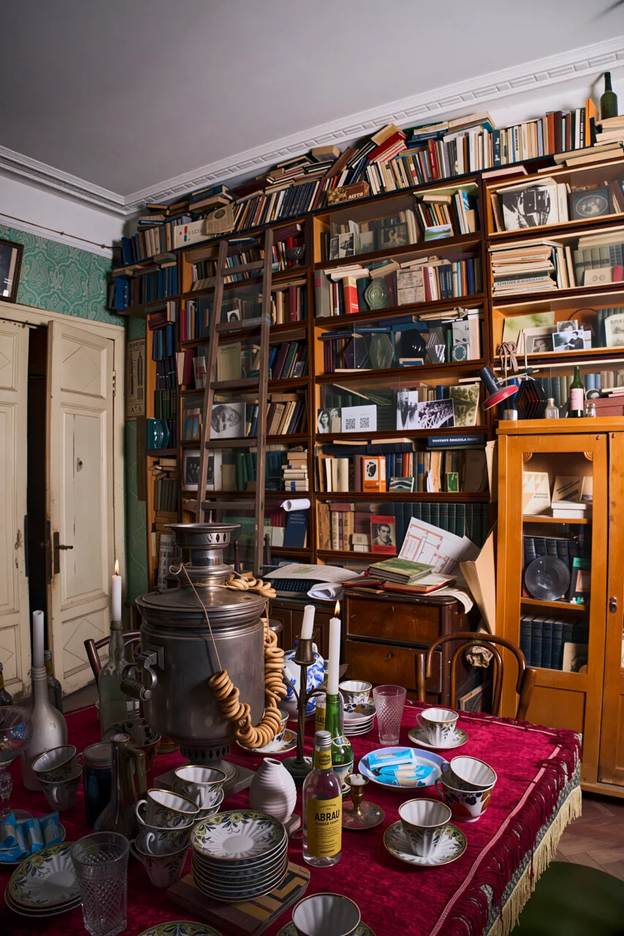
CAPTION: Dovlatov’s library and table, where he would receive guests and writers alike.
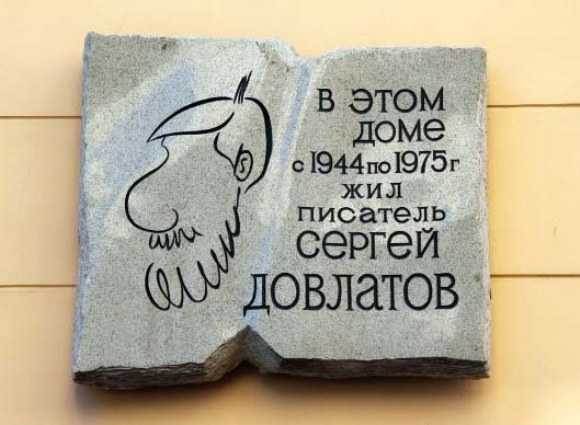
CAPTION: The memorial plaque outside of Dovlatov’s Saint Petersburg apartment building. It reads, “The writer Sergei Dovlatov lived in this building from 1944 to 1975”.
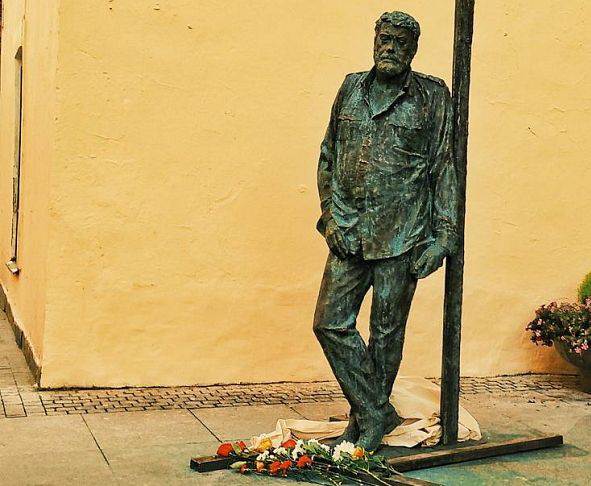
CAPTION: A memorial statue of Sergei Dovlatov, against the backdrop of his own apartment building in the center of Saint Petersburg, 23 Rubenstein Street.
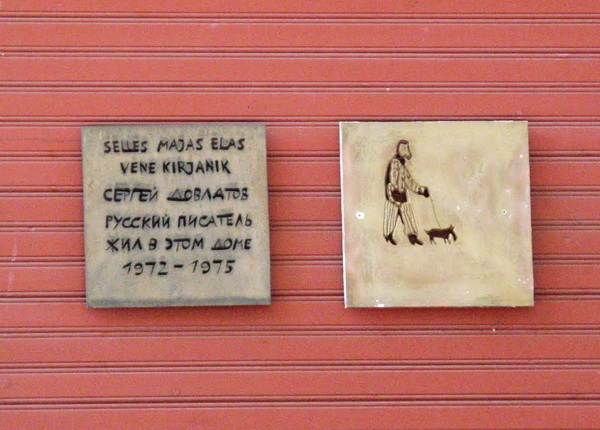
CAPTION: The memorial plaque outside of the Tallinn, Estonia apartment where Dovlatov resided for three years. The plaque reads “Russian Writer Sergei Dovlatov lived in this house from 1972 to 1975”.
Sergei Dovlatov’s temporary home near the city of Pskov, where he worked as a tour guide in the Pushkin Museum-Reserve, just two kilometers away from the historic site where great Russian poet Alexander Pushkin resided, has also been converted into a unique house-museum that documents Dovlatov’s literary experience and personal life. While the house has been structurally maintained, its dilapidated look has been preserved, just as it stood in the summer of 1977, when the writer rented it. The house itself inspired Dovlatov’s book The Reserve, where he famously wrote that “The house made a terrifying impression”. This space shares its fame among two of Russia’s most famous writers; there is a small art gallery outside of the house where reproductions of Dovlatov’s and Pushkin’s visual works hang side by side. Similarly to his Saint Petersburg apartment, this house museum represents Dovlatov’s life as it were, with every element preserved as a time capsule from Dovlatov’s life. This house, immortalized in Dovlatov’s writings and filled with his personal belongings, stands as another monument to the ordinary in the writer’s life, serving as a visual backdrop for his writing.
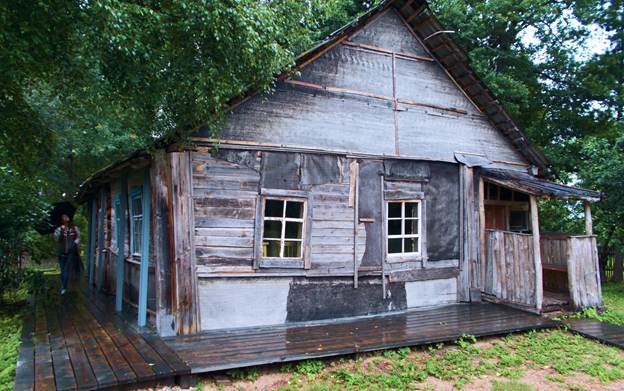
CAPTION: “Mikhail Ivanovich's house was a terrifying sight. A leaning antenna loomed black against the clouds. The roof had collapsed in places, revealing uneven, dark beams. The walls were carelessly covered with plywood. The cracked glass was patched with newspaper. Dirty tow protruded from countless cracks.” – Sergei Dovlatov, The Reserve
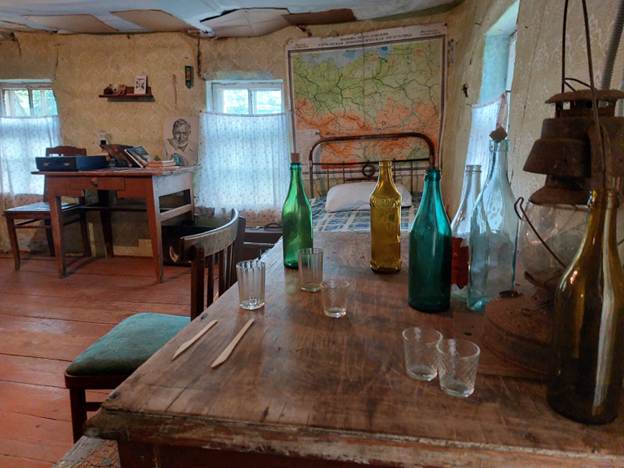
CAPTION: “The owner's room smelled of spoiled food. Above the table, I saw a color portrait of Mao from Ogonyok. Next to it, Gagarin was smiling broadly. Pasta floated in the sink, its enamel chipped with black circles. The clock was stopped. The iron, which served as a weight, was touching the floor.” – Sergei Dovlatov, The Reserve
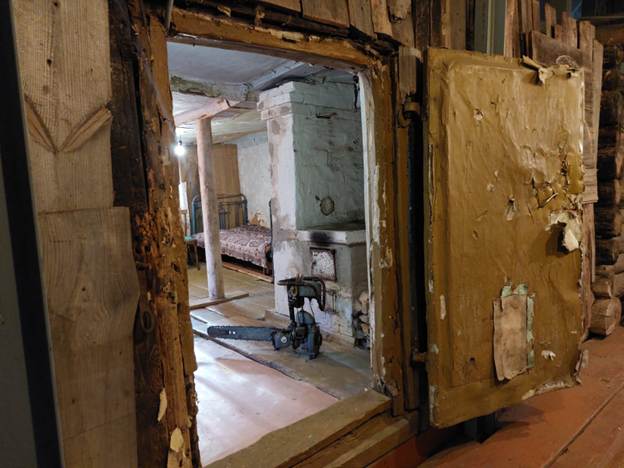
CAPTION: “The next room looked even more ugly. The center of the ceiling drooped ominously. Two metal beds were littered with rags and stinking sheepskins. Cigarette butts and eggshells made everything white.”
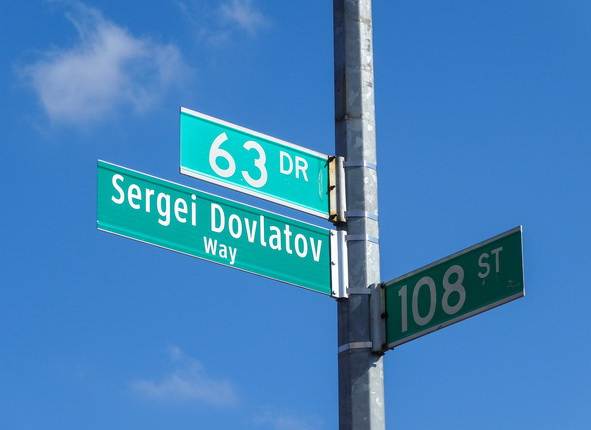
In New York City, Dovlatov is remembered just as fondly by his community, and the greater Russian diaspora across the city. Whether they have been in New York for many years before the writer, immigrated along with him, or came to the city decades after his arrival, it will be difficult to find any Russians who do not know Dovlatov – he is as emblematic of the city and its Russian population as he is of the small apartment where he grew up, or the dilapidated house in the Pskov region where he spent one of his final years in the Soviet Union. In 2013, local resident Alex Rubin launched an online petition to co-name the block Dovlatov lived on, 63rd Drive and 108th Street, “Sergei Dovlatov Way”, gathering the necessary signatures and sending the proposition to the New York City Council. In July of 2014, Mayor Bill De Blasio signed into law legislation that co-named several streets and public spaces in New York City, with this quiet, unassuming block being one of them. Honoring the street and apartment where Dovlatov wrote much of his most important work, the intersection remains, to this day, a memorial to the writer who spent twelve years living in and writing from Forest Hills. Dovlatov’s many memorials, statues, streets, and plaques all serve to show the millions of lives he touched – as well as the many people for whom Dovlatov was a crucial writer. Dovlatov’s work carried out a myriad of functions – from documenting everyday life to crossing political and ideological borders, making the importance of his writings impossible to overstate.
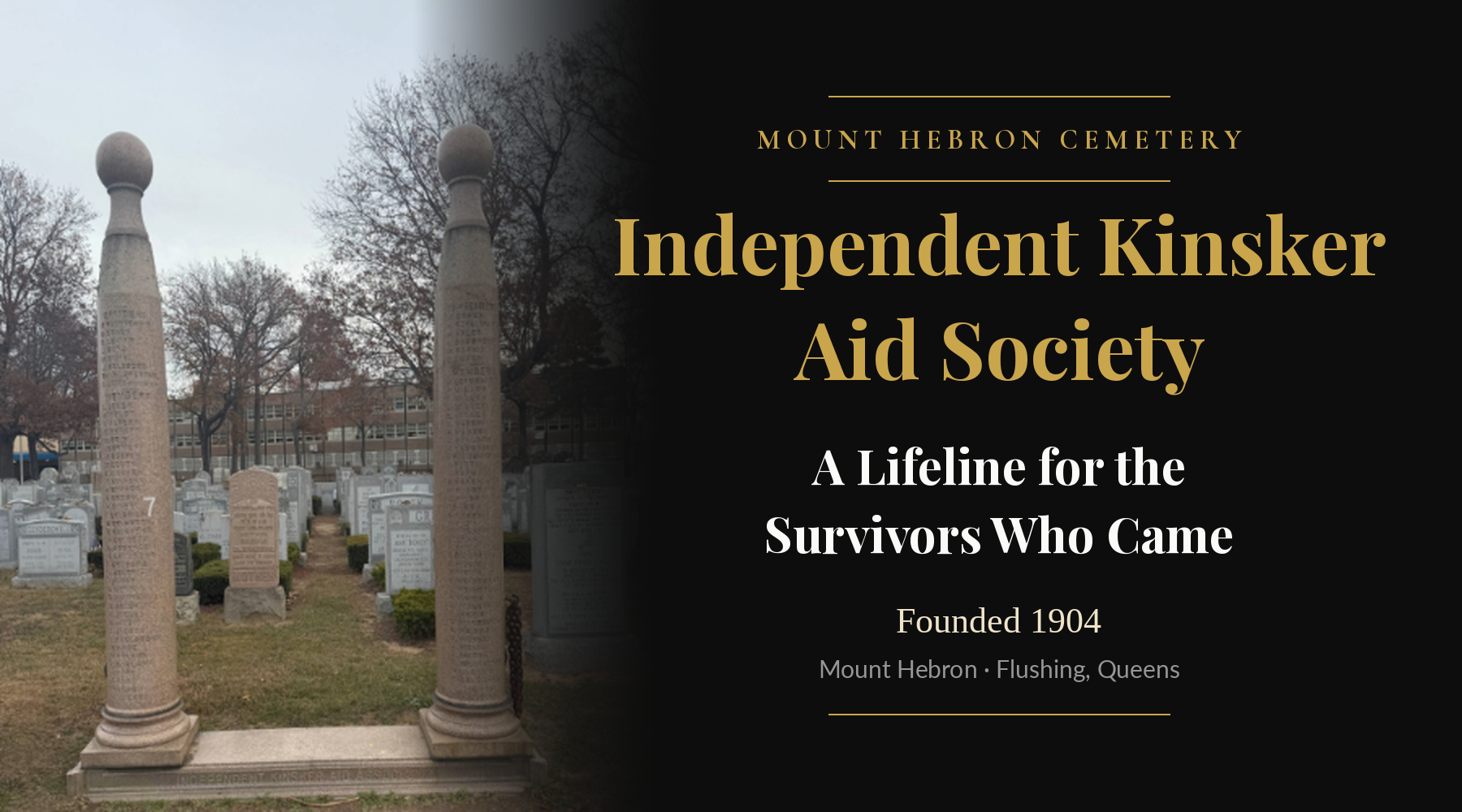
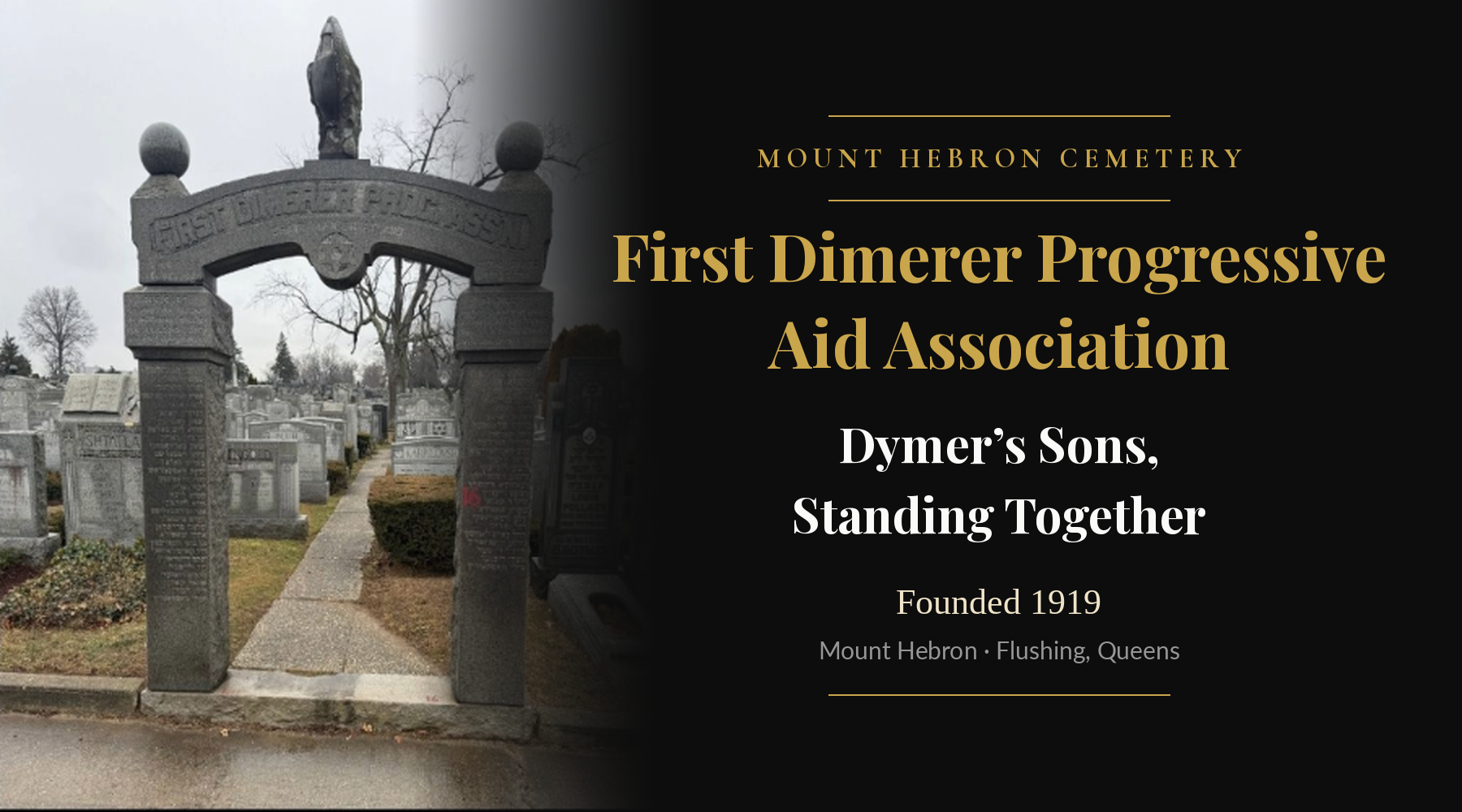
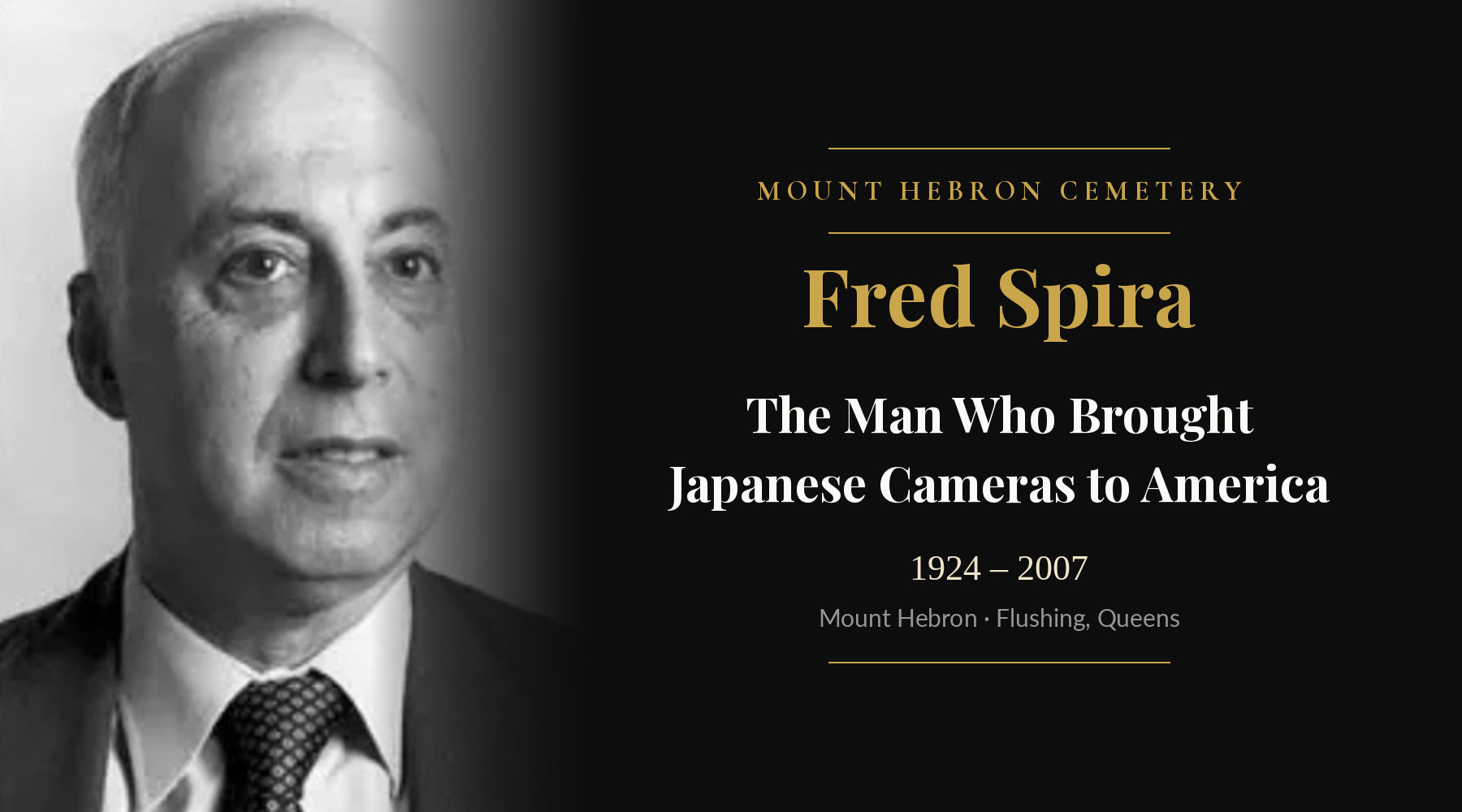
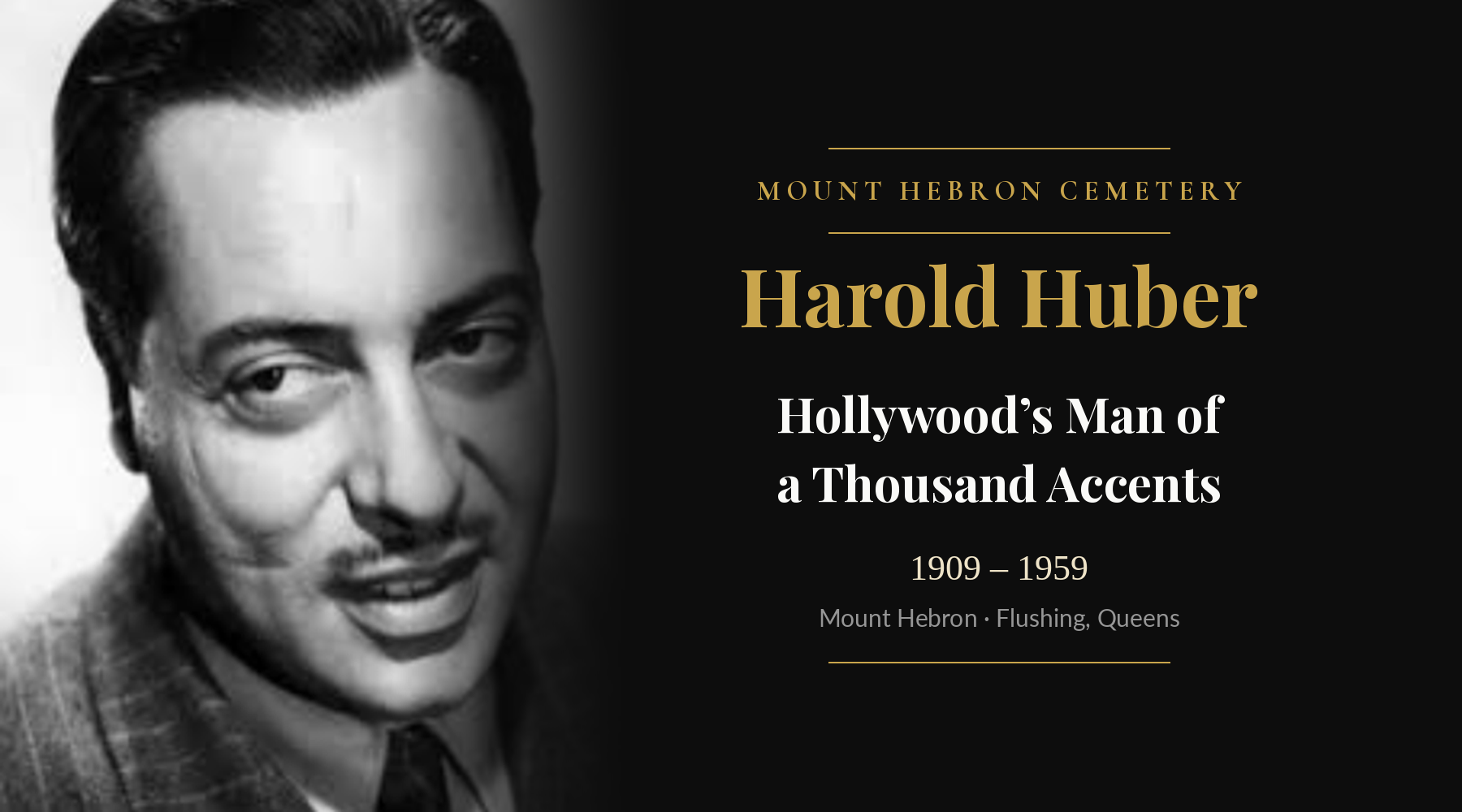
Sergei Dovlatov rests at Mount Hebron Cemetery, and the Legacy Foundation is honored to be able to tell his story.
Sources:
https://ru.wikipedia.org/wiki/%D0%94%D0%BE%D0%B2%D0%BB%D0%B0%D1%82%D0%BE%D0%B2,_%D0%A1%D0%B5%D1%80%D0%B3%D0%B5%D0%B9_%D0%94%D0%BE%D0%BD%D0%B0%D1%82%D0%BE%D0%B2%D0%B8%D1%87
https://www.newyorker.com/magazine/1986/05/05/the-colonel-says-i-love-you
https://www.ebsco.com/research-starters/history/sergei-dovlatov/
Sergei Dovlatov, The Zone
Sergei Dovlatov, Inostranka
Sergei Dovlatov, The Suitcase
Sergei Dovlatov, The Reserve
https://www.sergeidovlatov.com/
https://dovlatovmuseum.ru/
https://dovlatovland.ru/
https://www.rbth.com/literature/2014/07/10/dovlatov_way_finds_its_way_to_new_york_city_38103.html